
GL Assessment, CEM and ISEB: Which 11 Plus Exam Will Your Child Sit
Most 11+ guides explain GL Assessment and stop there. This one compares all five boards UK parents actually meet, and shows how format changes the way you prepare.
 Elspeth Marlow
- 13 min read

Almost every guide to the 11+ answers the same question: what is the GL Assessment test? That is rarely the question a parent is actually asking. The real question, usually asked at a school gate or in a WhatsApp group, is sharper and more anxious: which exam is my child sitting, and why does it sound nothing like the one my friend's child sat two years ago in a different county?
That confusion is entirely reasonable, because there is no single national 11+, as our guide to what the 11 plus exam is and how it works explains. GL Assessment itself says so plainly, warning parents that "11+ tests vary from area to area so please be aware that the exact timings, the combination of topics covered... and the number of questions in your local 11+ test may differ". Two children can both be described as sitting "the GL exam" and sit papers with different subject weightings, different lengths and different qualifying scores.
And GL is only one of five providers a UK family realistically meets. Below is a chronological walkthrough, from roughly two years out to results day, with the milestone at each stage. It includes a genuine side-by-side comparison of all five boards, a correction to the CEM advice still circulating on forums, and Gloucestershire's announced provider change.
Milestone one, roughly two years out: learn that there are five boards, not two
The first useful thing you can do, ideally when your child is in Year 4, is stop thinking in terms of "the 11+" and start thinking in terms of a named provider. Here is the full cast.
GL Assessment is the default. It describes itself as "the leading provider of 11+ tests for admissions" and says its tests "are used by the majority of grammar schools in the UK". If your child is sitting a state grammar school test in England or a post-primary transfer assessment in Northern Ireland, GL is the statistically likely answer.
Cambridge (formerly CEM) is the name that causes the most damage, because it is still discussed as though it were GL's twin. It is not, and we deal with that properly further down.
ISEB runs the Common Pre-Test, which is the independent school route rather than the grammar school route. Different world, different rhythm, different admissions calendar.
CSSE, the Consortium of Selective Schools in Essex, sets its own papers for ten Essex and Southend schools and does not use multiple choice at all.
FSCE, Future Stories Community Enterprise, is the newest arrival, appointed by the Gloucestershire grammar schools. If you have a child in Year 4 or below in Gloucestershire, this one changes your timeline, and we cover it in its own milestone.
If you are still working out whether the 11+ is the right route at all, our practical parent guide to the 11+ covers the wider decision before you get into board mechanics.
Milestone two, the same term: read the five boards side by side
This is the comparison the rest of the internet does not give you. Each board is set out on the same seven points, so you can scan across them.
GL Assessment
- Subjects tested: verbal reasoning, non-verbal reasoning, English and maths, in combinations chosen locally.
- Papers and timing: varies by area. In Buckinghamshire, for example, children sit two papers each about 60 minutes long with a break between, plus a shorter practice test usually taken two days before.
- Answer format: multiple choice, commonly on a separate machine-marked answer sheet.
- Adaptive or fixed: fixed. Every child sits the same paper.
- Online or paper: paper based in most areas.
- Free official samples: yes. GL publishes what it calls "10 hours of free familiarisation materials", six PDF papers covering verbal reasoning, non-verbal reasoning, English, maths, a combined non-verbal reasoning and maths paper, and verbal skills.
- Who sets the threshold: the local authority or consortium, not GL. GL supplies and marks the tests; the qualifying score is an admissions decision.
Cambridge Select Insight (the CEM remnant)
- Subjects tested: not published in the way GL's are; this is now a niche digital entrance product rather than a county-wide grammar test.
- Papers and timing: not publicly specified. Ask the individual school.
- Answer format: digital.
- Adaptive or fixed: not publicly stated.
- Online or paper: online.
- Free official samples: no meaningful public familiarisation library comparable to GL's.
- Who sets the threshold: the individual school.
ISEB Common Pre-Test
- Subjects tested: mathematics, English (reading comprehension and grammar), verbal reasoning and non-verbal reasoning.
- Papers and timing: four assessments, "often taken in Year 6 or Year 7", sat anytime between the autumn and spring term of that year. They can be taken together on the same day or split across several days. ISEB does not publish fixed public timings, so treat any number you see quoted online with suspicion and use the school's own familiarisation guidance instead.
- Answer format: on-screen.
- Adaptive or fixed: adaptive. Difficulty shifts in response to how the child is answering.
- Online or paper: online.
- Free official samples: limited familiarisation only, by design. There is no bank of past papers, because an adaptive test cannot be reprinted as one.
- Who sets the threshold: each senior school. Pupils applying to several schools sit the tests once and share results via a unique Applicant ID, so every school sees the same result.
CSSE (Essex and Southend)
- Subjects tested: English and mathematics only. No standalone verbal or non-verbal reasoning papers.
- Papers and timing: the English paper lasts sixty minutes with ten minutes additional reading time; the mathematics paper lasts sixty minutes.
- Answer format: written answers, not multiple choice.
- Adaptive or fixed: fixed.
- Online or paper: paper.
- Free official samples: yes, downloadable familiarisation papers via the CSSE 11+ examination section. Note that from September 2024 (2025 entry) the English paper no longer contains Applied Reasoning questions, so older papers overstate what is examined.
- Who sets the threshold: the consortium, covering ten schools including King Edward VI Grammar School, Colchester Royal Grammar School and Westcliff High School for Boys and for Girls.
FSCE (Gloucestershire, from 2028 entry)
- Subjects tested: curriculum-aligned assessments drawing heavily on Key Stage 2 content. Non-verbal reasoning is removed entirely.
- Papers and timing: not yet published. Do not trust any site quoting specific durations.
- Answer format: not yet published.
- Adaptive or fixed: not yet published.
- Online or paper: not yet published.
- Free official samples: deliberately minimal. The stated intent is to reduce reliance on specialist 11+ tutoring.
- Who sets the threshold: the Gloucestershire grammar schools.
Milestone three, before you buy a single practice paper: confirm your region
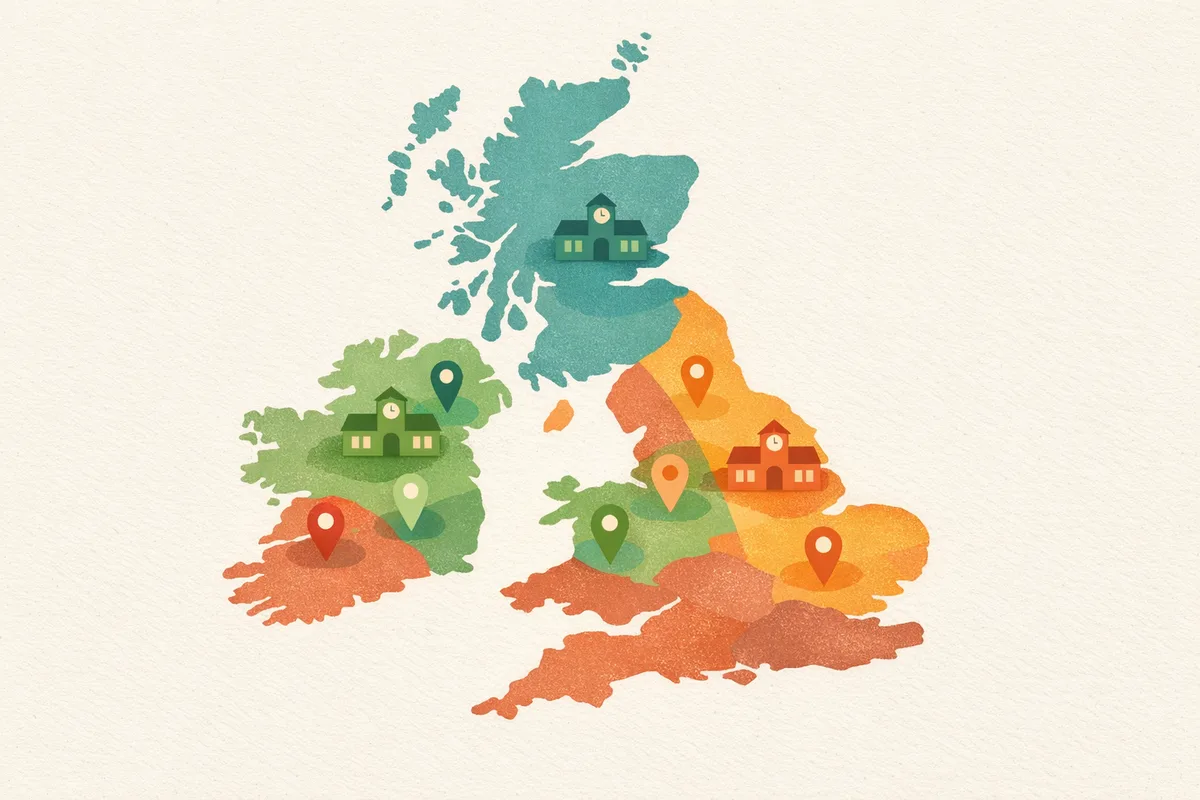
Board choice is geographic, so the cheapest mistake to avoid is buying twelve months of the wrong practice.
Buckinghamshire uses GL for its Secondary Transfer Test. Kent uses a GL-style multiple choice format with a separate answer sheet, split across two papers plus a separate 40 minute writing exercise that is only marked in borderline cases and headteacher appeals. Northern Ireland's SEAG entrance assessment is set and marked by GL, with two papers of 112 questions each, and a pupil who sits only one of the two papers has not completed the assessment. Essex and Southend sit CSSE. Gloucestershire is GL for 2027 entry and FSCE thereafter. Independent senior schools largely use ISEB.
That list is indicative, not exhaustive, and consortia do change providers. Our guide to grammar schools by area and their entrance tests goes region by region, but the authoritative source is always the admissions page of the specific school you are applying to.
The quickest way to confirm the board: choose your local authority below.
This part of the guide looks up which 11+ test your area uses. It works in your browser.
Milestone four, as soon as you join a parent forum: correct the CEM advice
Sooner or later somebody will tell you to prepare for a "CEM-style" test, with its vocabulary emphasis and its reputation for being tutor-proof. Some competing guides still describe GL and CEM as the two major examining bodies. That framing is out of date, and one widely shared page dates the change to "late 2022", which does not match the record either.
The first-party trail is clearer. CEM's own timeline records that CEM joined Cambridge in 2019, and that in 2025 Cambridge CEM became Cambridge Insight. Its live catalogue is now dominated by school-monitoring assessments: ASPECTS, BASE, Cambridge Primary Insight, MidYIS, Yellis, Alis, IBE Insight, Cambridge Secondary Insight and the Cambridge Wellbeing Check. Exactly one product sits under entrance testing: Cambridge Select Insight.
So the honest summary is not "CEM was discontinued". It is that CEM stopped being a grammar school 11+ board and became a school monitoring business with one niche digital entrance product. That distinction matters practically. Advice written for the old county-wide CEM papers, and the whole cottage industry of "CEM-style" workbooks built around it, is now aimed at an exam your child will almost certainly never sit. You can check the current product list yourself on the CEM about page.
Milestone five, if you are in Gloucestershire: recalculate your dates now
This is the change most likely to catch a family out, because it moves the exam nearly a year and a half earlier.
The Gloucestershire grammar schools have appointed Future Stories Community Enterprise as their admissions test provider for entry to Year 7 from 2028 onwards, with testing from summer 2027. The test moves from September of Year 6 to the latter part of the summer term of Year 5. FSCE tests draw heavily on Key Stage 2 curriculum content, with the stated aim of reducing reliance on specialist 11+ tutoring, and Denmark Road High School notes the assessments are fully aligned with the Key Stage 2 curriculum and confirms the removal of the non-verbal reasoning element. GL Assessment remains the provider for 2027 entry.
Read that again if you have a child currently in Year 4 in Gloucestershire. The exam arrives roughly a term and a half sooner than the standard national timetable assumes, and one of the four classic subjects has gone. A family following generic 11+ advice is preparing for the wrong exam on the wrong date. The official announcement from the schools is worth reading in full, and our year-by-year preparation timeline can be shifted back accordingly.
Milestone six, roughly a year out: let the format choose the habit
Once you know the board, format should drive practice. These five boards demand four genuinely different habits, and they are not interchangeable.
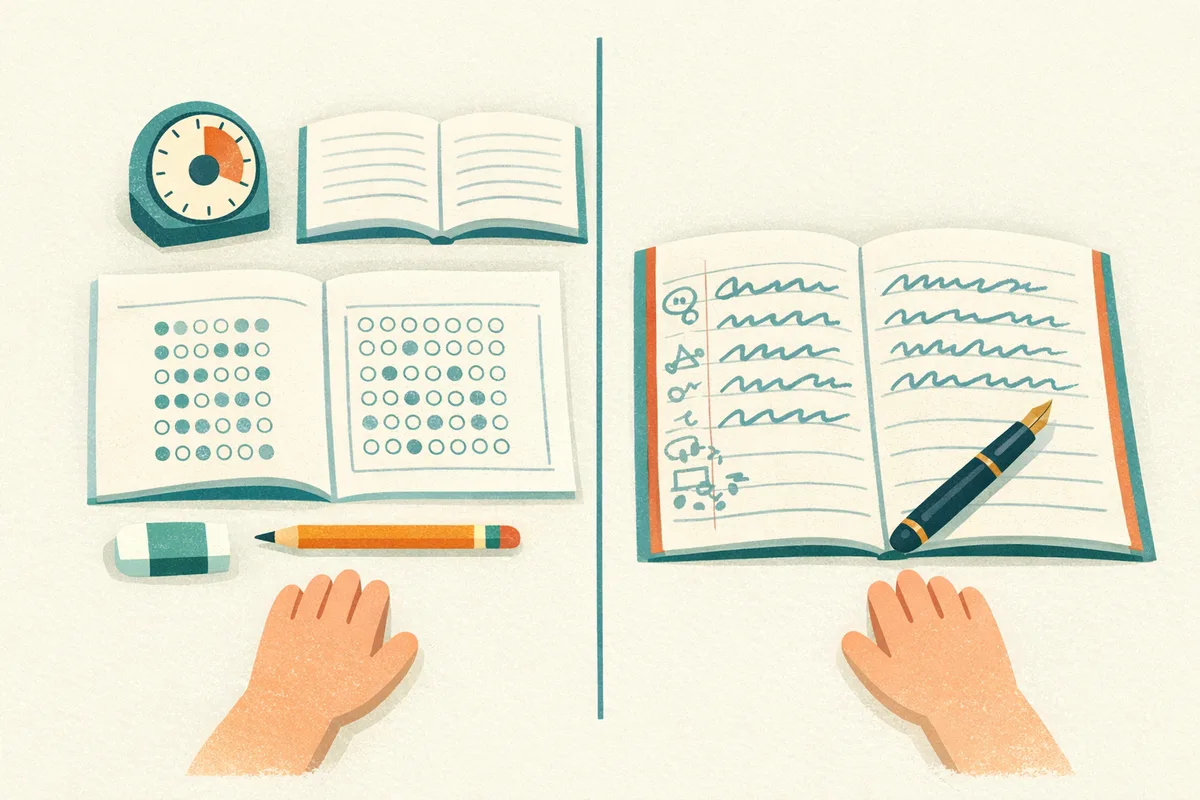
Answer-sheet transfer drill (GL, Kent). When answers go on a separate machine-marked sheet, a child who solves every question correctly can still lose marks by slipping a row. This is a mechanical skill and it needs mechanical rehearsal: work the question in the booklet, transfer immediately, check the number matches. Practising only on worksheets where you circle the answer in place trains the wrong motion entirely.
Written working (CSSE). Written answer papers reward legible method and partial credit, and punish the habit of jumping to a bare number. Children who have only ever practised multiple choice often cannot show working under time pressure, because they have never had to.
No-going-back pacing (ISEB). Adaptive tests respond to answers as they arrive, which changes the psychology completely. There is no scanning ahead for easy marks and no leaving one to come back to. The habit to build is steady, committed answering without the safety net of review.
Broad Key Stage 2 coverage (FSCE). Where a board deliberately publishes nothing to practise from, the only sensible preparation is genuinely secure curriculum knowledge across the whole of Key Stage 2, rather than technique for a paper nobody has seen.
One practical note across all of them: if your child's board still includes non-verbal reasoning, it is the subject least likely to be covered at school, and our non-verbal reasoning question type guide is the fastest way to see what is actually tested. If your board has dropped it, skip that work entirely. For a first timed practice sample, Trace Learn offers a short GL-style mock: 24 original questions in 30 minutes. For a full rehearsal, check the local format and use a paper with the required subjects, question styles and timings.
Milestone seven, the final months: understand what a pass mark really is
This is where parents most often misread a practice score, so it is worth being precise.
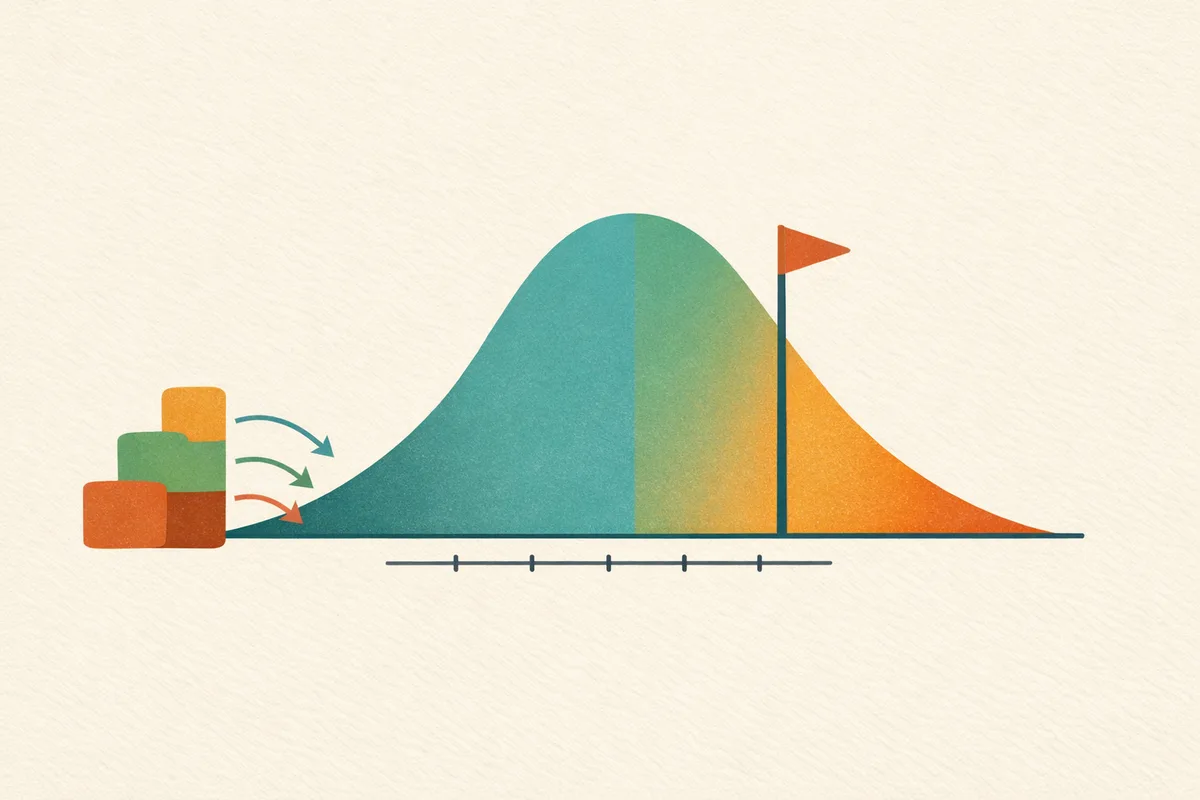
Raw marks are not what schools look at. In Buckinghamshire, GL Assessment marks the papers and marks are standardised for the child's age in years and months on the day of the test, with standardised scores ranging from 60 to 170. The Secondary Transfer Test Score is then weighted: 50% from the standardised verbal skills score, 25% mathematical and 25% non-verbal.
Three consequences follow. First, a summer-born child is not competing on raw marks against an autumn-born child, because age standardisation adjusts for that. Second, the weighting tells you where preparation time earns most: in Buckinghamshire, verbal skills carry half the score. Third, a threshold is a qualifying line, not a ranking. A score of 121 or above qualifies for grammar school there, a level expected to be achieved by around 37% of children, and scoring above 121 confers no additional priority. Pushing a child from a comfortable qualifying score to a spectacular one buys nothing in that system.
Every area sets its own arrangements, so those specific numbers apply to Buckinghamshire and nowhere else. The mechanism, though, is shared: raw marks, then age standardisation, then weighting, then a locally set threshold. You can read the full Buckinghamshire marking explanation for the detail.
One related caution: no provider, tutor or platform can promise a place. Anyone quoting a guaranteed outcome is selling you something the admissions system cannot deliver.
Milestone eight, this week: confirm the board in writing
Finish the research with three concrete actions.
- Open the admissions page of each school on your list and find the sentence naming the test provider and the test date. Not a forum post, not a tutoring blog, not this article. The school's own page.
- Download the official familiarisation material for that board. GL's free familiarisation materials are the obvious starting point for most families, and CSSE publishes its own downloadable papers. Sit one paper with your child under something close to real conditions before you spend anything.
- Write the format on a sticky note. Multiple choice or written. Separate answer sheet or answers in the booklet. Adaptive or fixed. Paper or screen. Four lines that determine what good practice looks like for the next twelve months.
If that comparison has left you unsure how much preparation your child actually needs, our free practice papers with answers are a low-pressure way to find a baseline before committing to a routine.
The SERP will keep telling you about GL's four subjects. The more useful truth is that five boards exist, one of them has quietly changed identity, one is brand new and moves the exam a year earlier, and the format your child meets should decide how they practise. Get the board right first, and everything else becomes a much smaller problem.
Topics
- gl assessment
- cem
- iseb
- csse
- exam boards
- grammar schools