
 Length 2:41
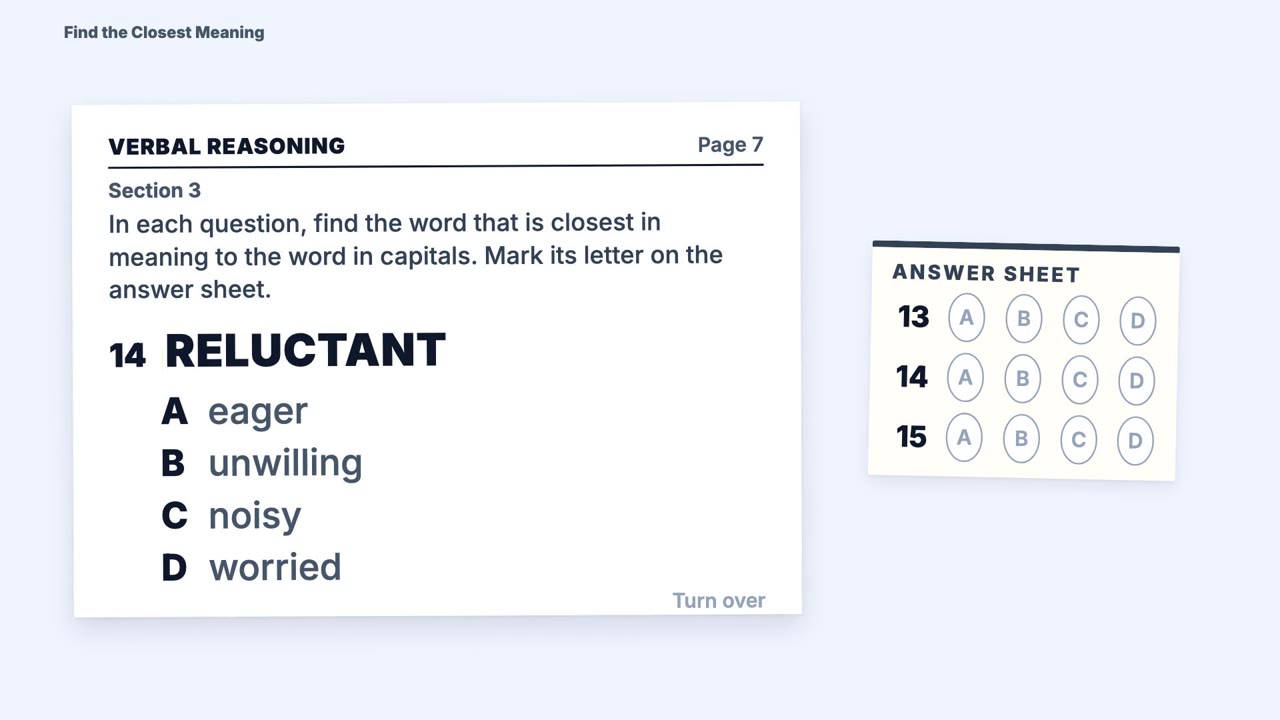
Find the Closest Meaning
Select closest meaning
11+ Verbal Reasoning · Vocabulary
A short worked example (2:38) for one 11+ verbal reasoning skill: Select opposite meaning.
This video shows how to choose the option with the most opposite meaning to a given word. Watch an 11+ verbal reasoning question solved step by step.
Turn on captions with the CC button. The full transcript is below the video.
Every word of the video, to read along or to skim before watching.
Two words can both feel different from a target, but only one can be its true opposite. The trick is not spotting a word that simply does not match. You are hunting for the word that pulls furthest in the other direction.
Picture a meaning line. Hot stands at one end, and cold stands at the other. They name opposite ends of the same idea: temperature. First, say the target in your own words. Then ask, "What would reverse this meaning?" That question gives your search a clear direction. Now test every option. Replace the target with each choice, or place the pair on your meaning line. A true opposite should make a strong, sensible pair, like enter and leave. Cross out words that mean nearly the same thing. Be careful: different does not always mean opposite. Banana is not the opposite of noisy; it is merely unrelated. If two words do not share a sensible meaning scale, they cannot sit at opposite ends. Choose the clearest reversal, not the strangest choice.
Let's work through an example. Choose the word most opposite in meaning to ancient. The options are: A, modern; B, tiny; C, broken; D, famous; E, stone. We need one option that reverses ancient. Ancient means very old, especially from a long time ago. Imagine a timeline stretching from long ago to the present. Now test the choices. Tiny describes size. Broken describes condition. Famous describes how well known something is. Stone names a material. Each is different from ancient, but none reverses age. Modern means belonging to the present or recent times. On our timeline, modern sits across from ancient. That is a direct reversal of the same idea: age in time. So the explicit answer is A, modern. Notice why we checked the relationship, instead of grabbing any unfamiliar word.
Remember: define the target, find its meaning scale, and choose the word at the opposite end. Reject synonyms and unrelated distractions. You can now spot the strongest reversal with confidence - opposite solved!
Watch these next. The first ones teach the skills closest to this one.
Length 2:41Select closest meaning
 Length 2:29
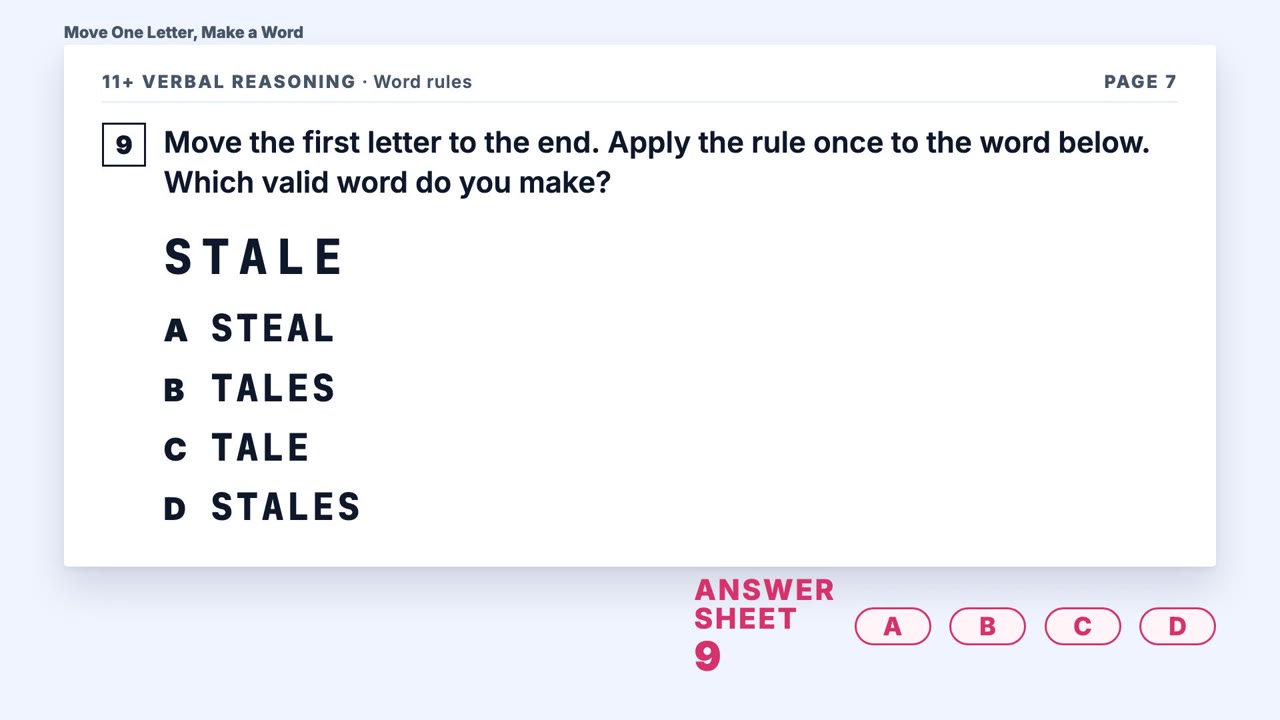
Apply a word transformation rule
 Length 2:25
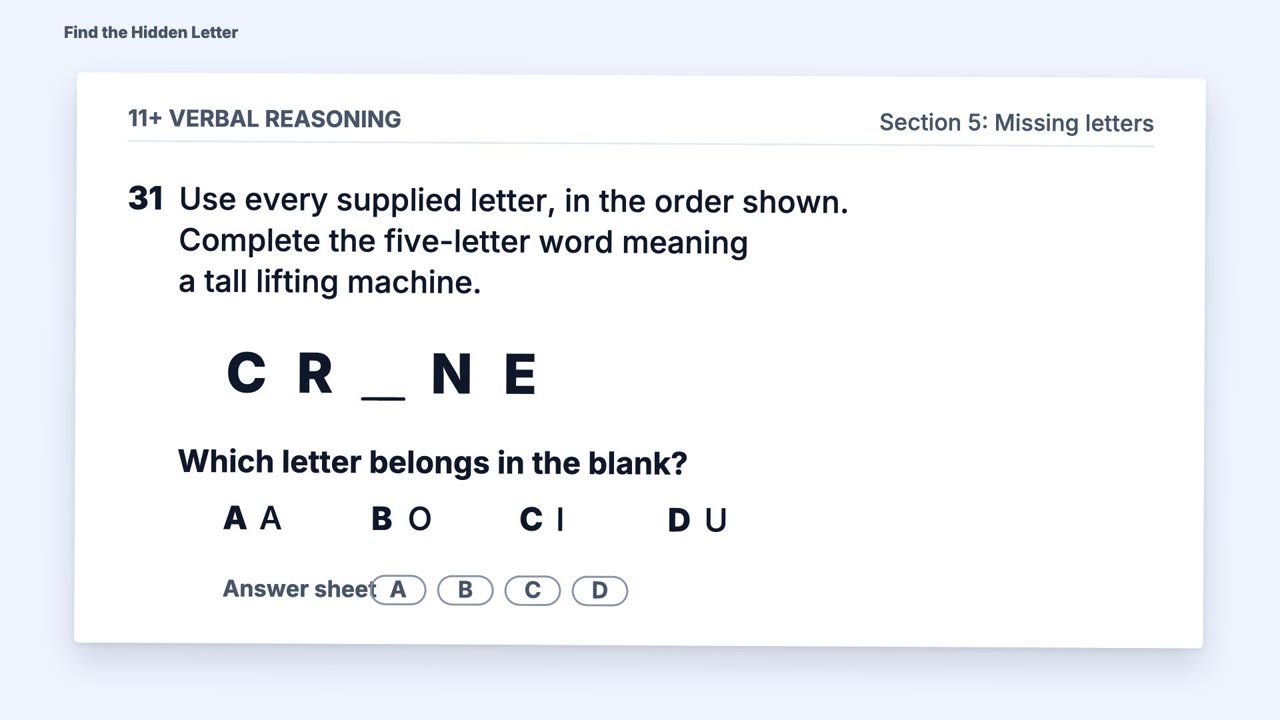
Complete a word with a letter
The free diagnostic checks maths, English and both kinds of reasoning, and shows what to practise next. No card is required.