
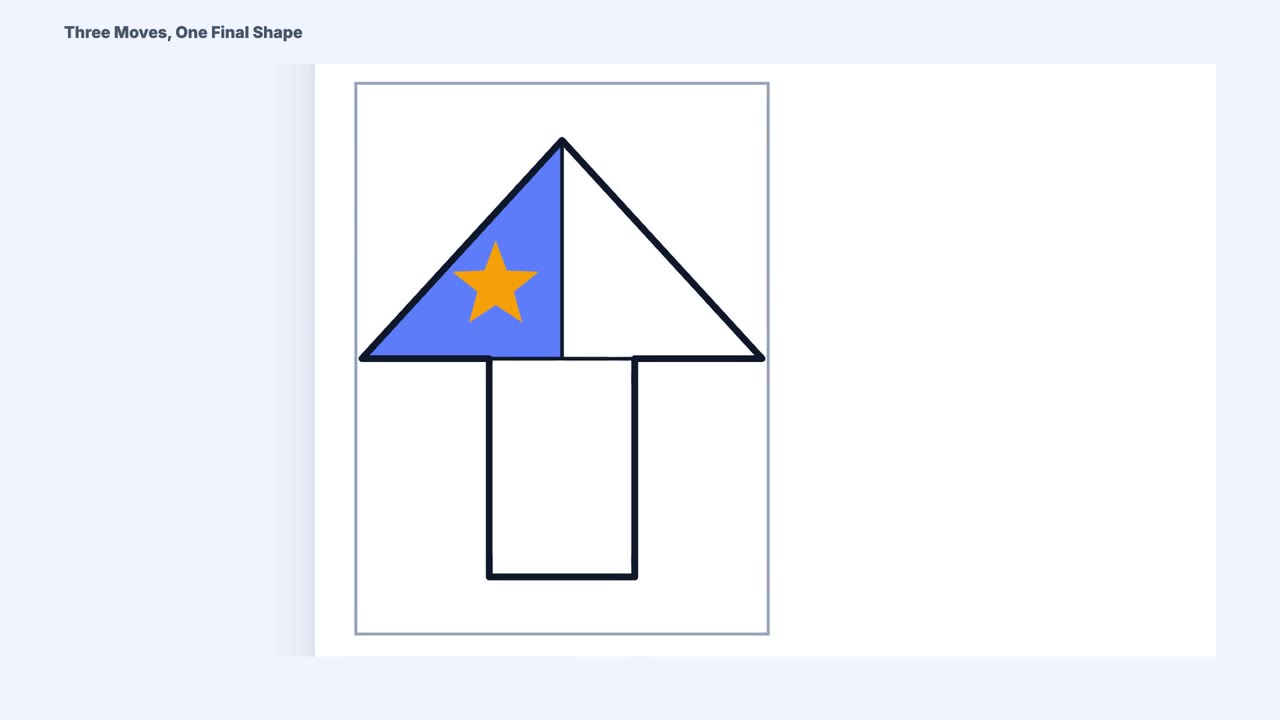
 Length 2:39
Three Moves, One Final Shape
Compose a visual transformation sequence
11+ Non-verbal Reasoning · Transform
A short worked example (2:35) for one 11+ non-verbal reasoning skill: Rotate a visual figure.
This video shows how to follow every marked part of a figure as it turns through a single rotation. Watch an 11+ non-verbal reasoning question solved step by step.
Turn on captions with the CC button. The full transcript is below the video.
Every word of the video, to read along or to skim before watching.
A figure can turn without changing what it is. But one tiny mark makes the answer tricky... Can you rotate the WHOLE figure, keeping every corner, stripe and dot in the right relationship? Watch what travels together.
Picture an arrow-shaped tile pointing upwards. A blue dot sits beside its left edge, and the pointed tip is striped. Turn the tile one quarter-turn clockwise. The tip swings to the right. The blue dot travels to the top edge. Nothing swaps sides or changes its marking. Use a simple tracking trick. First trace the outside shape. Next follow each marked part through the SAME turn. Finally compare distances: the dot must stay just as close to its neighbouring edge, and the striped tip remains the same tip. Do not rotate only the easiest mark. If the outline turns but the dot stays behind, the figure has broken apart. And do not flip it like a mirror. A rotation changes direction, not handedness, shading or number of parts.
Let's work through an example. A question shows a thick L-shaped figure. Its long arm runs upwards, then a short foot bends right at the top. A black circle sits inside the bottom end, and the foot is grey. Which option shows this complete figure after one quarter-turn clockwise? Start with the outline. The upward arm turns to point right. The right-pointing foot turns to point down, so the rotated L lies across the top and bends down at its right end. That rules out any option bending upwards or down on the left. Now track the circle. It began inside the bottom end. That end has become the left-hand end, so the circle must appear there. Track the grey foot too. The same foot is now the downward section. Choose the option with a right-facing long arm, a downward foot, the circle at the left end, and grey shading on the foot. That is option C.
Remember: rotate the outline, then carry EVERY mark through the same turn. Track one complete figure, and choose confidently!
Watch these next. The first ones teach the skills closest to this one.
Length 2:39Compose a visual transformation sequence
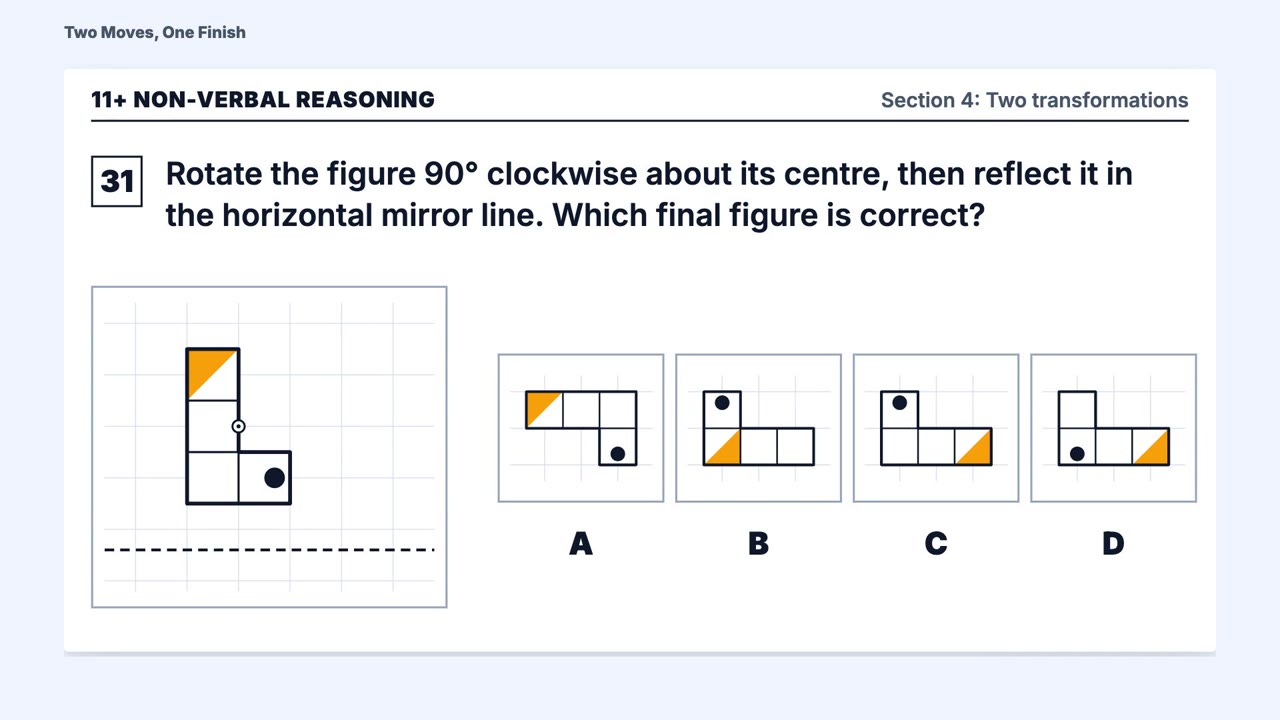 Length 2:47
Compose two visual transformations
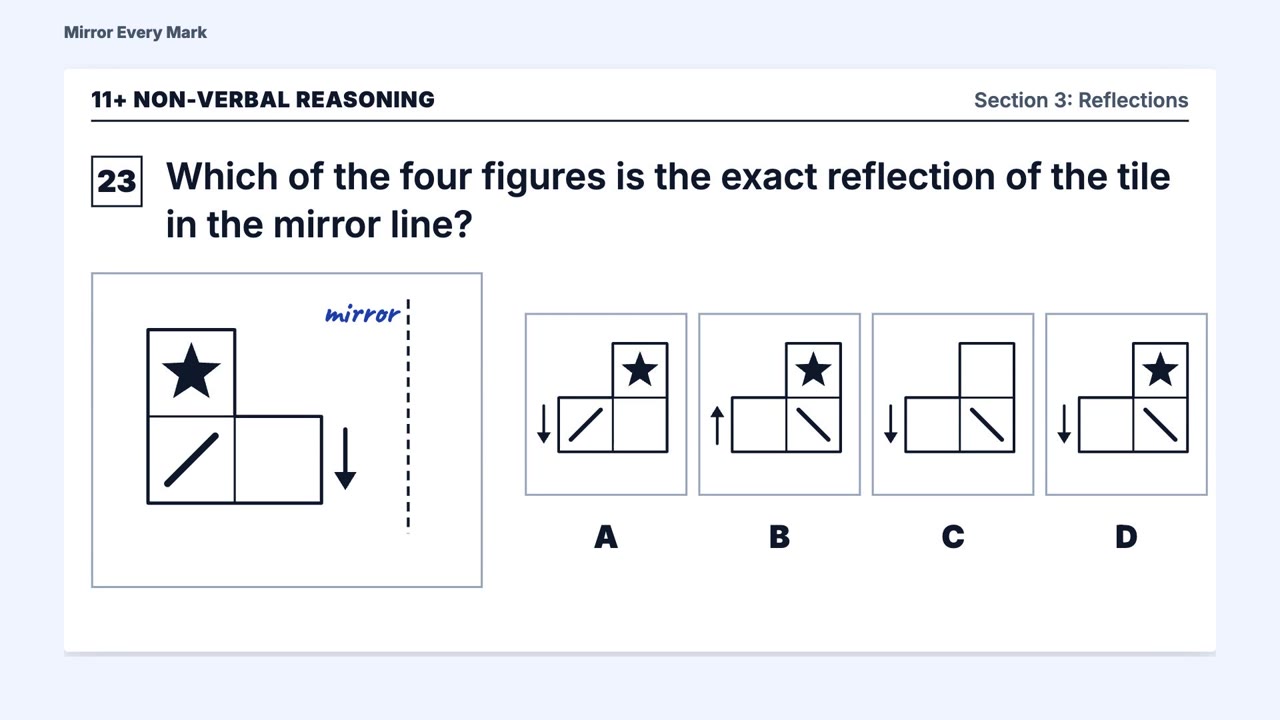 Length 2:35
Reflect a visual figure
The free diagnostic checks maths, English and both kinds of reasoning, and shows what to practise next. No card is required.