
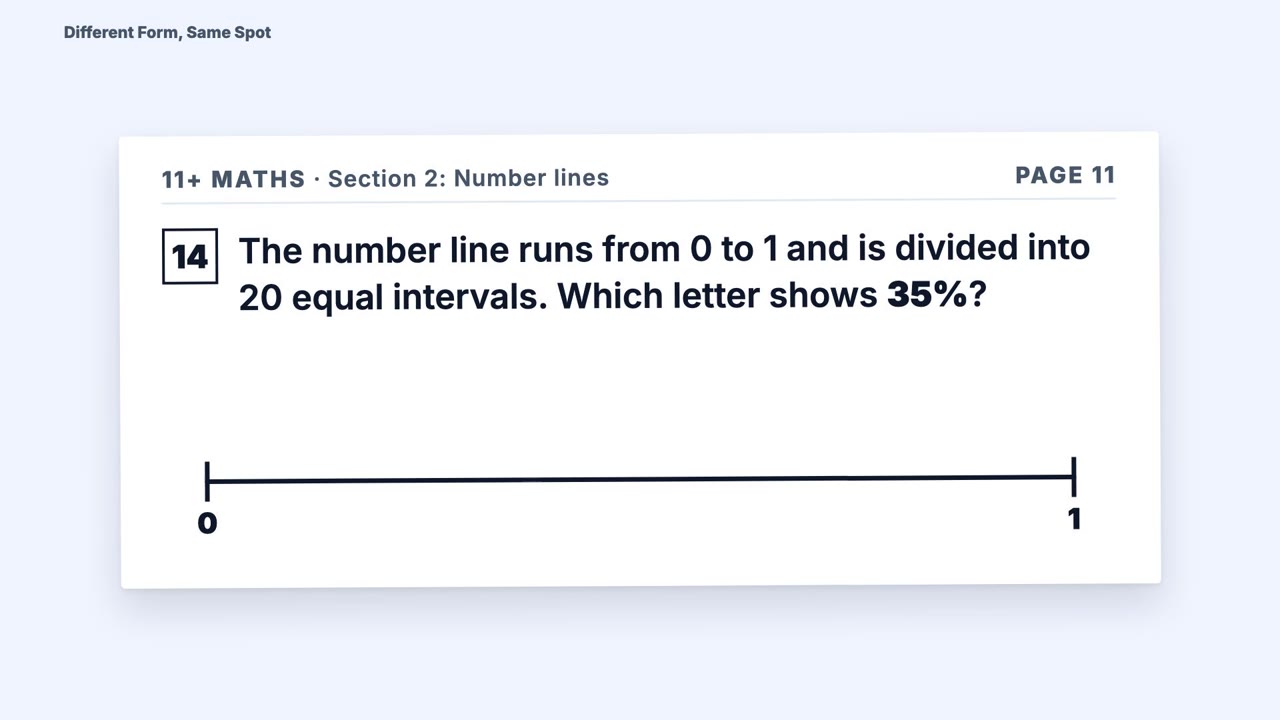
 Length 2:36
Different Form, Same Spot
Locate an equivalent value
11+ Maths · Fractions, decimals and percentages
A short worked example (2:21) for one 11+ maths skill: Identify a represented fraction.
This video shows how to count equal parts to name the fraction shown by a divided whole. Watch an 11+ maths question solved step by step.
Turn on captions with the CC button. The full transcript is below the video.
Every word of the video, to read along or to skim before watching.
Two shapes each have three shaded pieces. So, they must show the same fraction... right? Not so fast! One tiny detail changes EVERYTHING. Can you spot it before the fractions are revealed?
A fraction describes equal parts of ONE whole. Look at this chocolate bar. Every piece is the same size, and all the pieces fit together to make one complete bar. That means we can name the shaded fraction fairly. First, count every equal part in the whole. There are eight. That total gives us the bottom number, called the denominator. It tells you what kind of fraction you are counting: eighths. Next, count only the shaded parts. One, two, three, four, five. That gives us the top number, called the numerator. Five parts out of eight equal parts means the fraction is five eighths. But watch this... these pieces are NOT equal. Even if three are shaded, you cannot call them three fifths. Fractions need equal shares of one whole. Always check the pieces before you count.
Now try a GL-style question. A rectangle is split into ten equal squares. Some are blue. What fraction of the whole rectangle is blue? The choices are three tenths, seven tenths, seven thirds, and ten sevenths. Start with the whole. The outer border contains every square, so we have one complete rectangle. Are its parts equal? Yes. Each square has the same height and width. The diagram is ready to count. Count ALL the equal parts, not just the blue ones. There are ten squares altogether, so the denominator is ten. We are looking for tenths. Straight away, you can remove any answer that does not end in tenths. Now count the blue squares. One, two, three, four, five, six, seven. The numerator is seven. Seven blue parts out of ten equal parts gives seven tenths. Select seven tenths... nailed it!
Remember: check for one whole with EQUAL parts. Count every part for the denominator, then count the represented parts for the numerator. Whole, equal, total, shown. Follow that order, and you can name the fraction with confidence!
Watch these next. The first ones teach the skills closest to this one.
Length 2:36Locate an equivalent value
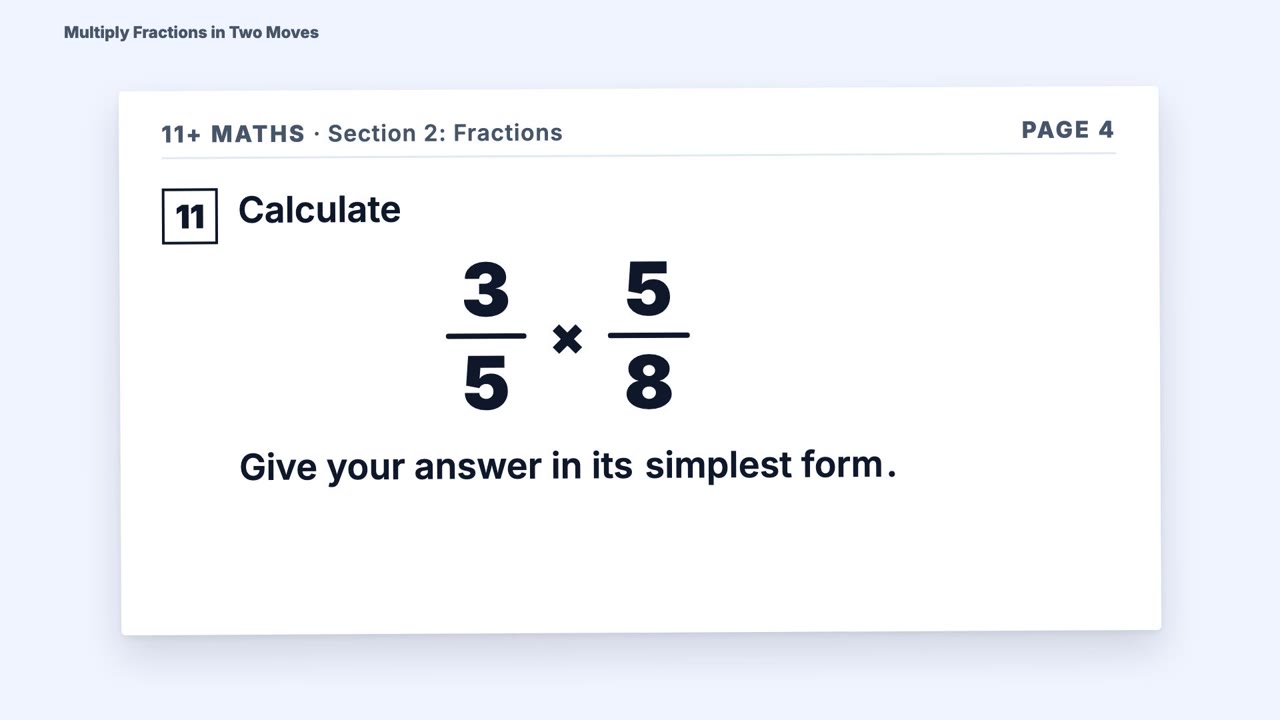 Length 2:35
Multiply fractions
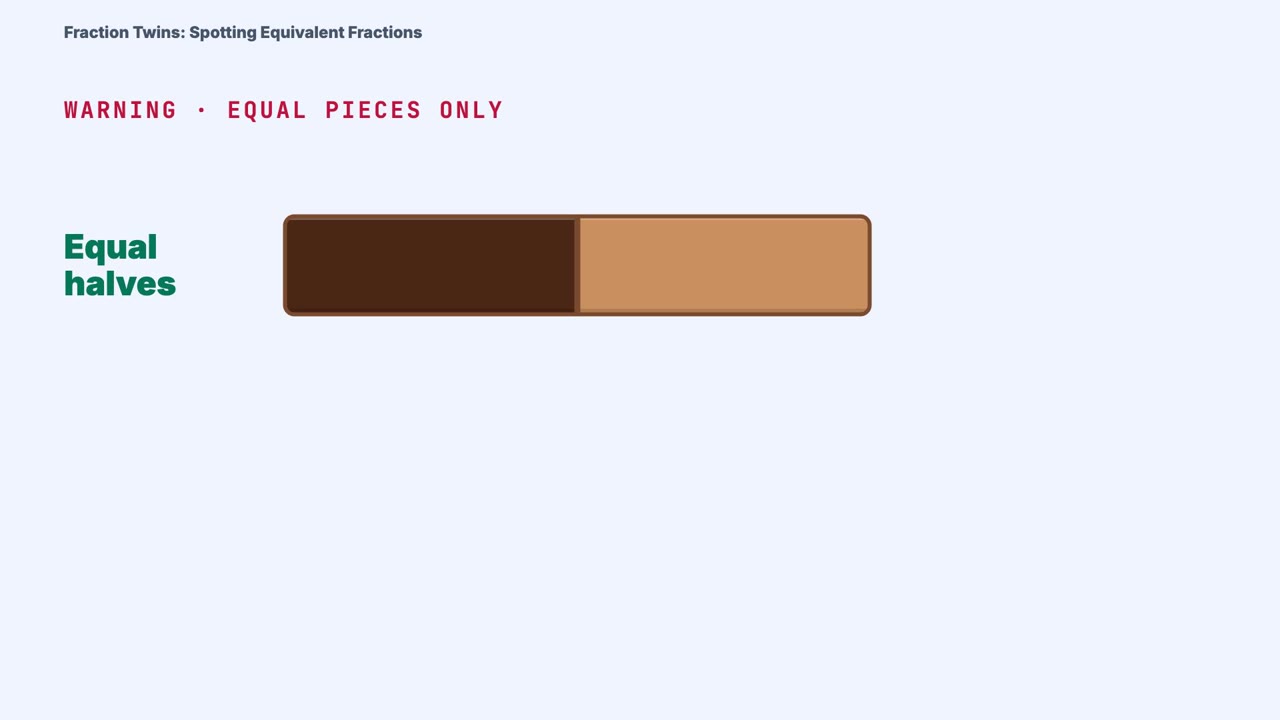 Length 2:31
Recognise equivalent fractions
The free diagnostic checks maths, English and both kinds of reasoning, and shows what to practise next. No card is required.