
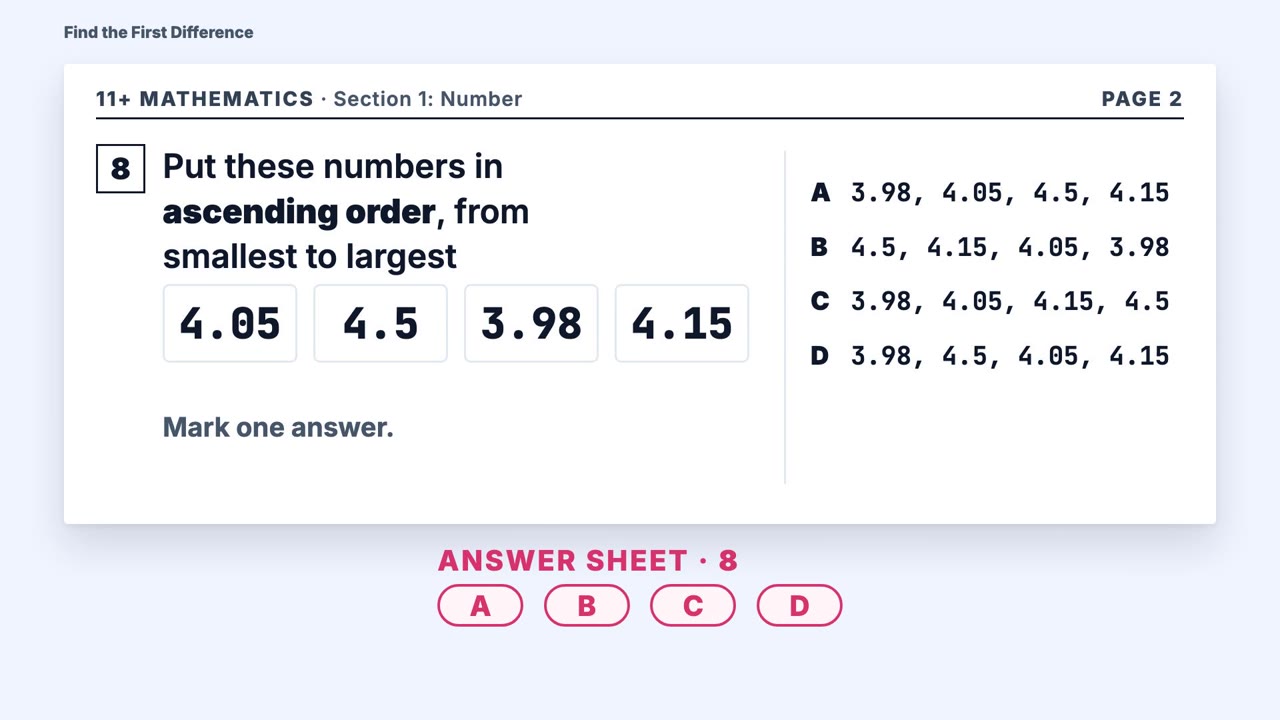
 Length 2:34
Find the First Difference
Compare and order numbers
11+ Maths · Number
A short worked example (2:41) for one 11+ maths skill: Calculate a whole-number operation.
This video shows how to carry out a addition, subtraction, multiplication or division with whole numbers. Watch an 11+ maths question solved step by step.
Turn on captions with the CC button. The full transcript is below the video.
Every word of the video, to read along or to skim before watching.
A single symbol can turn the same two whole numbers into completely different answers. So, before your pencil moves, what should your eyes find?
First, spot the operation sign. A plus means add, a minus means subtract, a multiplication sign means multiply, and a division sign means divide. The question has already chosen the operation for you. Your job is to calculate it accurately. For larger numbers, organise the digits by place value. Line up ones with ones, tens with tens, hundreds with hundreds, and thousands with thousands. Remember, a digit is not its value. In three thousand seven hundred and forty-eight, the seven represents seven hundred, not just seven. Work one column at a time, starting where your method begins. Keep every exchanged or carried amount in the correct next column. Then estimate or use the inverse operation to see whether your final answer is sensible.
Let's work through an example. Calculate three thousand seven hundred and forty-eight plus two thousand five hundred and eighty-six. Write the numbers in columns, with the plus sign clearly shown. Begin with the ones. Eight ones plus six ones equals fourteen ones. Write four in the ones column, then carry one ten into the tens column. Now add the tens. Four tens plus eight tens, plus the carried ten, makes thirteen tens. Write three in the tens column, and carry one hundred. Next, seven hundreds plus five hundreds, plus the carried hundred, makes thirteen hundreds. Write three, and carry one thousand. Finally, add the thousands. Three thousands plus two thousands, plus the carried thousand, makes six thousands. The answer is six thousand three hundred and thirty-four. A quick estimate, about three thousand eight hundred plus two thousand six hundred, gives about six thousand four hundred. Our exact answer fits.
Find the stated sign, respect each digit's place value, and calculate one careful step at a time. Keep your columns straight, check that the answer is sensible... and you can tackle any whole-number operation with confidence.
Watch these next. The first ones teach the skills closest to this one.
Length 2:34Compare and order numbers
 Length 2:44
Continue a number sequence
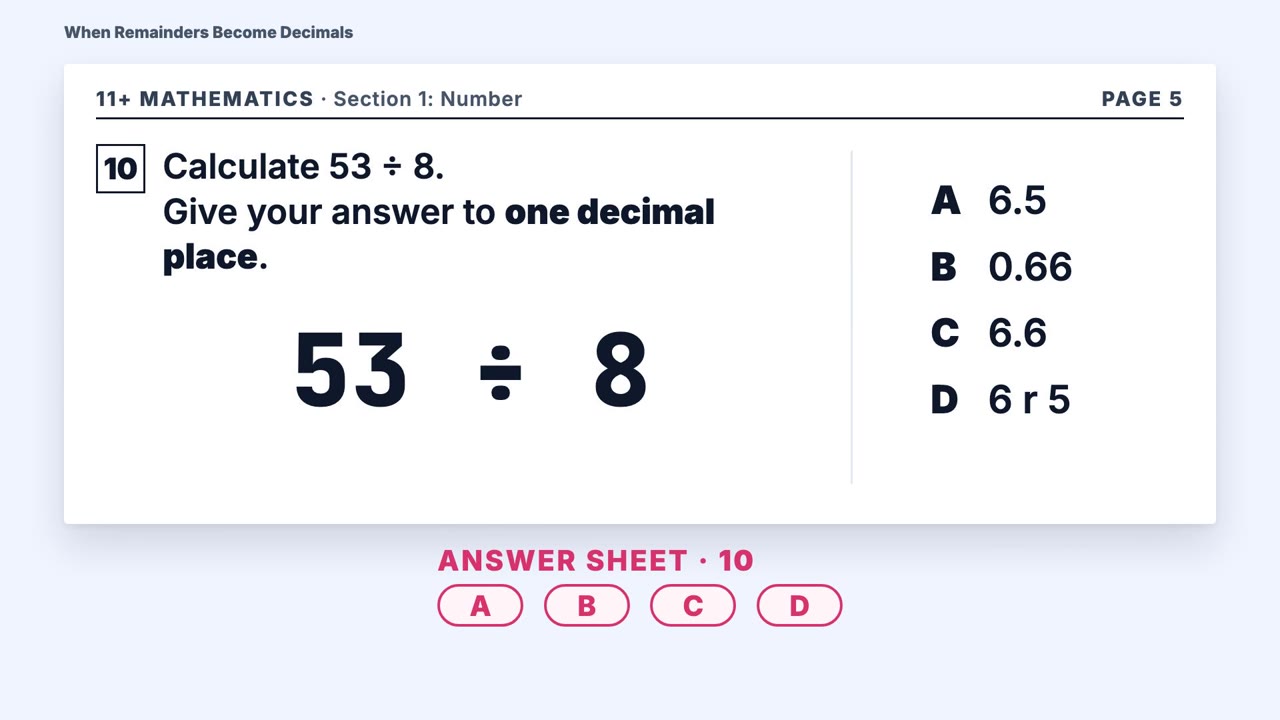 Length 2:33
Divide whole numbers or decimals
The free diagnostic checks maths, English and both kinds of reasoning, and shows what to practise next. No card is required.