
 Length 2:49
Make the Speaker Clear
Punctuate direct speech
11+ English · Punctuation
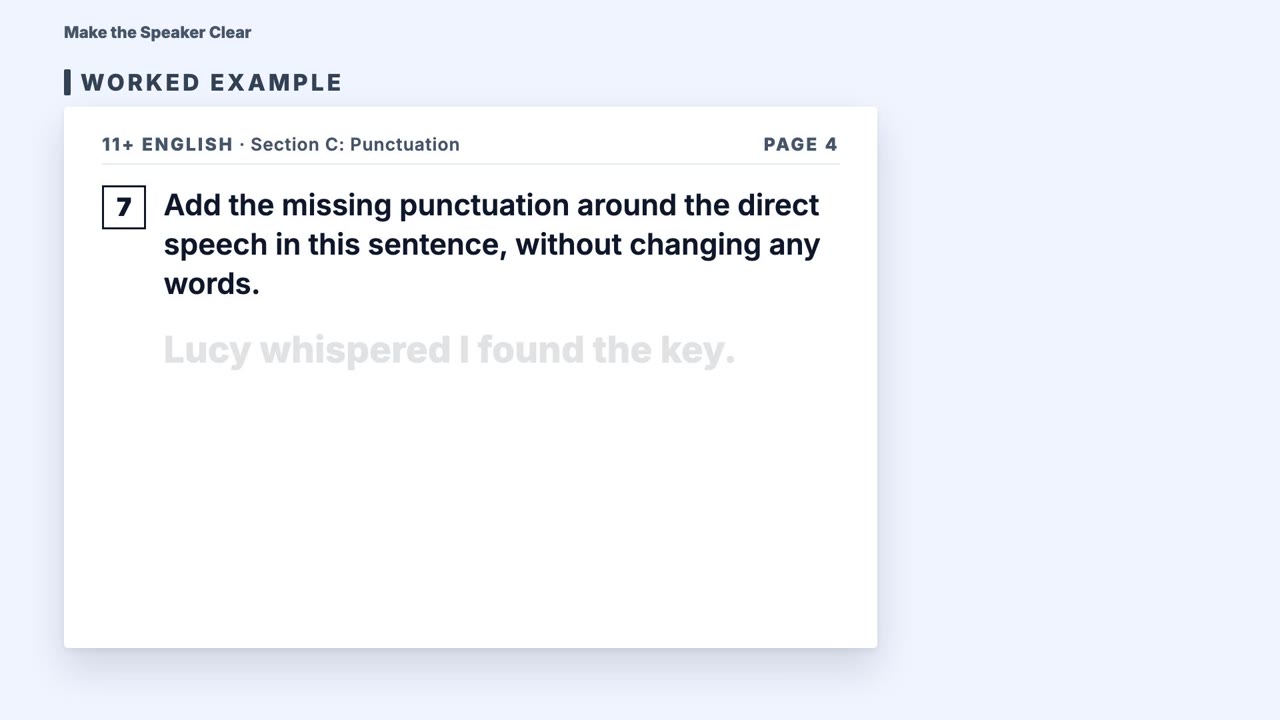
A short worked example (2:37) for one 11+ English skill: Punctuate direct address.
This video shows how to use commas to separate the name of the person being spoken to from the sentence. Watch an 11+ English question solved step by step.
Turn on captions with the CC button. The full transcript is below the video.
Every word of the video, to read along or to skim before watching.
A name can hide inside a sentence, yet it is doing a special job. It is not part of the message itself. It shows WHO the speaker is talking to... and two tiny commas can reveal it.
Look at: "Oscar, bring the map." Oscar is the named addressee. The speaker could remove the name and still say, "Bring the map." Because Oscar comes first, a comma separates his name from the rest of the sentence. Think: name, pause, message. Now the name moves: "Please, Oscar, bring the map." The message begins, then turns towards Oscar, then continues. Put one comma before his name and one after it. The pair acts like two clear gates around the person being addressed. If the name comes last, write: "Bring the map, Oscar." Only one comma is needed before the name. These are commas, not apostrophes. An apostrophe stays inside a word: in "you're", it replaces a missing letter; in "Oscar's map", it shows possession. It never fences off a person.
Let's work through an example. An 11+ question says: Insert only the commas needed to show the named addressee. The sentence is, "Before you leave Daniel please put Aisha's coat away because you're on cloakroom duty." Keep every word in the same order. First, find the person being spoken to. It is Daniel. Read without that name: "Before you leave, please put Aisha's coat away because you're on cloakroom duty." The message still works. So Daniel is extra direct address, sitting in the middle of the message. Place a comma just before Daniel, after "leave". Place another just after Daniel, before "please". Leave both apostrophes exactly where they are: Aisha's shows possession, while you're means "you are". The completed answer is: "Before you leave, Daniel, please put Aisha's coat away because you're on cloakroom duty."
Spot the person spoken to, then fence off that name with commas: one beside an end name, or two around a middle name. Keep apostrophes inside words. You can now make direct address crystal clear!
Watch these next. The first ones teach the skills closest to this one.
Length 2:49Punctuate direct speech
 Length 2:45
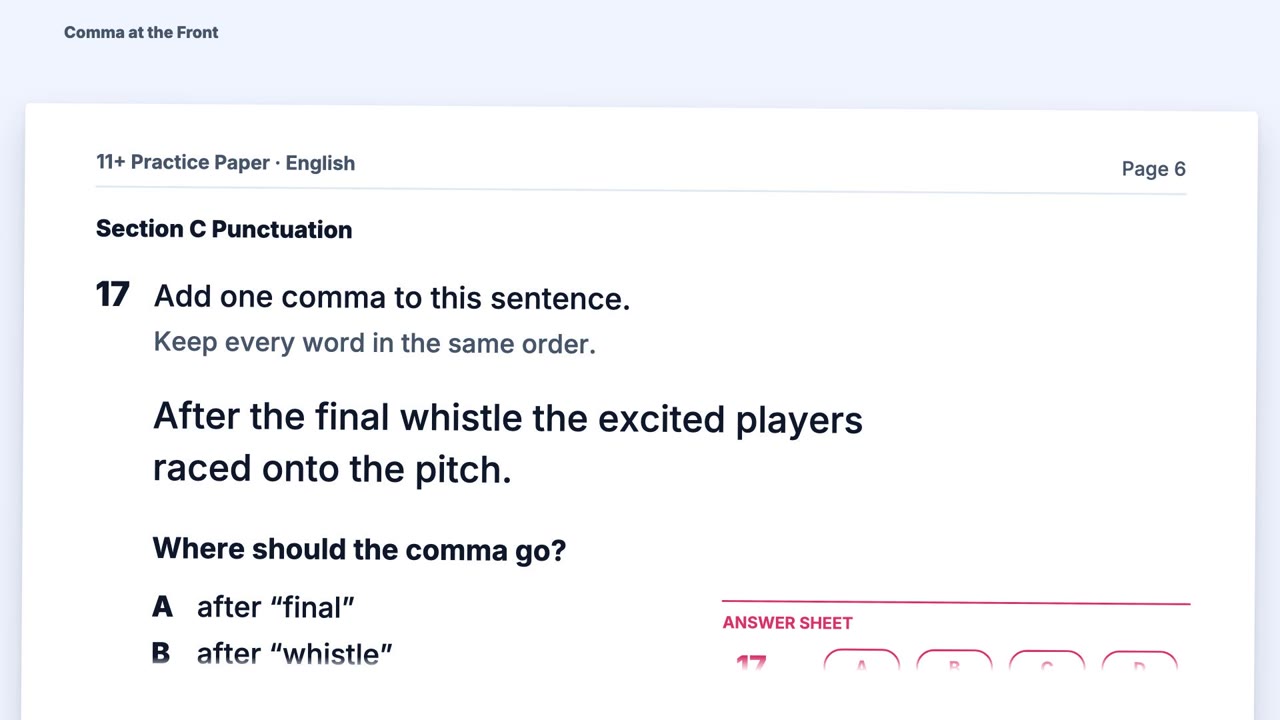
Punctuate a fronted adverbial
 Length 2:35
Punctuate a list
The free diagnostic checks maths, English and both kinds of reasoning, and shows what to practise next. No card is required.