
11 Plus Reading List by Year Group
A year-by-year 11 plus reading list where every title carries a reading age, the exam skill it builds, and a flag for the classics that recur as comprehension extracts. Built from the statutory Years 5 and 6 reading objectives, not personal taste.
 Elspeth Marlow
- 14 min read
Most 11 plus reading lists answer the question "which books?". Almost none answers the question parents actually have, which is "which book, for my child, next, and why?". A list of sixty titles sorted into Classics, Fantasy and Adventure tells you nothing about whether your Year 5 child, who reads confidently but skims, should be reading Holes or Tom's Midnight Garden this half term.
This list is built differently. Every title carries three pieces of information: a year-group band, an indicative reading age, and a skill tag naming the specific comprehension competency the book develops. Where a title is a public-domain classic of the kind that turns up repeatedly as a comprehension extract, it is flagged as dual-purpose. The skill tags are not invented labels. They are drawn from the statutory Years 5 and 6 reading objectives in the national curriculum, which is the same content the main test publishers say their English papers sit on top of.
That matters because reading is the highest-leverage thing you can do, and also the easiest to do badly. Ten minutes a night of a book that is two years below your child's level builds fluency but no inference. A book three years above builds resentment. The point of banding by reading age as well as year group is that you can cross-band deliberately instead of guessing.
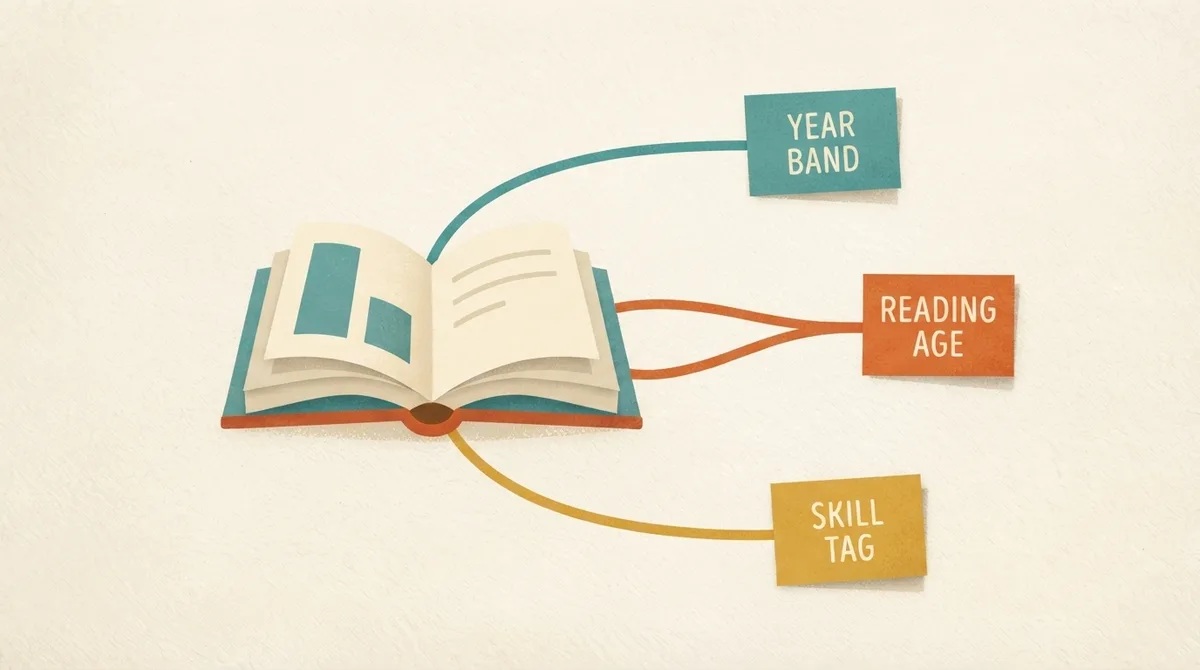
How to use this list: year bands, reading ages and skill tags
Myth: a reading list is a queue. Start at the top, work down, tick them off.
Reality: the year band tells you when a book is typically appropriate. The reading age tells you whether it will actually work for your child this term. Those two numbers come apart far more often than lists admit. A Year 5 child with a reading age of 9 should be reading from the Year 4 band with one stretch title running alongside, not battling through Year 6 texts because their birth certificate says so. A Year 4 child with a reading age of 12 should be reading up, with a parental eye on emotional content rather than difficulty.
The skill tags work like this:
- Inference-rich. The text withholds. Characters' motives have to be worked out from what they do, not what they say. This maps to the statutory requirement to draw inferences "such as inferring characters' feelings, thoughts and motives from their actions, and justifying inferences with evidence".
- Archaic vocabulary. Nineteenth and early twentieth century diction, longer sentences, unfamiliar registers. This is the single biggest shock in an exam extract.
- Unreliable or limited narrator. The reader knows more, or less, than the narrator does. Excellent preparation for viewpoint questions.
- Figurative language. Dense imagery and metaphor, matching the requirement to "discuss and evaluate how authors use language, including figurative language, considering the impact on the reader".
- Non-fiction retrieval. Information organised in headings, captions and sequences, which meets the requirement to read "books that are structured in different ways".
Run one band-appropriate book plus one stretch title at a time. Two books, not ten.
What 11 plus English actually tests
Myth: the 11 plus is a general knowledge test of how well-read a child is.
Reality: it tests a narrow set of assessable reading behaviours, and the boards say so in public. GL Assessment describes the 11 plus as "a single test or a series of tests, covering one or more of the following subjects: English, maths, verbal reasoning and non-verbal reasoning", and notes that its English and maths tests are "based mainly around curriculum content reached during the early part of Year 6" (GL Assessment FAQs). That is precisely why the Years 5 and 6 programme of study is the right frame for a reading list.
For independent schools, ISEB states that its Common Pre-Tests cover "mathematics, English (reading comprehension and grammar), verbal reasoning and non-verbal reasoning", usually sat in Year 6 or Year 7 (ISEB Common Pre-Tests). In Essex, CSSE runs an English paper lasting "sixty minutes with ten minutes additional reading time", paired with a published Continuous Writing mark scheme (CSSE). Formats vary by region, so check your own consortium, but the common core is comprehension plus writing.
The curriculum itself makes the volume argument better than any tutor can: "Reading widely and often increases pupils' vocabulary because they encounter words they would rarely hear or use in everyday speech" (national curriculum programmes of study). Reading is vocabulary work you do not have to schedule. Our 11 plus vocabulary list covers the words that survive contact with the exam paper.
Year 3 reading list (reading age 7 to 9): building the stamina habit
Myth: Year 3 is too early to think about the 11 plus.
Reality: nothing here is exam prep. The goal is a child who can hold a chapter book across a week without losing the thread.
- Fantastic Mr Fox, Roald Dahl. Reading age 7 to 8. Skill: sequencing and cause and effect. A first proper plot with consequences.
- The Owl Who Was Afraid of the Dark, Jill Tomlinson. Reading age 7 to 8. Skill: inference-rich, gently. Feelings are shown through behaviour.
- The Iron Man, Ted Hughes. Reading age 8 to 9. Skill: figurative language. Short, strange and full of imagery worth talking about.
- The Sheep-Pig, Dick King-Smith. Reading age 8 to 9. Skill: dialect and voice. Prepares the ear for non-standard speech in extracts.
- Charlotte's Web, E. B. White. Reading age 8 to 9. Skill: inference-rich, theme. Dual-purpose: appears regularly as an extract.
- Varjak Paw, SF Said. Reading age 8 to 9. Skill: unusual narrative viewpoint.
- The Firework-Maker's Daughter, Philip Pullman. Reading age 8 to 9. Skill: setting and description.
Year 4 reading list (reading age 8 to 10): first inference-rich chapter books
Myth: longer books mean harder books.
Reality: difficulty in Year 4 comes from what the author leaves unsaid, not from page count.
- Stig of the Dump, Clive King. Reading age 8 to 9. Skill: inference from action, ambiguity about what is real.
- The Lion, the Witch and the Wardrobe, C. S. Lewis. Reading age 8 to 10. Skill: allegory, slightly formal register. Dual-purpose: a frequent extract source.
- Kensuke's Kingdom, Michael Morpurgo. Reading age 9 to 10. Skill: first-person retrospective narration.
- Carrie's War, Nina Bawden. Reading age 9 to 10. Skill: inference-rich, historical context, adult motives seen through a child's eyes. Dual-purpose.
- The Wolves of Willoughby Chase, Joan Aiken. Reading age 9 to 11. Skill: archaic vocabulary and pastiche Victorian style. The best on-ramp to nineteenth century diction.
- Journey to the River Sea, Eva Ibbotson. Reading age 9 to 11. Skill: extended description, figurative language.
- The Nowhere Emporium, Ross MacKenzie. Reading age 9 to 10. Skill: plot structure and foreshadowing.
If you are working out when to formalise preparation around this reading, our guide on when to start 11 plus preparation sets out a realistic year-by-year plan.
Year 5 reading list (reading age 9 to 12): the year that decides the exam
Myth: Year 6 is the year that counts.
Reality: for most regions the paper is sat in early Year 6, so the reading that shapes performance happens in Year 5. This is the band to over-invest in.
- Skellig, David Almond. Reading age 10 to 11. Skill: inference-rich, sustained ambiguity. Almost nothing is explained. Ideal for "how do you know?" questions.
- Holes, Louis Sachar. Reading age 10 to 11. Skill: interwoven timelines, structure. Directly meets the requirement to read "books that are structured in different ways".
- Goodnight Mister Tom, Michelle Magorian. Reading age 10 to 12. Skill: character change, inference from dialect and silence. Dual-purpose.
- Tom's Midnight Garden, Philippa Pearce. Reading age 10 to 12. Skill: figurative language, limited narrator. Dual-purpose.
- The Explorer, Katherine Rundell. Reading age 10 to 11. Skill: precise descriptive verbs, survival narrative pace.
- Street Child, Berlie Doherty. Reading age 9 to 11. Skill: Victorian social context and archaic vocabulary.
- Northern Lights, Philip Pullman. Reading age 11 to 12. Skill: invented vocabulary in context, moral ambiguity. A genuine stretch title.
- The Hobbit, J. R. R. Tolkien. Reading age 10 to 12. Skill: formal narratorial voice, embedded verse. Dual-purpose.
- Wonder, R. J. Palacio. Reading age 9 to 11. Skill: multiple narrators, viewpoint comparison.
Year 6 reading list (reading age 10 to 13 and above): exam-level texts
Myth: in Year 6 you should swap books for papers.
Reality: papers diagnose, books build. Keep one demanding text running alongside practice. Comprehension extracts in Year 6 papers routinely sit above the average Year 6 reading age, which is the whole point of stretch titles.
- The Secret Garden, Frances Hodgson Burnett. Reading age 11 to 12. Skill: archaic vocabulary, Yorkshire dialect, character transformation. Dual-purpose and heavily extracted.
- Treasure Island, Robert Louis Stevenson. Reading age 12 and above. Skill: archaic vocabulary, unreliable first-person narration. Dual-purpose.
- A Christmas Carol, Charles Dickens. Reading age 12 and above. Skill: dense figurative language, long periodic sentences. Dual-purpose.
- Watership Down, Richard Adams. Reading age 12 and above. Skill: sustained metaphor, invented lexicon, epigraphs.
- The Machine Gunners, Robert Westall. Reading age 11 to 12. Skill: shifting viewpoint, moral complexity.
- Private Peaceful, Michael Morpurgo. Reading age 11 to 12. Skill: framed narrative and countdown structure.
- The Curious Incident of the Dog in the Night-Time, Mark Haddon. Reading age 12 and above. Skill: unreliable and limited narrator, the clearest example in modern fiction. Preview it first: some language is stronger than younger readers expect.
The classics that keep turning up as comprehension extracts
Myth: you can predict the extract if you read the right books.
Reality: you cannot, and no reputable source publishes a list of upcoming extracts. But paper setters have a strong practical bias toward out-of-copyright prose, because it is free to reproduce and reliably formal in register. That makes a handful of titles genuinely dual-purpose: enjoyable now, and familiar territory if a similar passage appears.
The recurring cluster is The Secret Garden, The Railway Children, Treasure Island, A Christmas Carol and other Dickens openings, The Wind in the Willows, The Jungle Book, Black Beauty, Anne of Green Gables and Peter Pan. Read one or two properly rather than skimming all nine. The transferable gain is comfort with the sentence shape, not recognition of the plot.
This is also the statutory expectation. Years 5 and 6 pupils should be "increasing their familiarity with a wide range of books, including myths, legends and traditional stories, modern fiction, fiction from our literary heritage, and books from other cultures and traditions". Literary heritage is written into the curriculum, not bolted on by tutors. If you want to see how those extracts convert into question types, our guide to 11 plus comprehension questions works through each format.
Non-fiction and poetry: the sections most lists skip
Myth: the exam is about stories, so read stories.
Reality: the curriculum requires "reading for a range of purposes", and non-fiction retrieval questions appear in plenty of regional papers. Poetry appears less often but rewards enormously in creative writing, where imagery is the fastest route to marks.
- A Short History of Nearly Everything (Illustrated), Bill Bryson. Reading age 11 and above. Skill: non-fiction retrieval, explanatory structure.
- The Lost Words, Robert Macfarlane and Jackie Morris. Reading age 9 and above. Skill: figurative language, precise nature vocabulary.
- A Poem for Every Night of the Year, edited by Allie Esiri. Reading age 9 and above. Skill: form, rhythm, one short text per sitting.
- Please Mrs Butler, Allan Ahlberg. Reading age 8 to 10. Skill: voice and tone, an easy poetry entry point.
- A weekly children's news digest or magazine. Skill: skimming, headline and caption reading, summarising.
The reluctant-reader track: a ladder, not a lecture
Myth: a reluctant reader needs an easier book.
Reality: they usually need a different route in. The curriculum is explicit that "by listening frequently to stories, poems and non-fiction that they cannot yet read for themselves, pupils begin to understand how written language can be structured". Listening is real reading development, with statutory backing.
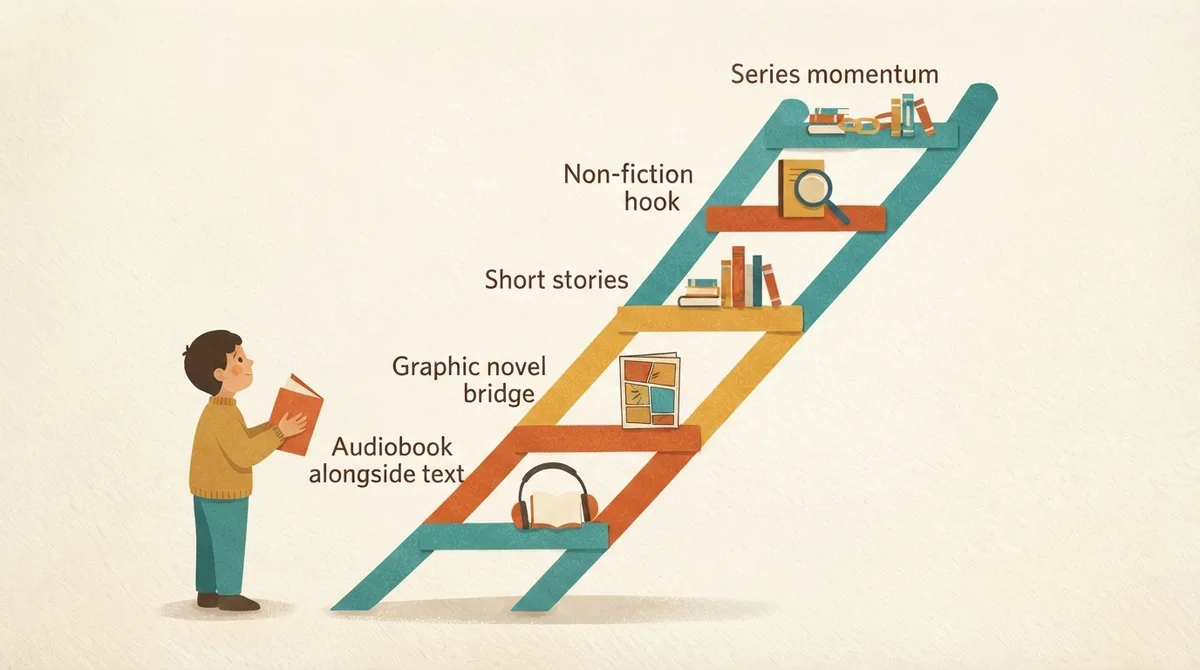
- Audiobook alongside the physical text. Same edition, child following the line. Two or three weeks of this rebuilds decoding stamina without the struggle.
- Graphic-novel bridges. The Arrival by Shaun Tan, or illustrated editions of familiar novels. Inference from images is still inference.
- Short stories and single chapters. A ten-page unit that ends is worth more than a 300-page book that does not. Anthologies and Just So Stories work well.
- Non-fiction hooks. Let the subject carry the reading: football, space, disasters, cookery. Retrieval practice arrives free.
- Series momentum. Once a child finishes one book willingly, a series removes the choosing friction that stops most reluctant readers dead.
Move up one rung only when the current rung is genuinely comfortable. Dropping back a rung for a fortnight is not failure.
Turning ten minutes of reading into exam practice
Myth: reading counts as revision.
Reality: reading builds the raw material. Converting it takes about four minutes a week.
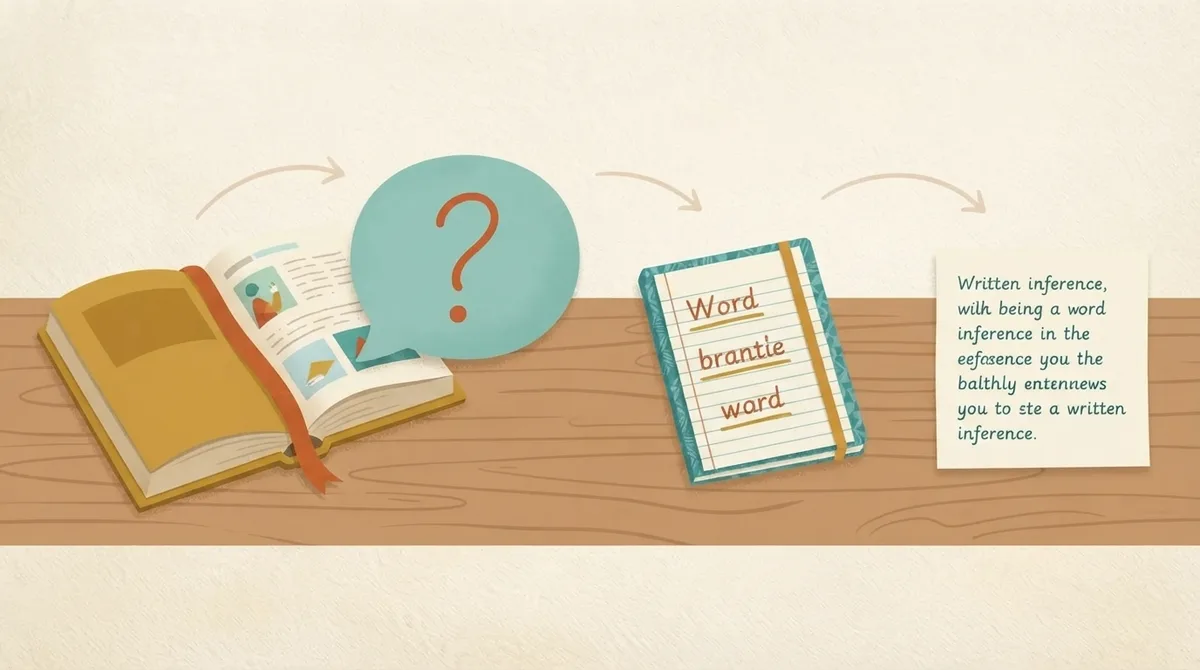
Once a week, after a chapter, do this:
- Ask one inference question. "How do you think she felt there? What in the text makes you say that?" The second half is the whole exercise, because the curriculum asks pupils to justify inferences "with evidence".
- Collect three words. Not defined for them: guessed from context first, then checked. Three a week is around 120 a year.
- Ask one language question. "Why did the author choose that word instead of a plain one?"
- Write two sentences. A description of one setting from the chapter, in the child's own words. This feeds the extended writing task directly.
That is the loop we build into structured practice at Trace Learn, where paper tests sit alongside the reading rather than replacing it. The same evidence-first habit applies across subjects, including the reasoning steps set out in our guide to 11 plus maths topics and question types.
Frequently asked questions
Is 70 per cent enough to pass the 11 plus? There is no publisher-set pass mark. GL Assessment directs parents asking about scores to "contact the admissions department of your local grammar school or local authority", because raw percentages are converted into standardised, age-adjusted scores and the qualifying threshold is set locally. We explain the conversion in our guide to 11 plus standardised scores.
How many books does a child actually need to read? Roughly one band-appropriate book every two to three weeks from Year 4, plus one stretch title running slowly alongside. That is around 20 books a year, not 100. Depth beats volume.
What about archaic vocabulary? It is the most common reason a capable reader stalls in an exam extract. Address it with texts, not word lists: The Wolves of Willoughby Chase in Year 4, Street Child in Year 5, then The Secret Garden or Treasure Island in Year 6.
Can I print this list? Yes. Use your browser's print or save-as-PDF option on this page, or copy the band that matches your child into a note. There is no email gate.
My child is in Year 4 and reads well above their age. Should they read Year 6 titles? Read up on difficulty, but check emotional content first. War, bereavement and jeopardy land differently at nine than at eleven.
Does any of this replace practice papers? No. Reading builds the comprehension ceiling, papers build timing and question technique. If you want both structured together, start a plan that schedules reading alongside timed practice.
Topics
- 11 plus
- english
- reading
- comprehension
- parents