
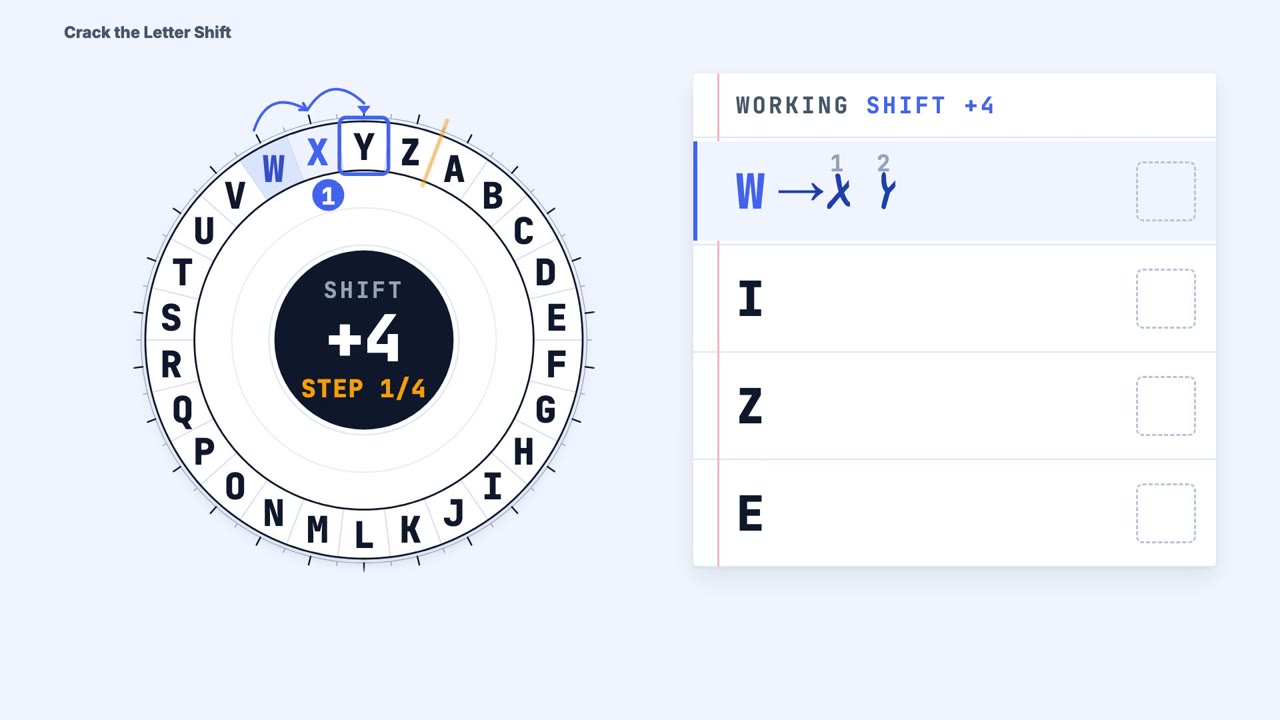
 Length 2:16
Crack the Letter Shift
Apply a letter shift
11+ Verbal Reasoning · Classification
A short worked example (2:27) for one 11+ verbal reasoning skill: Group words by relation.
This video shows how to group words or word pairs that share the same meaning relationship. Watch an 11+ verbal reasoning question solved step by step.
Turn on captions with the CC button. The full transcript is below the video.
Every word of the video, to read along or to skim before watching.
Four word pairs can look like a jumble. Yet three may be secretly linked by one invisible rule. Spot that rule, and the odd pair almost points to itself. Ready to become a relation detective?
A relation tells you how meanings connect. See puppy beside dog: a puppy is the young form of a dog. Now see kitten beside cat. That uses the SAME relation: young animal to adult animal. Do not group words just because they share a topic. Puppy and kennel both concern dogs, but one is an animal and one is its home. Ask for a precise sentence that fits every pair, in the same direction. First, name the connection in one pair. Next, test that exact sentence on the others. Keep the pairs that match. If the wording bends or reverses, that pair belongs elsewhere. On screen, matching pairs slide into one row, while a different relation starts another row.
Let's work through an example. Three word pairs share one relation. Which option does not belong? Option A: kitten, cat. Option B: calf, cow. Option C: foal, horse. Option D: cub, den. Which option is correct? Start with Option A. A kitten is the young form of a cat. Test Option B. A calf is the young form of a cow. The sentence fits exactly, and the direction stays young animal to adult animal. Now test Option C. A foal is the young form of a horse. Another exact match. But watch Option D... a cub is not the young form of a den. A den is a home. So Option D breaks the relation. Option D is the answer.
Remember: words can share a subject without sharing a relation. State the connection precisely, keep its direction, and test the SAME sentence against every pair. Trust your rule, not the first association that pops into your head. When every match clicks into place, you have found the group - and you can choose the odd one confidently!
Watch these next. The first ones teach the skills closest to this one.
Length 2:16Apply a letter shift
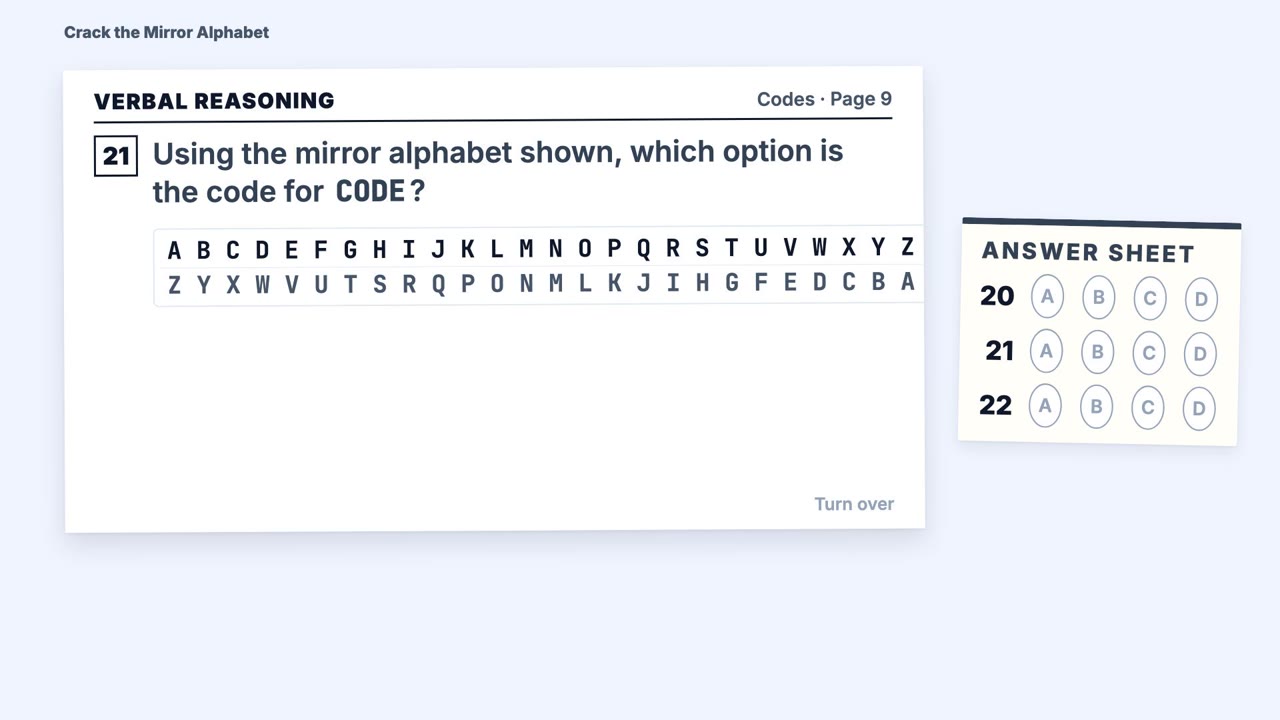 Length 2:16
Apply mirrored alphabet pairing
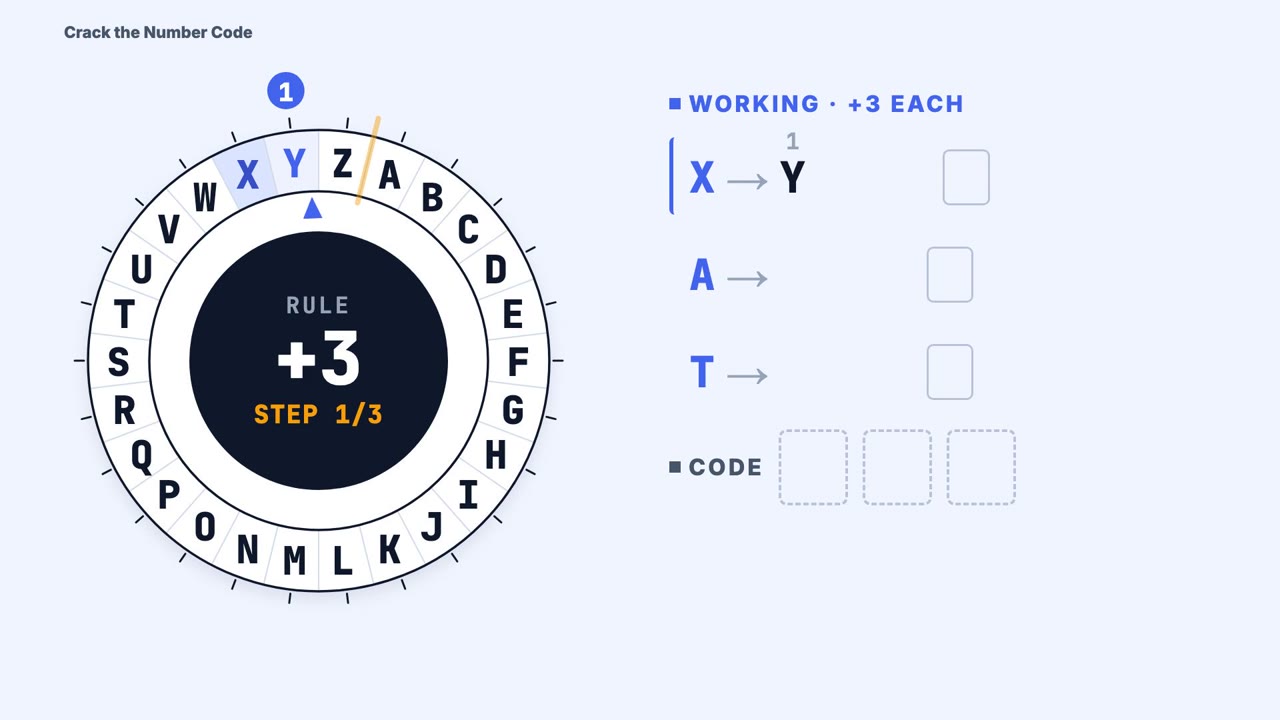 Length 2:19
Apply a number code rule
The free diagnostic checks maths, English and both kinds of reasoning, and shows what to practise next. No card is required.