
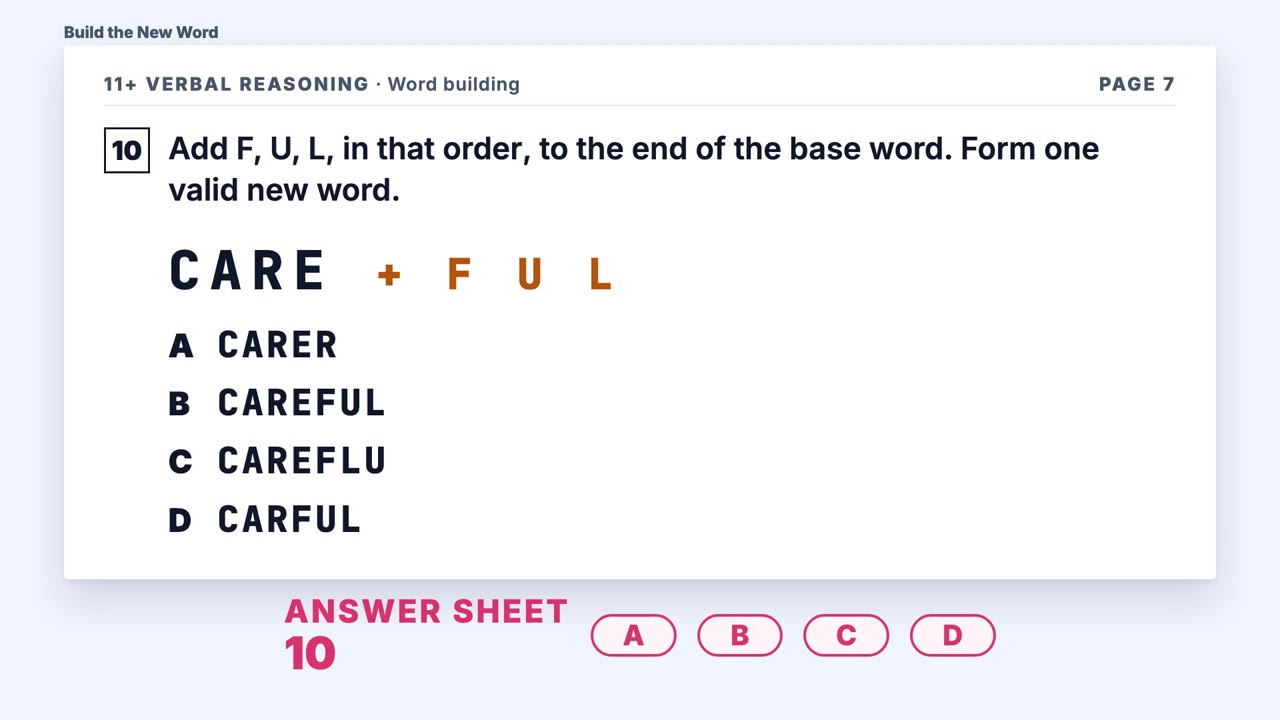
 Length 2:24
Build the New Word
Form a derived word
11+ Verbal Reasoning · Word
A short worked example (2:26) for one 11+ verbal reasoning skill: Form a compound word.
This video shows how to join two word parts to make a real compound word. Watch an 11+ verbal reasoning question solved step by step.
Turn on captions with the CC button. The full transcript is below the video.
Every word of the video, to read along or to skim before watching.
Two tiny word parts can click together and unlock a brand-new word. But there is a catch... every supplied letter must come along. Can you spot the perfect join before the pieces snap into place?
A compound word is made when two complete word parts join to create one recognised word with its own meaning. Picture tooth beside brush. Slide tooth straight towards brush: tooth plus brush becomes toothbrush, the thing you use to clean your teeth. Order matters. Brush plus tooth gives brushtooth, which is not the conventional word. So test the parts in the shown order, say the joined word aloud, and ask: is this a real compound people normally use? Now check the join like a careful word detective. Point to every letter in the first part, then every letter in the second. Do not swap, drop, or invent letters. A word that merely sounds possible is not enough - you must use BOTH supplied parts completely.
Let's work through an example. Here is the complete question. Join the two supplied word parts to make one conventional compound word: rain plus bow. Write the new word as a single word. The parts appear in this exact order: rain, then bow. Start with the first part, rain. Keep r, a, i, n together. Next take the second part, bow. Keep b, o, w together. Slide bow directly after rain. No gap, no missing letters: rain plus bow becomes rainbow. Now check the result. Rainbow is a recognised word for the coloured arc you may see after rain. Read across once more: every letter from rain appears first, and every letter from bow follows it. So the explicit answer is rainbow, spelled r, a, i, n, b, o, w.
Remember: keep each supplied part complete, join them in the required order, then check that the result is a conventional compound word. Use every letter, trust the real word, and you will make the join with confidence!
Watch these next. The first ones teach the skills closest to this one.
Length 2:24Form a derived word
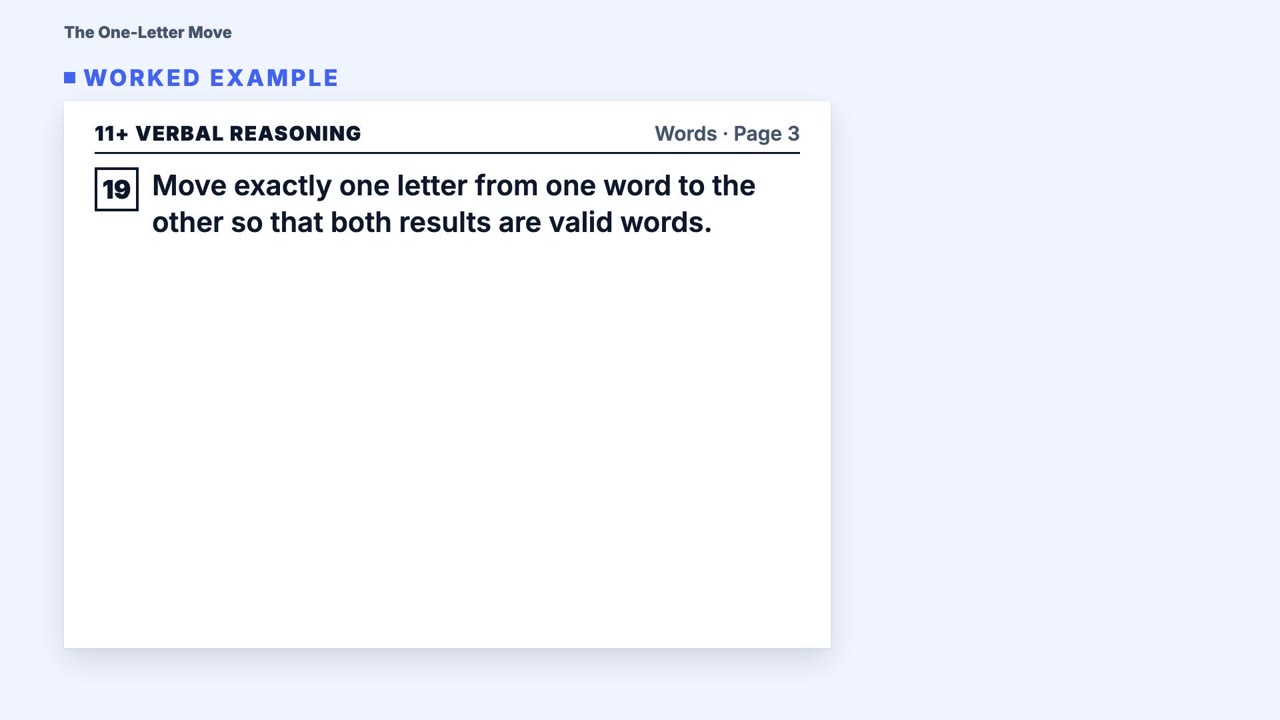 Length 2:23
Move a letter between words
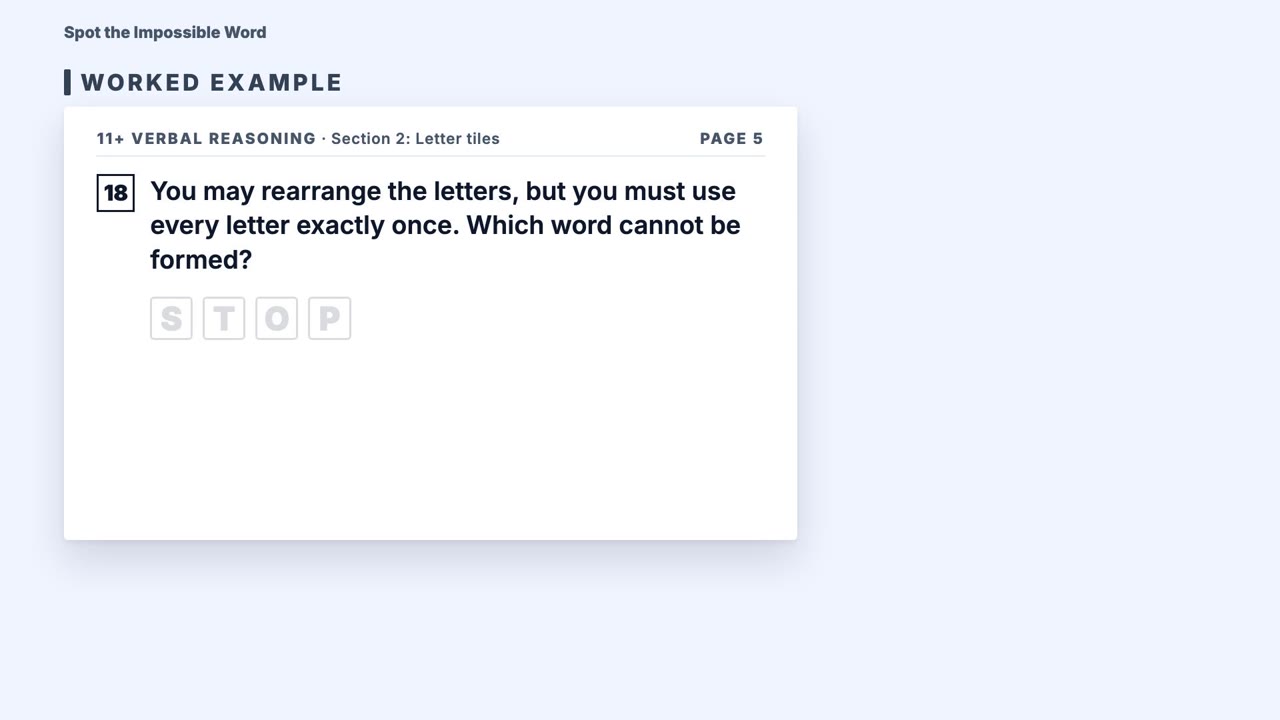 Length 2:34
Identify an impossible word formation
The free diagnostic checks maths, English and both kinds of reasoning, and shows what to practise next. No card is required.