
 Length 2:28
Which Face Is Opposite?
Track opposite cube faces
11+ Non-verbal Reasoning · Spatial
A short worked example (2:29) for one 11+ non-verbal reasoning skill: Track a paper fold.
This video shows how to predict where parts of a pattern move when paper is folded or unfolded. Watch an 11+ non-verbal reasoning question solved step by step.
Turn on captions with the CC button. The full transcript is below the video.
Every word of the video, to read along or to skim before watching.
One tiny punch can become two holes... without moving by itself. Watch the left half fold across an amber crease. The punch rides on the paper. Now it opens... and a green partner appears at the matching place. How?
Opening one fold REFLECTS every punch across its crease. The crease stays fixed. The punch travels with the hinged half, at right angles to the crease. Its distance before crossing equals its distance after crossing. The original and mirror point sit opposite each other, equally far from the amber line. With two folds, think backwards. Undo the MOST recent fold first, and mirror the punch. Then undo the earlier fold, and mirror every point again. Do not guess that marks separated on the flat sheet must be opposite. Their positions come from the creases and equal distances.
Let's work through an example. A rectangular sheet folds from left to right along its vertical centre crease. Then it folds from top to bottom along its horizontal centre crease. One hole is punched near the top-left of the folded packet. Which opened pattern is correct? Option A has one hole in each quarter. Option B has two holes on the right. Option C has four holes near the outer corners. Option D has two diagonal holes. Open the last fold first. The bottom half swings upwards around the horizontal amber crease. The punch stays on the sheet, and its green mirror lands directly above it, at the same perpendicular distance. Now there is a vertical pair on the right. Next, open the right half back to the left around the vertical crease. Each hole gains one green mirror. The final sheet has four holes, one in every quarter, with equal spacing from both centre lines. That is Option A.
Remember: open folds in reverse order, then reflect every punch across each fixed crease. Keep the distances equal, let the paper carry the points, and even a tricky pattern unfolds clearly.
Watch these next. The first ones teach the skills closest to this one.
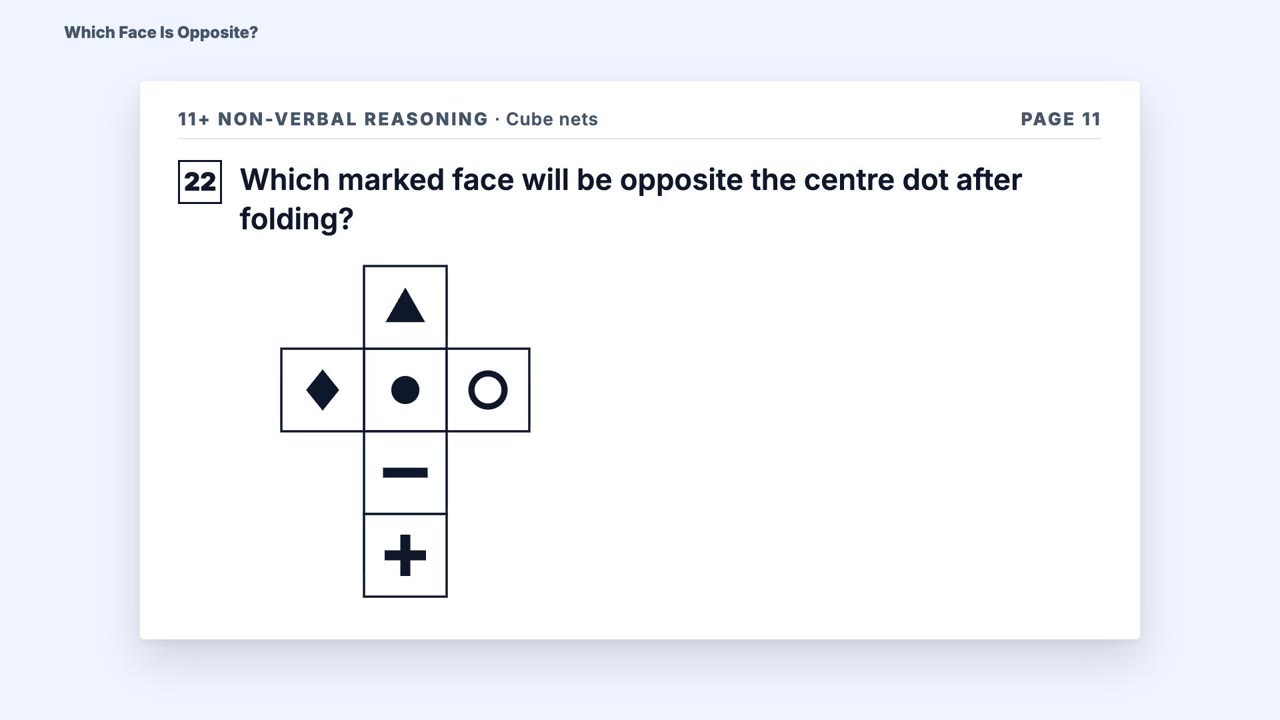
Length 2:28Track opposite cube faces
 Length 2:33
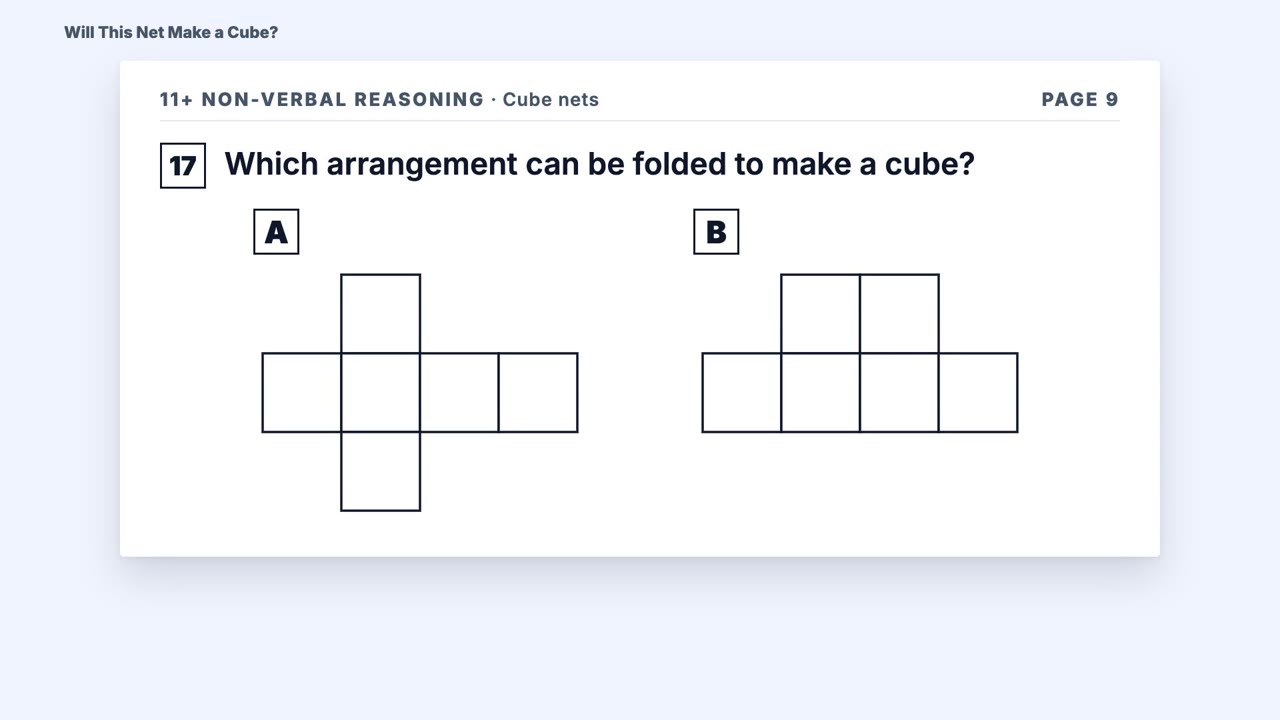
Validate a cube net
 Length 2:43
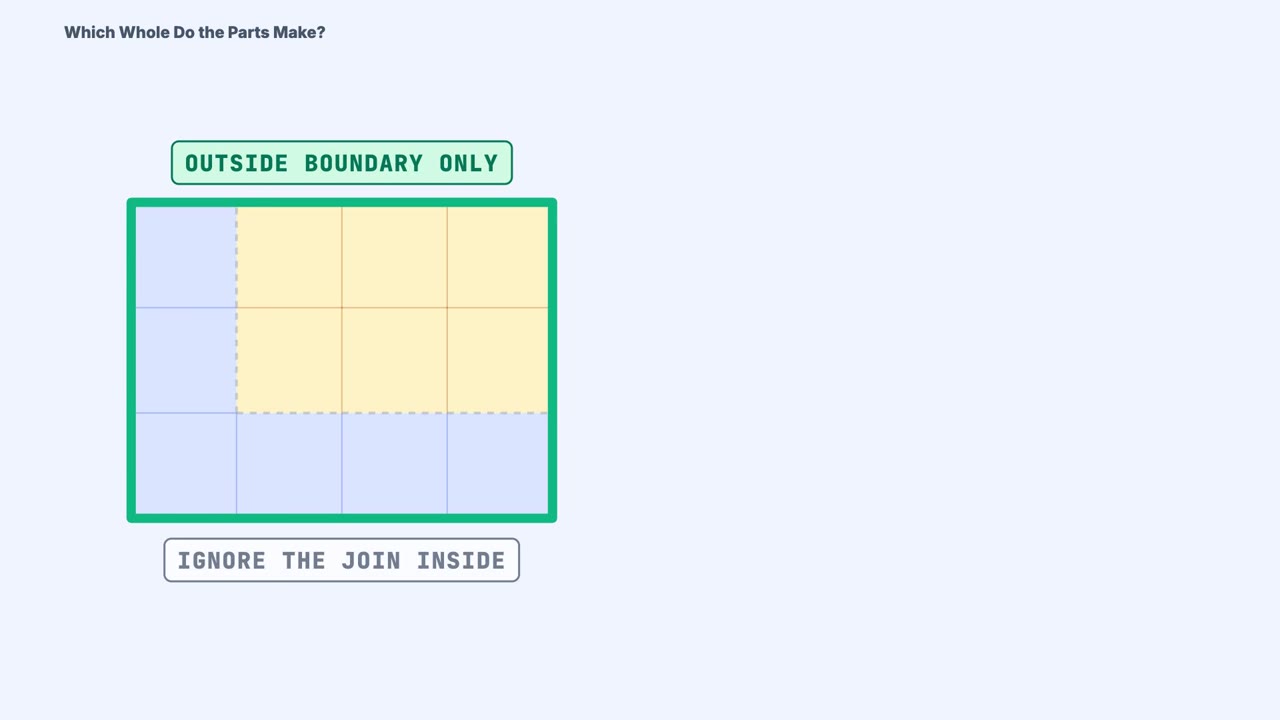
Connect shape parts
The free diagnostic checks maths, English and both kinds of reasoning, and shows what to practise next. No card is required.