
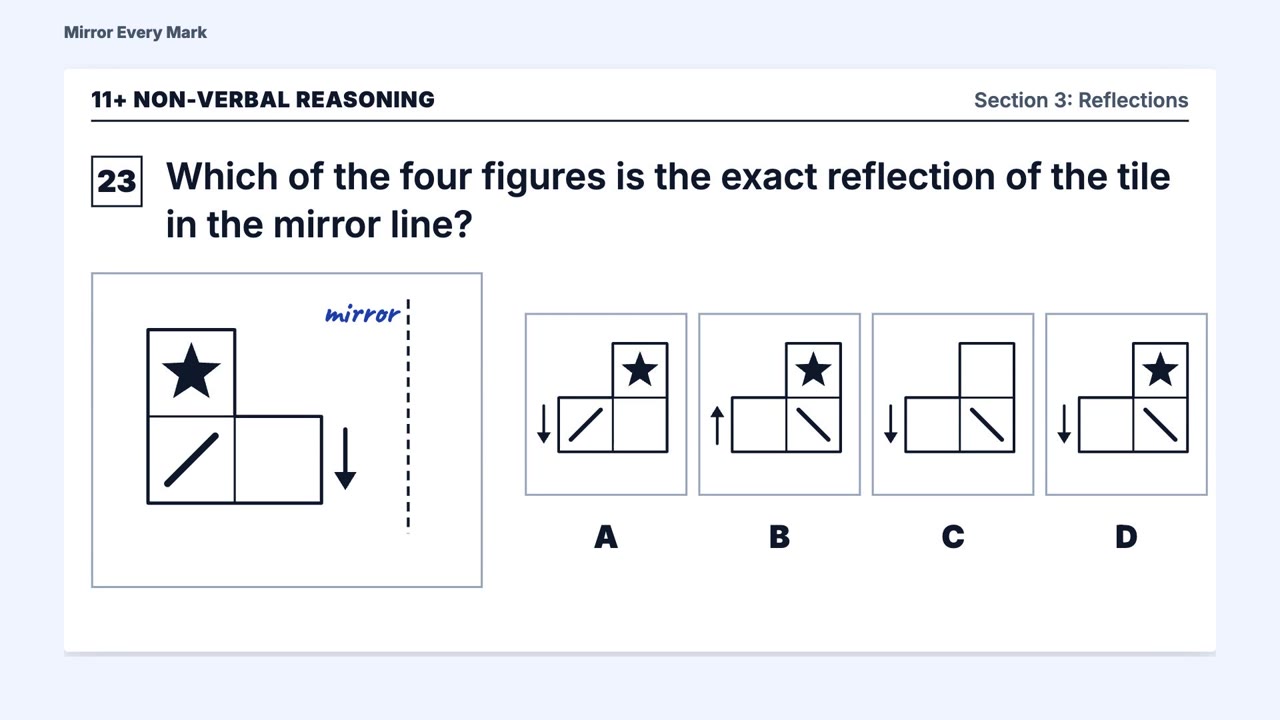
 Length 2:35
Mirror Every Mark
Reflect a visual figure
11+ Non-verbal Reasoning · Transform
A short worked example (2:47) for one 11+ non-verbal reasoning skill: Compose two visual transformations.
This video shows how to apply two rotations or reflections in order and track the result. Watch an 11+ non-verbal reasoning question solved step by step.
Turn on captions with the CC button. The full transcript is below the video.
Every word of the video, to read along or to skim before watching.
Two moves can make one figure land somewhere completely unexpected. A quarter-turn, then a reflection, is not a choice between moves. It is a journey with two stops... and swapping the stops can change the finish.
Start with the whole figure: an arrow-shaped tile, a black corner, and one white spot. First, rotate it ninety degrees clockwise. Imagine lifting the complete tile and turning it one quarter-turn to the right. The arrow, corner, and spot all travel together. Now use that new position as your starting figure. Reflect it in the vertical mirror line. Every point crosses straight across to the opposite side, staying the same distance from the mirror. This second move acts on the result of the first. Keep a tiny checkpoint after move one. It stops you jumping from the original figure to the final answer. And never move only the black corner or the spot. Transform the COMPLETE figure, including its outline, markings, and direction.
Let's work through an example. A square grid shows an L-shaped figure. Its short arm points right. A shaded triangle sits in the top-left square, and a dot sits at the far-right tip. The instruction says: rotate the figure ninety degrees clockwise about its centre, then reflect it in a horizontal mirror line. Which final figure is correct? Do move one first. Turn the entire L one quarter-turn clockwise. The short arm now points down. The shaded triangle moves from top-left to top-right, and the dot turns from the right-hand tip to the bottom tip. Freeze that intermediate figure... outline, triangle, dot, everything. Now reflect that rotated result across the horizontal line. The top-right triangle crosses to bottom-right. The bottom tip crosses to the matching top position, carrying its dot. Left and right do not swap in a horizontal reflection. So choose the L whose short arm points up, with the triangle at bottom-right and the dot at the top tip. That is the answer.
Remember: transform the whole figure, keep the result of move one, then apply move two. Follow the order carefully, and you will nail the finish!
Watch these next. The first ones teach the skills closest to this one.
Length 2:35Reflect a visual figure
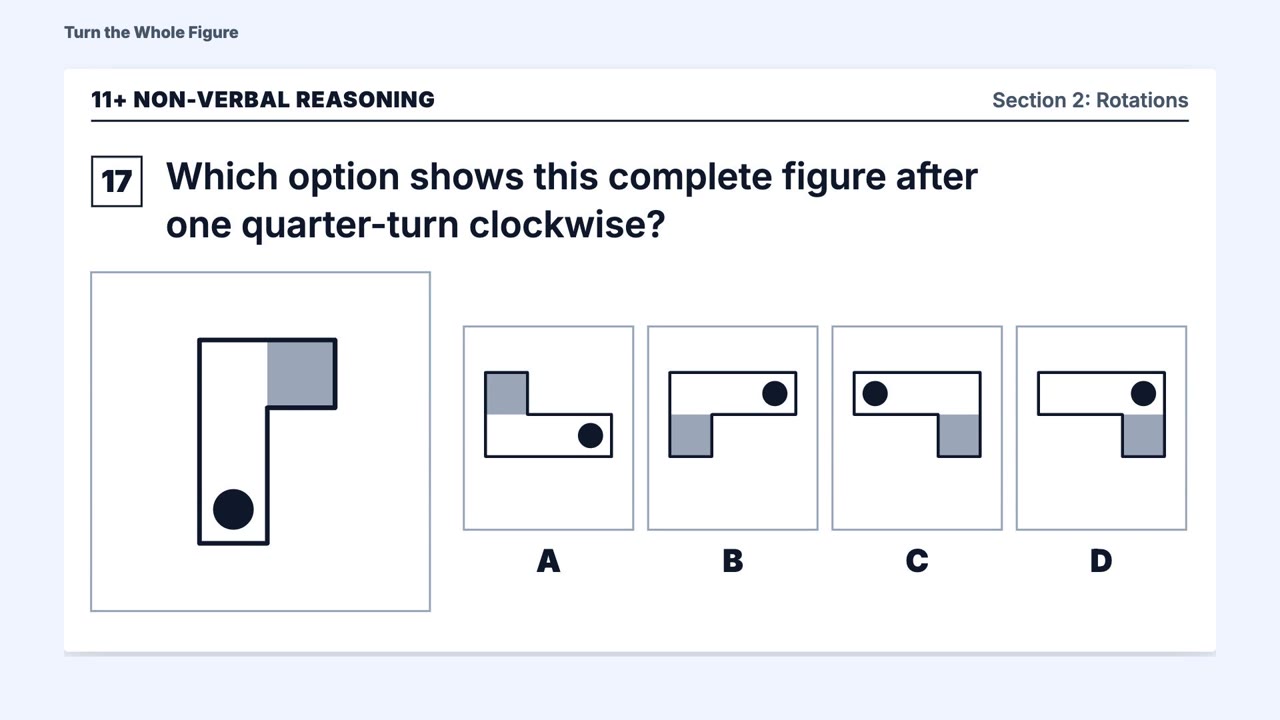 Length 2:35
Rotate a visual figure
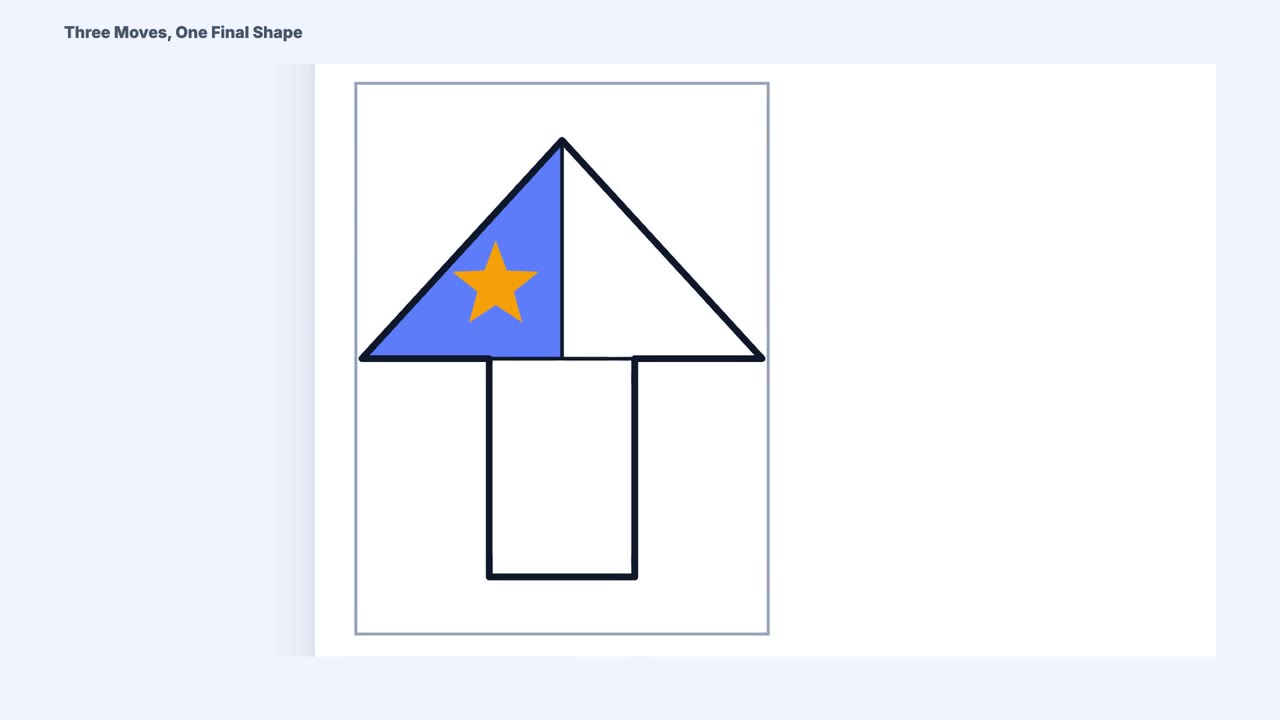 Length 2:39
Compose a visual transformation sequence
The free diagnostic checks maths, English and both kinds of reasoning, and shows what to practise next. No card is required.