
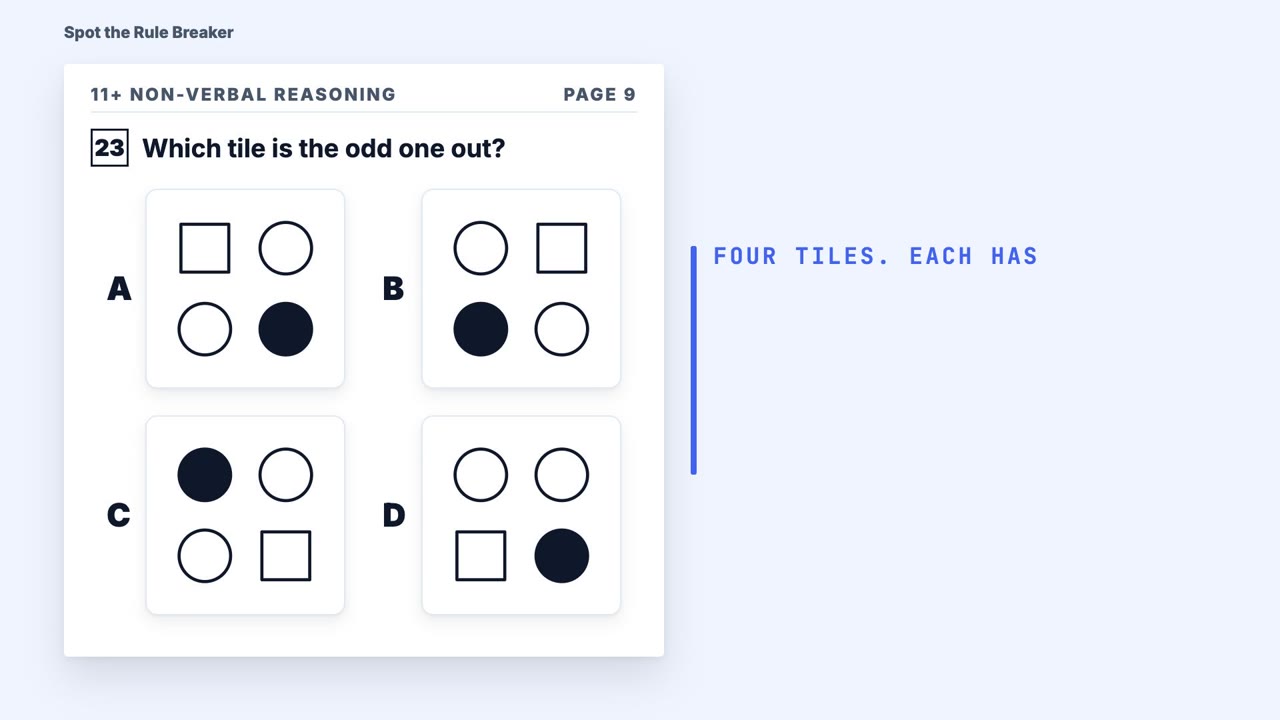
 Length 2:37
Spot the Rule Breaker
Identify a visual odd one out
11+ Non-verbal Reasoning · Pattern
A short worked example (2:39) for one 11+ non-verbal reasoning skill: Complete a visual analogy.
This video shows how to find the relationship between two figures and use it to complete a second pair. Watch an 11+ non-verbal reasoning question solved step by step.
Turn on captions with the CC button. The full transcript is below the video.
Every word of the video, to read along or to skim before watching.
Three pictures can reveal the fourth... but only if you spot the whole change. A becomes B. C must change in exactly the same way. One tiny missed detail can make a tempting answer completely wrong.
Read from left to right. First, compare A with B. Check the outer shape, direction, shading, number of marks, and each mark's position. Say every change you can see. Together, those changes make one rule. Then apply that complete rule to C. If the figure turns one quarter-turn clockwise, turn everything together. A mark near the lower-left corner travels with the figure. If pale becomes dark, swap the shading too. Keep each feature linked to the same move. Do not copy B's final appearance onto C. And do not choose after noticing only the turn. A distractor may point the right way yet leave its marks behind. Test every option against EVERY part of the rule.
Let's work through an example. Here is a complete 11+ style question. A is a pale triangle pointing upwards, with one dark dot near its lower-left corner. B is a dark triangle pointing right, with one pale dot near its upper-left corner. C is a pale arrow pointing upwards, with two dark dots near its lower corners. Which option completes the analogy? Start with A to B. Upwards becomes right, so the whole figure turns one quarter-turn clockwise. Pale becomes dark. The lower-left dot rotates to the upper-left, and dark becomes pale. That gives four checks: direction, shading, position, and dot colour. Now transfer all four checks to C. Rotate the arrow one quarter-turn clockwise, so it points right. Change its pale fill to dark. The two lower dots rotate onto the left side, one above the other. Both become pale. Therefore the answer is the dark right-pointing arrow with two pale dots stacked on its left side. Solved!
Find every change from A to B, then repeat the WHOLE rule on C. Check direction, shading, count, colour, and position - then choose with confidence!
Watch these next. The first ones teach the skills closest to this one.
Length 2:37Identify a visual odd one out
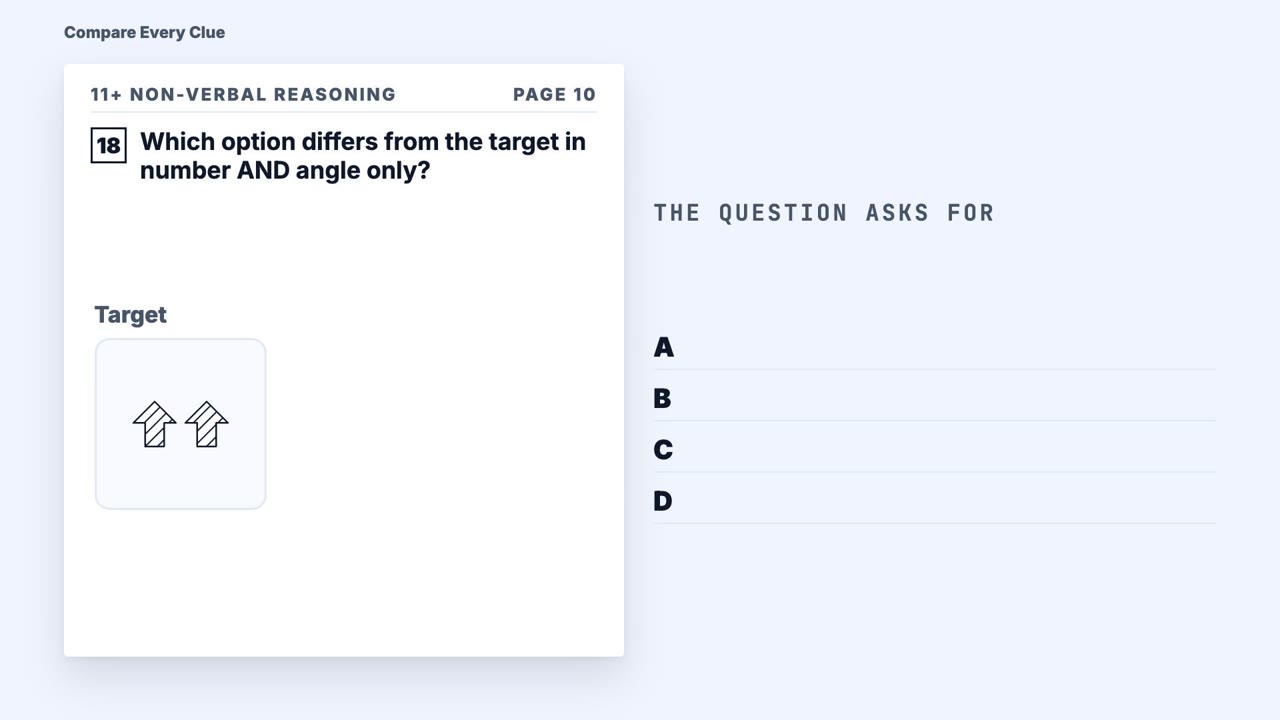 Length 2:39
Compare visual attributes
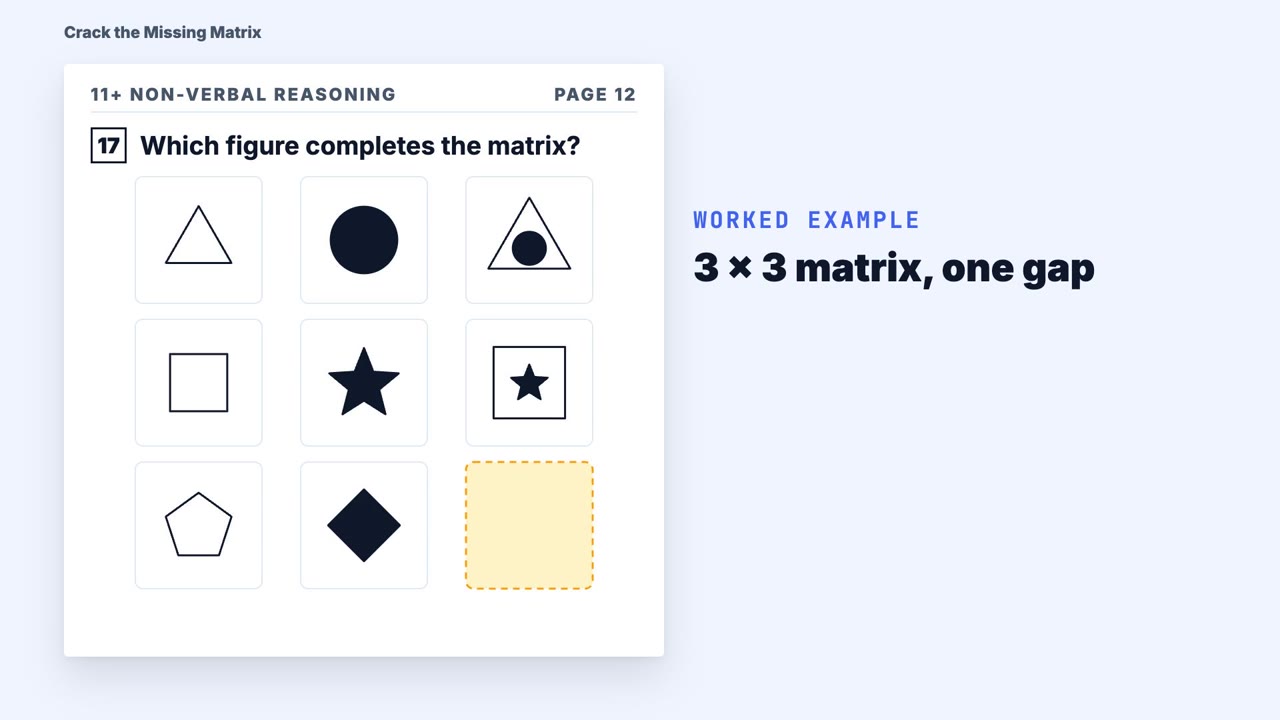 Length 2:35
Complete a visual matrix
The free diagnostic checks maths, English and both kinds of reasoning, and shows what to practise next. No card is required.