
 Length 2:39
Compare Every Clue
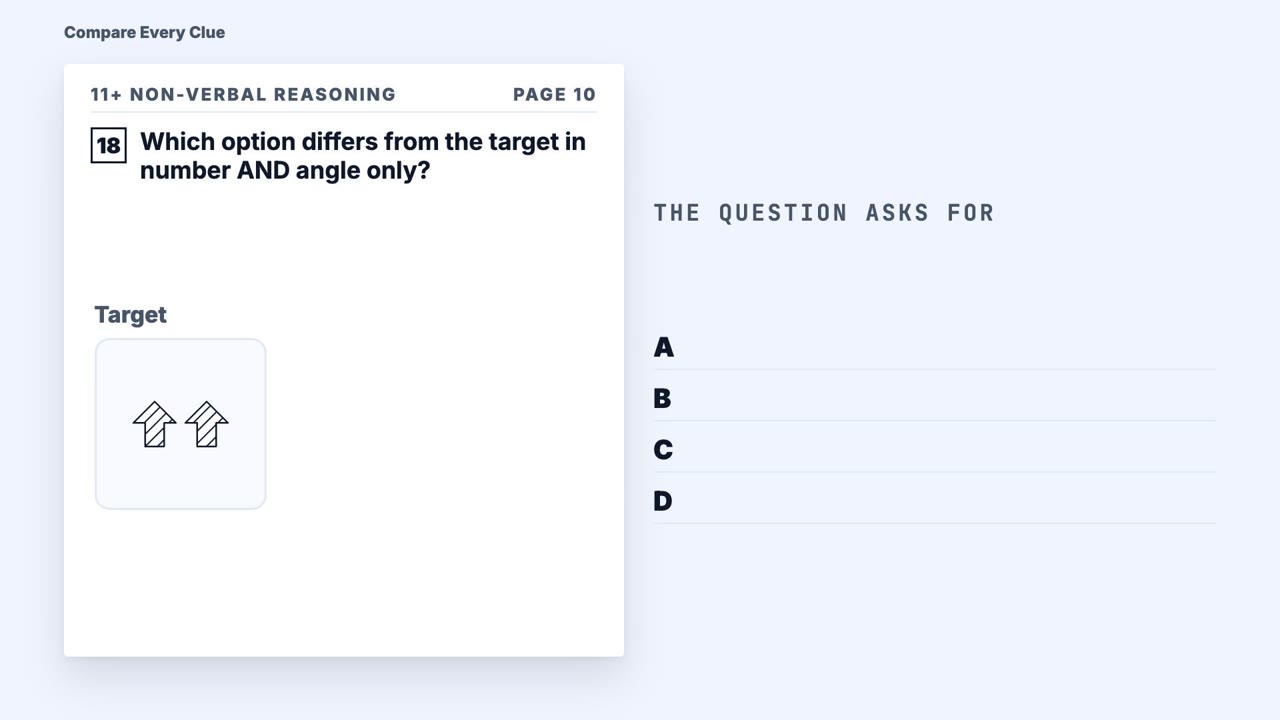
Compare visual attributes
11+ Non-verbal Reasoning · Layer
A short worked example (2:41) for one 11+ non-verbal reasoning skill: Combine visual layers.
This video shows how to predict the picture formed when two simple layers are placed on top of each other. Watch an 11+ non-verbal reasoning question solved step by step.
Turn on captions with the CC button. The full transcript is below the video.
Every word of the video, to read along or to skim before watching.
Two plain cards can hide a surprise. Slide one transparent card over the other... and a brand-new symbol appears. Can you predict it before the layers meet? Watch the marks, because every line keeps its exact place.
Think of each card as clear plastic. Layer A shows a blue vertical line near the left edge. Layer B shows a red horizontal line across the top. When they stack, you see BOTH marks: blue stays left, and red stays at the top. Combine does not mean move, turn, or join the marks. Lower the top card straight down without twisting it. A bottom-right mark remains bottom-right. A diagonal rising from left to right keeps the same direction. Here, every mark remains visible, even where lines cross. Neither layer hides the other. Avoid the common trap: choosing an option with only one layer, or rotating a mark.
Let's work through an example. Layer A contains a black diagonal from the bottom-left corner to the top-right corner, plus one dot above the centre. Layer B contains a black vertical line through the centre, plus one dot in the bottom-right corner. Which answer option shows their overlay? First, freeze the frame. Copy Layer A exactly: one rising diagonal and the upper dot. Now lower Layer B straight on top. Add the central vertical line. Add the bottom-right dot. Nothing shifts, and nothing disappears. So the result must contain three lines? Wait - count carefully... Layer A has one line, and Layer B has one line. That makes TWO lines: one rising diagonal and one central vertical. It also has two dots, one above centre and one bottom-right. Compare the options. Reject the card with a falling diagonal; it has been flipped. Reject the card with one dot; it has lost a layer. Choose the card showing both original lines and both original dots. That is option C.
Remember: hold every mark in its original position and orientation, then show all visible parts together. Keep your layers steady, check every detail... and you will spot the correct overlay with confidence.
Watch these next. The first ones teach the skills closest to this one.
Length 2:39Compare visual attributes
 Length 2:35
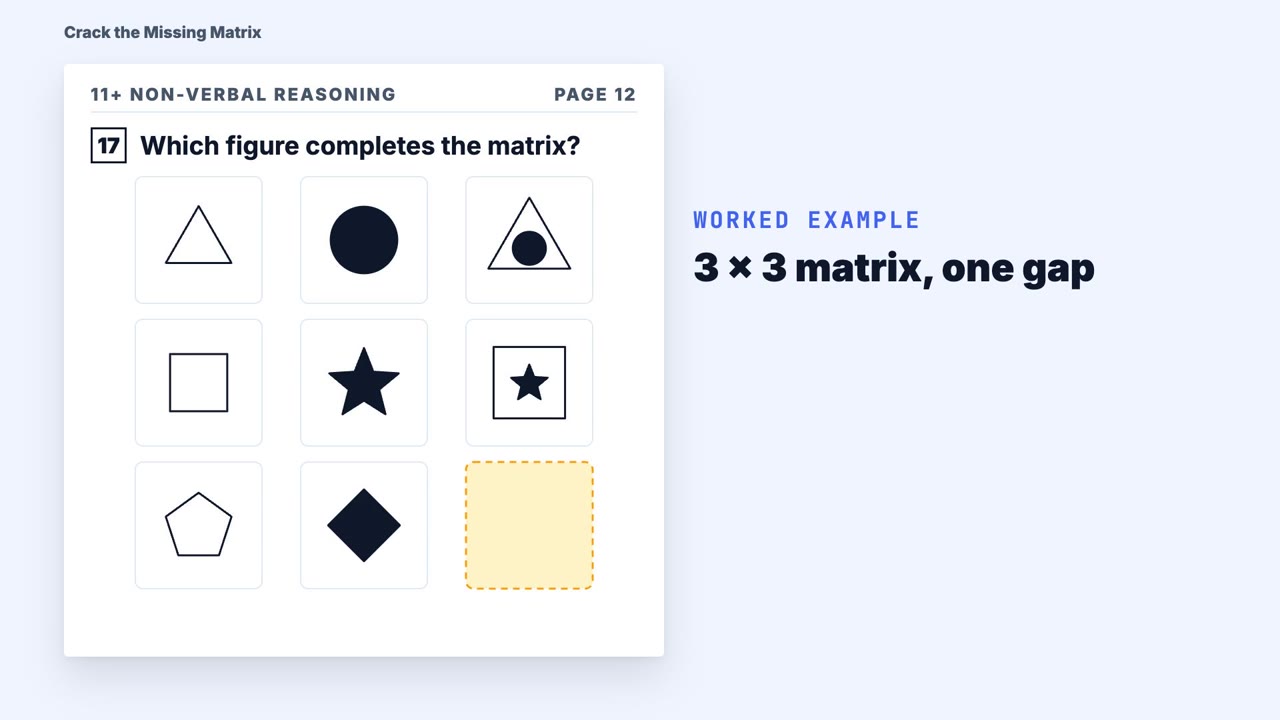
Complete a visual matrix
 Length 2:32
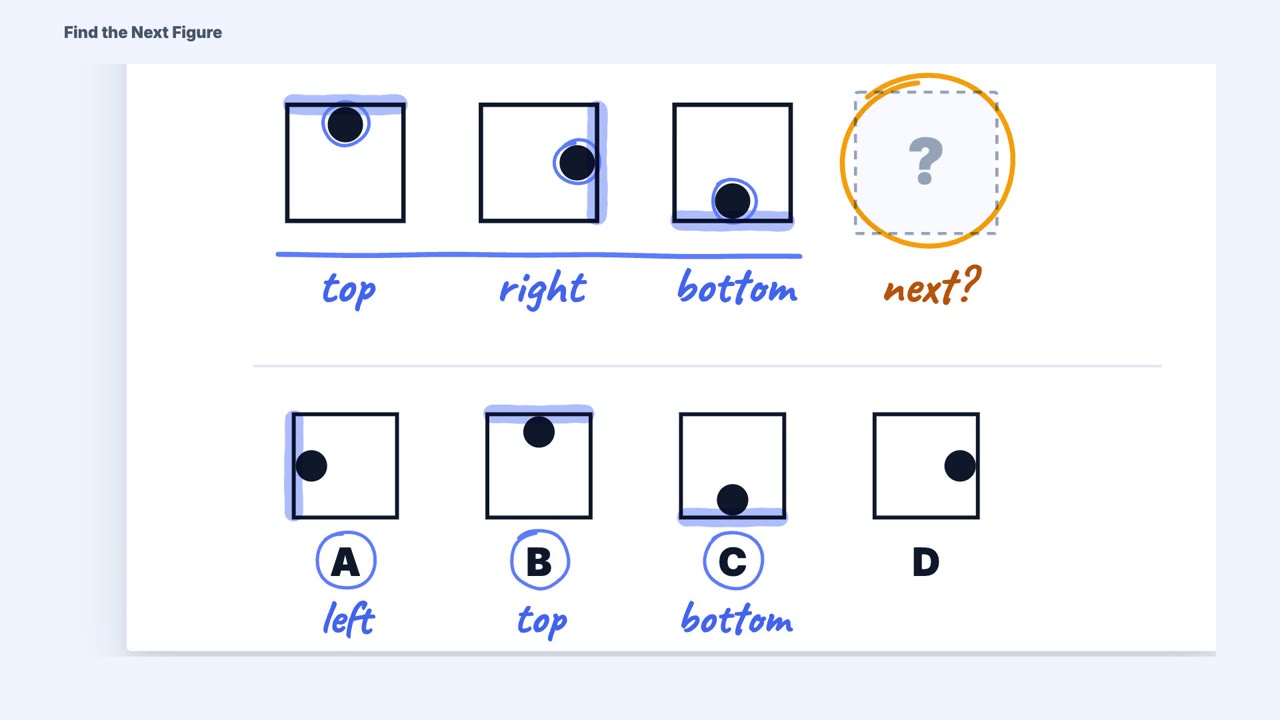
Complete a visual series
The free diagnostic checks maths, English and both kinds of reasoning, and shows what to practise next. No card is required.