
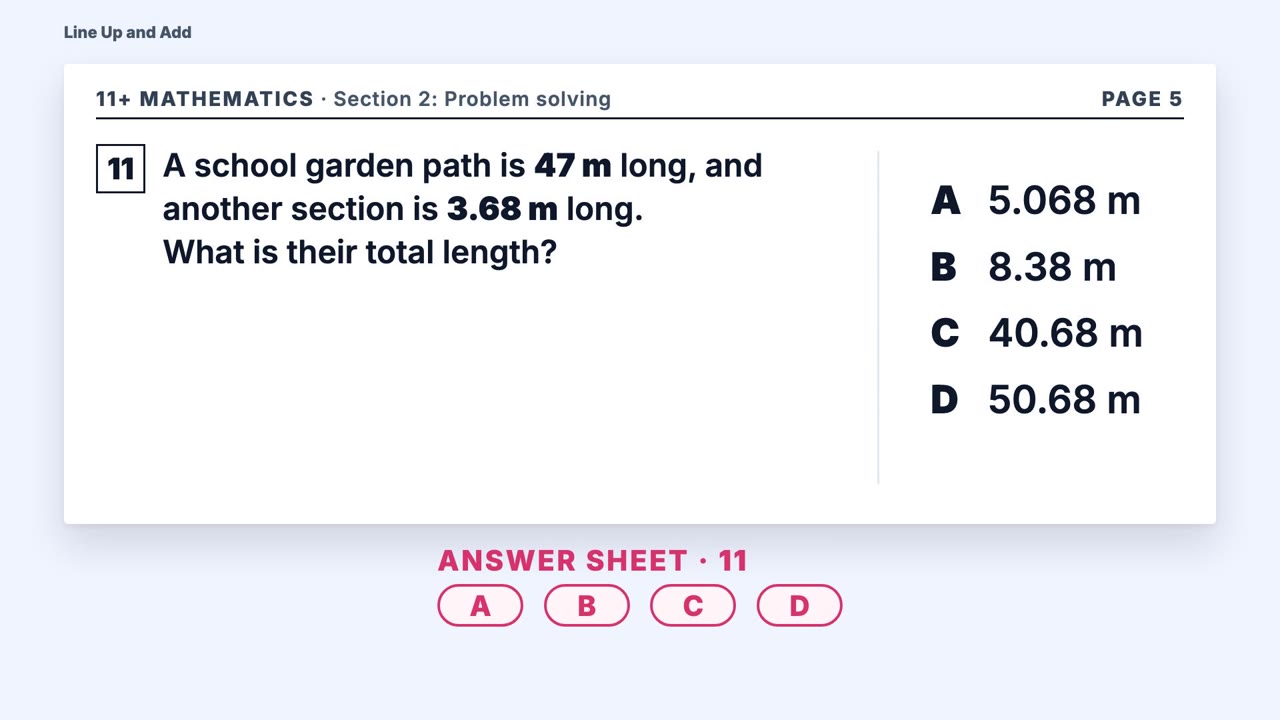
 Length 2:37
Line Up and Add
Add whole numbers or decimals
11+ Maths · Number
A short worked example (2:31) for one 11+ maths skill: Subtract whole numbers or decimals.
This video shows how to align place values to subtract whole numbers or decimals accurately. Watch an 11+ maths question solved step by step.
Turn on captions with the CC button. The full transcript is below the video.
Every word of the video, to read along or to skim before watching.
Two numbers can look neatly lined up... and still produce a completely wrong answer. The tiny decimal point is the clue that keeps every digit in its proper place.
When you subtract, stack the numbers so their decimal points sit directly above each other. This makes the ones share a column, the tenths share a column, and the hundredths share a column. If one number ends sooner, place a zero in the empty space. A zero after the last decimal digit does not change the number. It simply holds the column open. Now subtract from right to left, one place-value column at a time. Regroup whenever the top digit is too small. And remember: a digit is not just a digit. In the tenths column, three means three tenths, not three ones.
Let's work through an example. A water tank contains fifty-four point three litres. Twenty-seven point eight six litres are used. How many litres remain? Write fifty-four point three above twenty-seven point eight six. Align the decimal points. Add a zero, making the top number fifty-four point three zero. Both numbers now show hundredths. Start at the hundredths. Zero cannot subtract six, so regroup one tenth as ten hundredths. Ten minus six is four. The tenths digit has become two. Two cannot subtract eight, so regroup one one as ten tenths. Twelve minus eight is four. In the ones column, three cannot subtract seven. Regroup one ten. Thirteen minus seven is six. In the tens column, four minus two is two. Bring the decimal point straight down. The answer is twenty-six point four four litres.
Line up decimal points, fill empty decimal places with zeros, then subtract each column from right to left, regrouping when needed. Keep each digit tied to its place VALUE, and bring the decimal point straight down. You can now tackle whole-number and decimal subtraction with a calm, careful layout... and a confident final check every single time you practise.
Watch these next. The first ones teach the skills closest to this one.
Length 2:37Add whole numbers or decimals
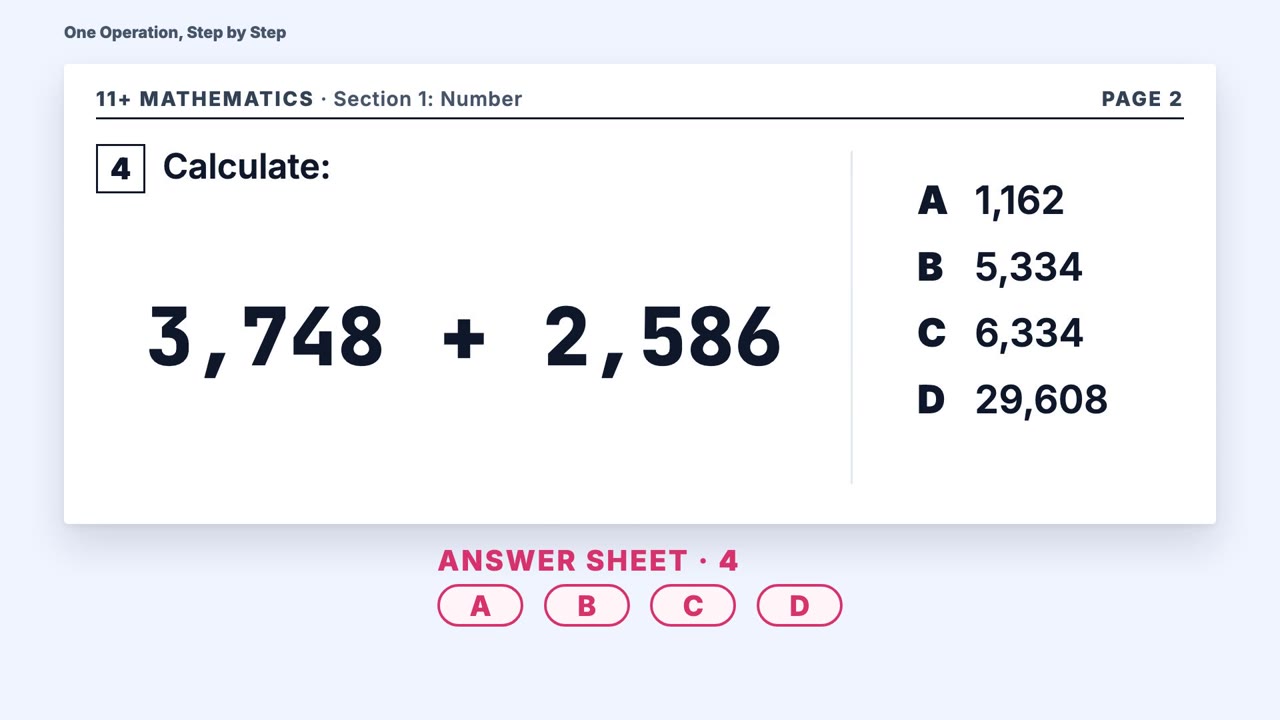 Length 2:41
Calculate a whole-number operation
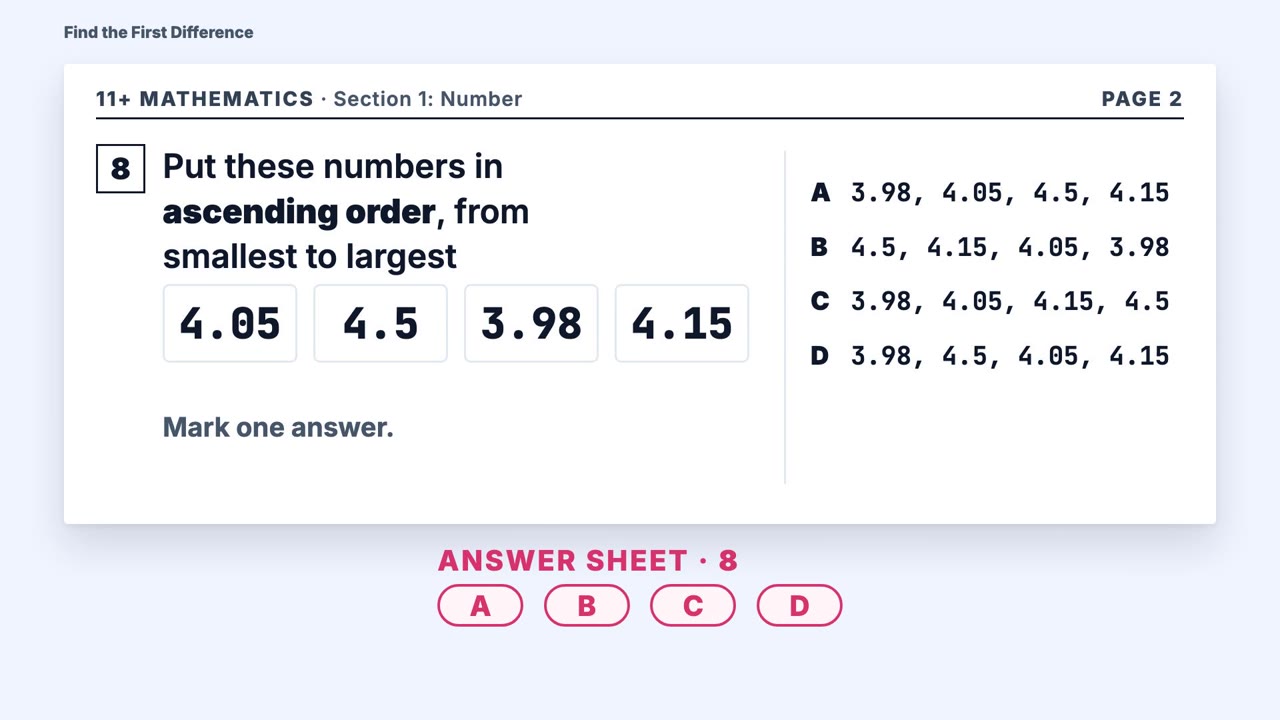 Length 2:34
Compare and order numbers
The free diagnostic checks maths, English and both kinds of reasoning, and shows what to practise next. No card is required.