
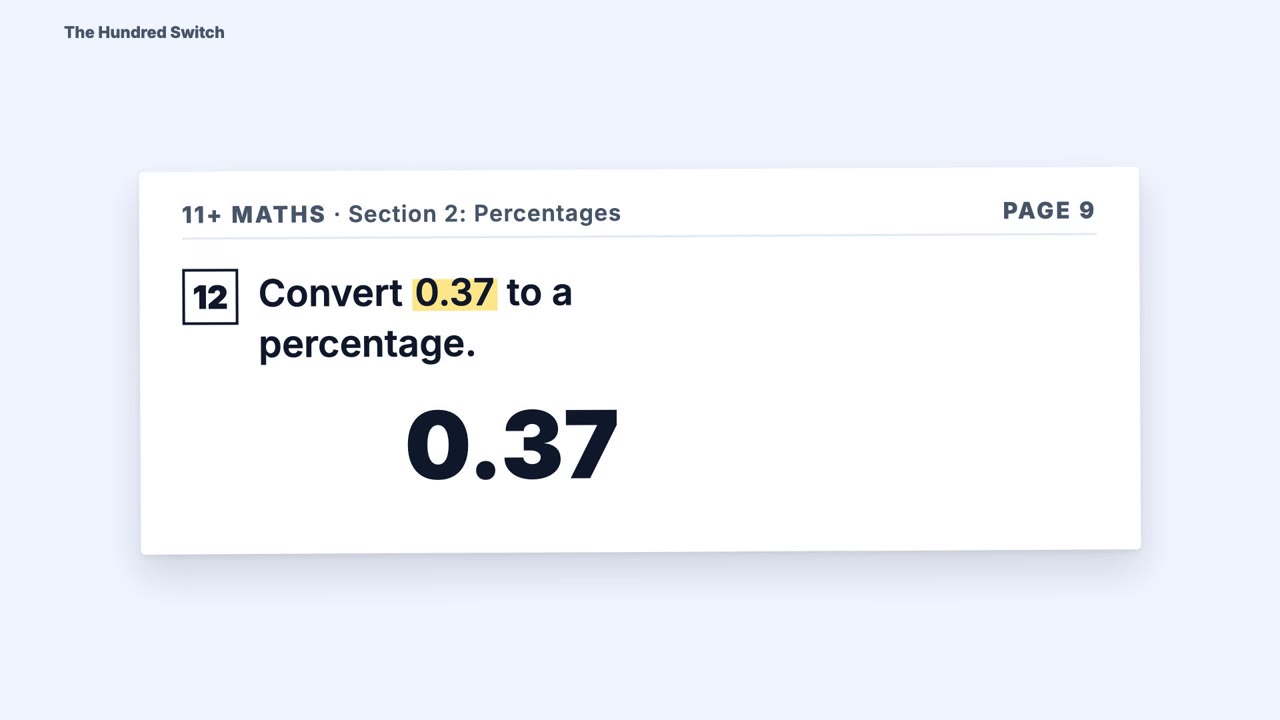
 Length 2:42
The Hundred Switch
Convert decimal and percentage
11+ Maths · Fractions, decimals and percentages
A short worked example (2:31) for one 11+ maths skill: Recognise equivalent fractions.
This video shows how to recognise fractions that have different numerators and denominators but the same value. Watch an 11+ maths question solved step by step.
Turn on captions with the CC button. The full transcript is below the video.
Every word of the video, to read along or to skim before watching.
Quick question. Would you rather have one half of a chocolate bar... or two quarters of it? Think carefully. One half. Two quarters. Different tops, different bottoms - they look like completely different fractions. But here's the surprise... they're worth EXACTLY the same. Same chocolate. Same amount. Two different names for one value. Let me show you why.
Take a chocolate bar. Snap it into two equal pieces, and shade one of them. One piece shaded, out of two. That's one half. Now slice every piece - every single one - in half. Count what you've got. Four pieces, and two of them are shaded. But look closely at the chocolate... nothing was added. Nothing was taken away. The shaded amount is EXACTLY the same. And here's the secret behind it. Multiply the top and the bottom by the same number, and the value never changes. One times two makes two. Two times two makes four. So one half becomes two quarters. A brand new name... for the very same fraction. One warning, though. This trick only works with EQUAL pieces. If a bar breaks into one giant chunk and one tiny chunk, that giant chunk is not one half - even though it's one piece out of two. Equal parts, or it doesn't count.
Right - test time! Here's a real eleven plus style question. Which fraction is equivalent to three quarters? Your choices are... six eighths, three eighths, or four fifths. Hunt for the matching multiplier. Look at six eighths. Three to six on top? That's times two. Four to eight on the bottom? Times two as well! Top and bottom, both times two - so six eighths is our answer. But a good detective always checks the others. Three eighths? The bottom doubled, but the top never moved - so it's a smaller amount. Not equivalent. Four fifths? That's adding one to the top and the bottom. And adding NEVER keeps a fraction's value. Out they both go.
So here's your takeaway. Equivalent fractions are twins - different names, exactly the same value. Multiply the top and the bottom by the same number, and the fraction's value stays put. Next time two fractions stare back at you in a test, hunt for that matching multiplier - and make sure the parts are equal. You've got this. Go and spot those twins!
Watch these next. The first ones teach the skills closest to this one.
Length 2:42Convert decimal and percentage
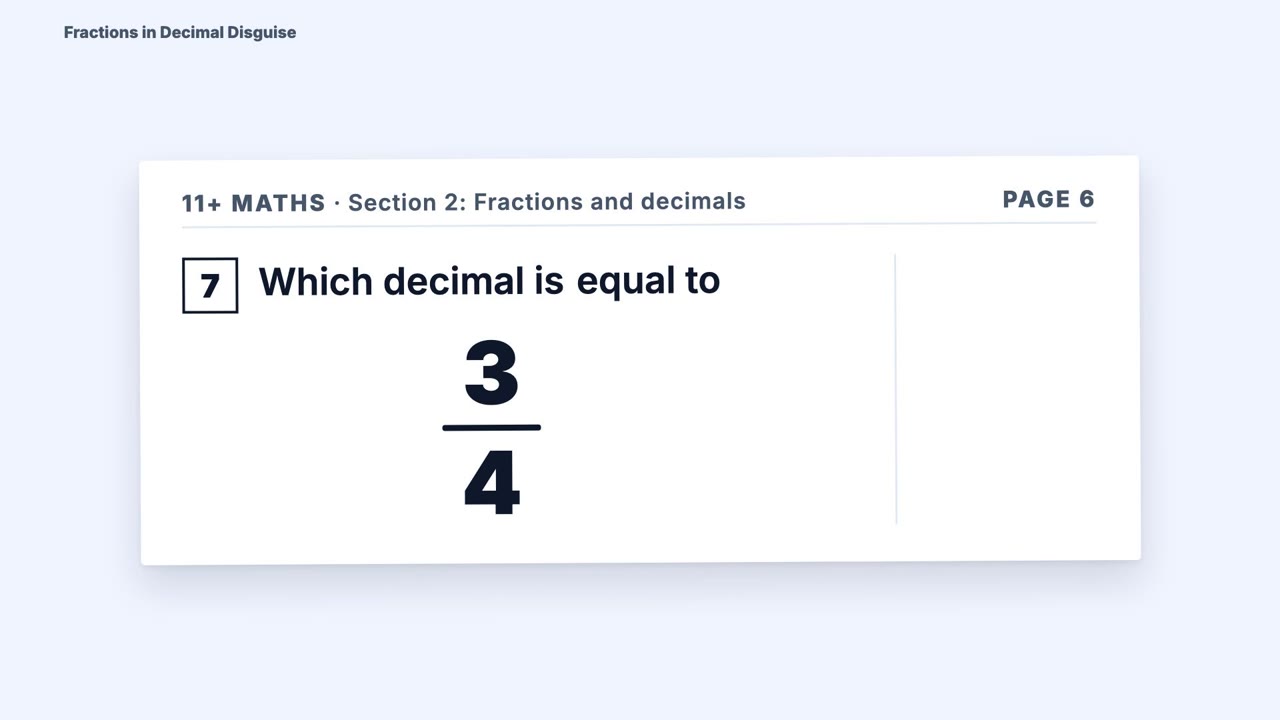 Length 2:26
Convert fraction and decimal
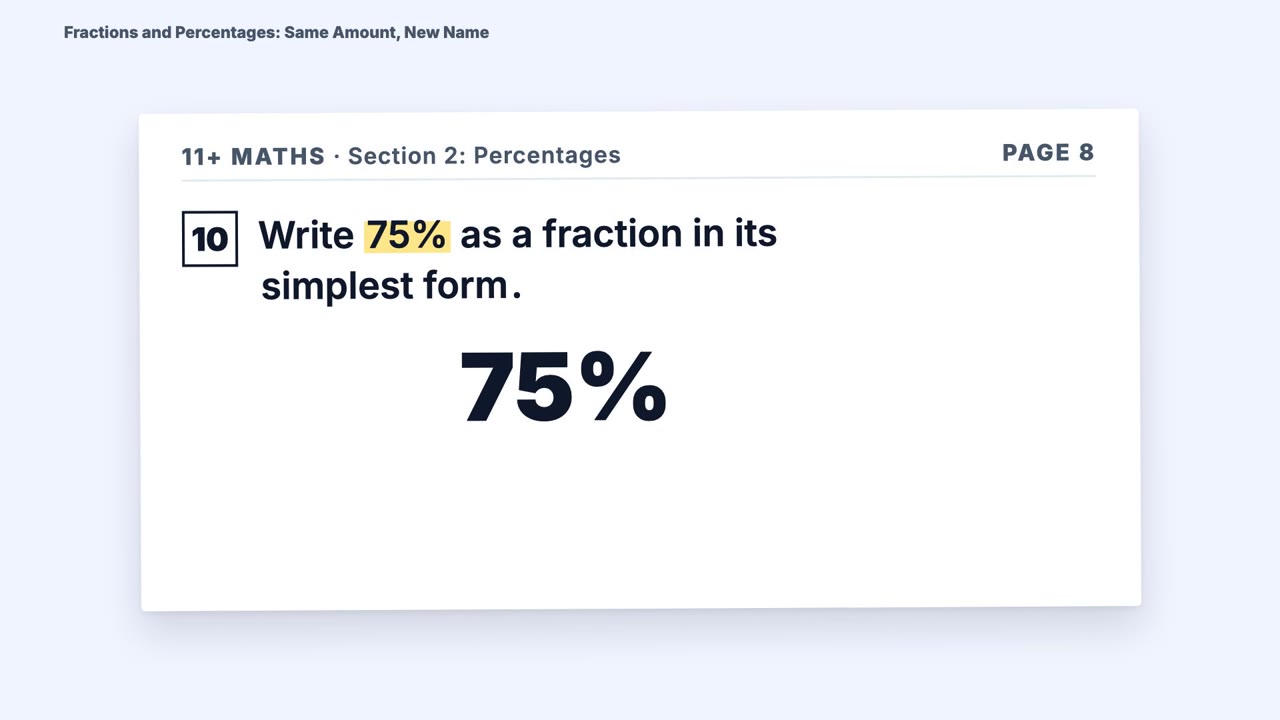 Length 2:36
Convert fraction and percentage
The free diagnostic checks maths, English and both kinds of reasoning, and shows what to practise next. No card is required.