
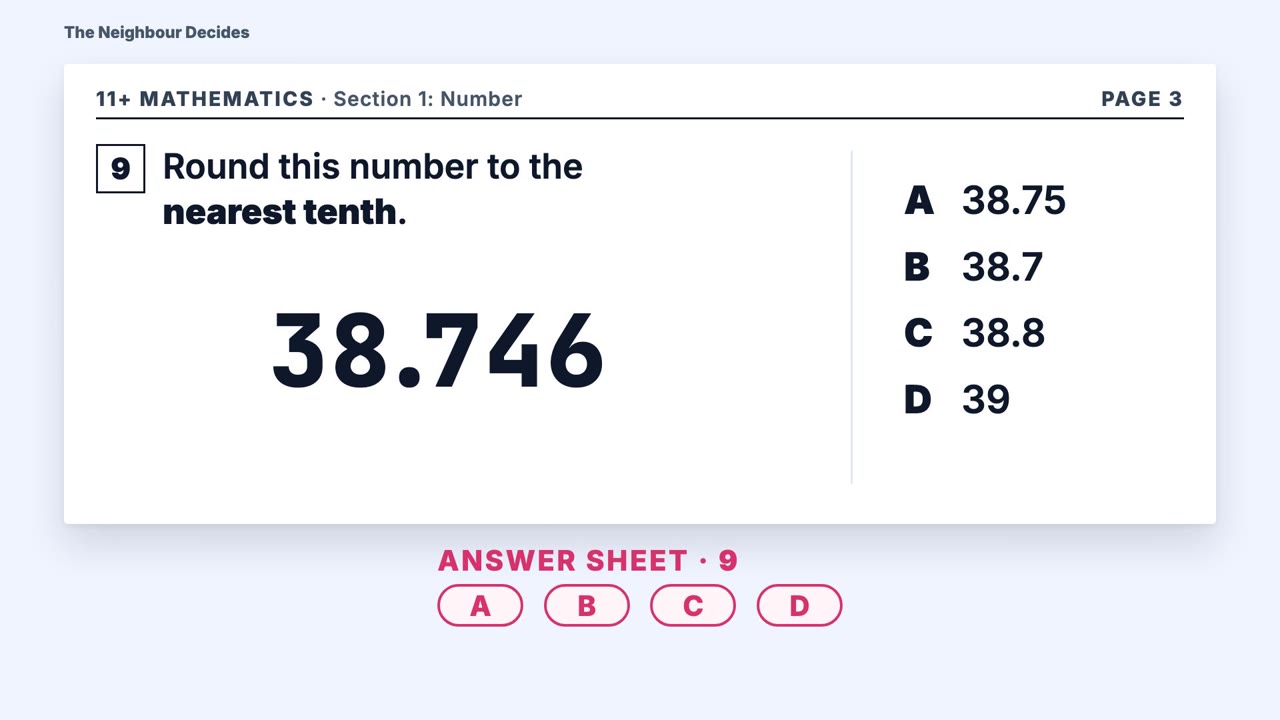
 Length 2:34
The Neighbour Decides
Round to a stated place
11+ Maths · Number
A short worked example (2:22) for one 11+ maths skill: Read place value.
This video shows how to find the value of a digit by its position in a whole number or decimal. Watch an 11+ maths question solved step by step.
Turn on captions with the CC button. The full transcript is below the video.
Every word of the video, to read along or to skim before watching.
One tiny digit can be worth five, five hundred, or five thousand. Same digit... completely different value! The secret is not the digit itself. It is WHERE that digit stands in the number.
Picture a place-value chart. From right to left, the columns are ones, tens, hundreds, then thousands. Put the digit six in the ones column, and its value is six. Slide it one place left into tens... now its value is sixty. The decimal point gives us a fixed landmark. Immediately to its right are tenths, then hundredths. In four point six two, the six is in the tenths column. Its value is six tenths, or zero point six. Here is the trap. If you are asked for the value of the six, do not simply answer "six". Name what it is worth because of its column. Read the place first, then state the VALUE.
Let's work through an example. A question shows the number seventy-two thousand, six hundred and four point eight five. What is the value of the digit four? First, find the four. Watch it glow in seventy-two thousand, six hundred and four point eight five. Now line the number up with the chart. The four sits immediately left of the decimal point. That is the ones column. So the digit is four, but its place value is four ones. Four ones equal four. The answer is FOUR. Notice that we checked only the specified digit; the other digits helped us locate its column, but we did not evaluate them.
When one digit is singled out, point to it, name its column, and say what it is worth. Ones, tens, hundreds, tenths, or hundredths - the position does the work. Do not echo the digit unless its value truly matches. Keep the decimal point as your landmark, and take your time when neighbouring columns look similar. You can now read place value with a quick check: find it, place it, VALUE it. You've got this!
Watch these next. The first ones teach the skills closest to this one.
Length 2:34Round to a stated place
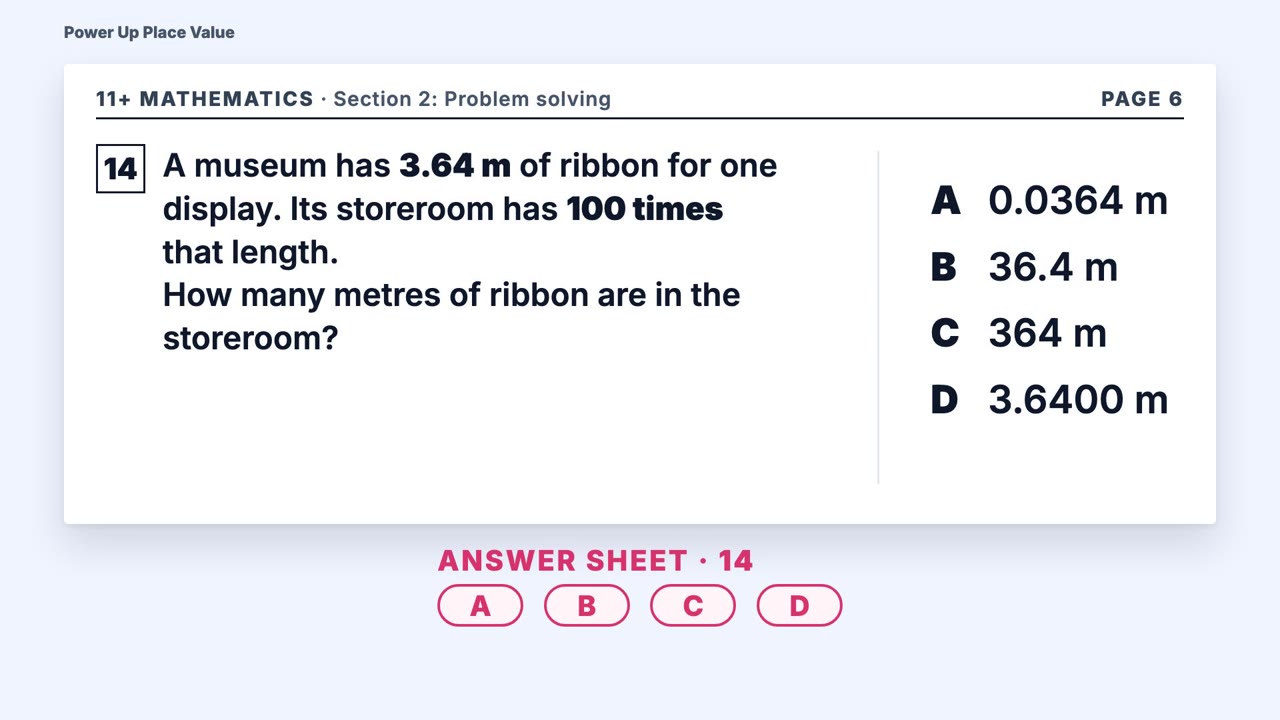 Length 2:42
Scale by a power of ten
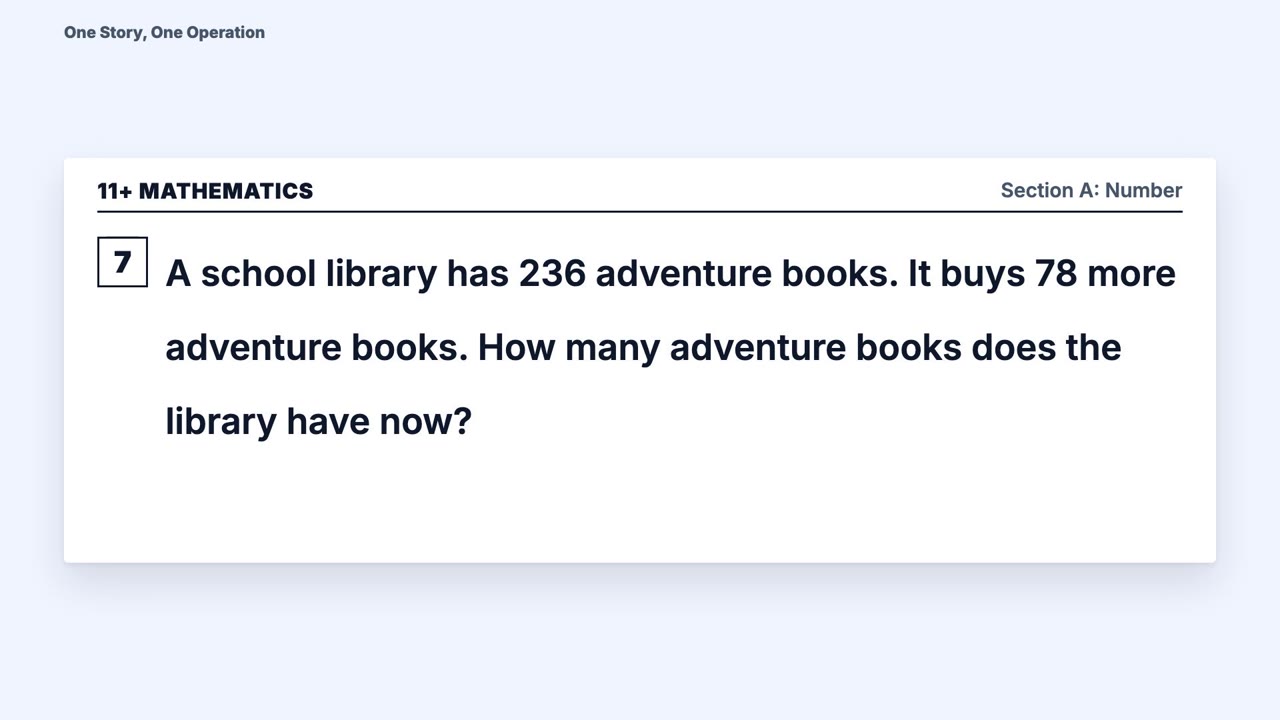 Length 2:44
Solve a one-step number problem
The free diagnostic checks maths, English and both kinds of reasoning, and shows what to practise next. No card is required.