
 Length 2:38
Shape Detective
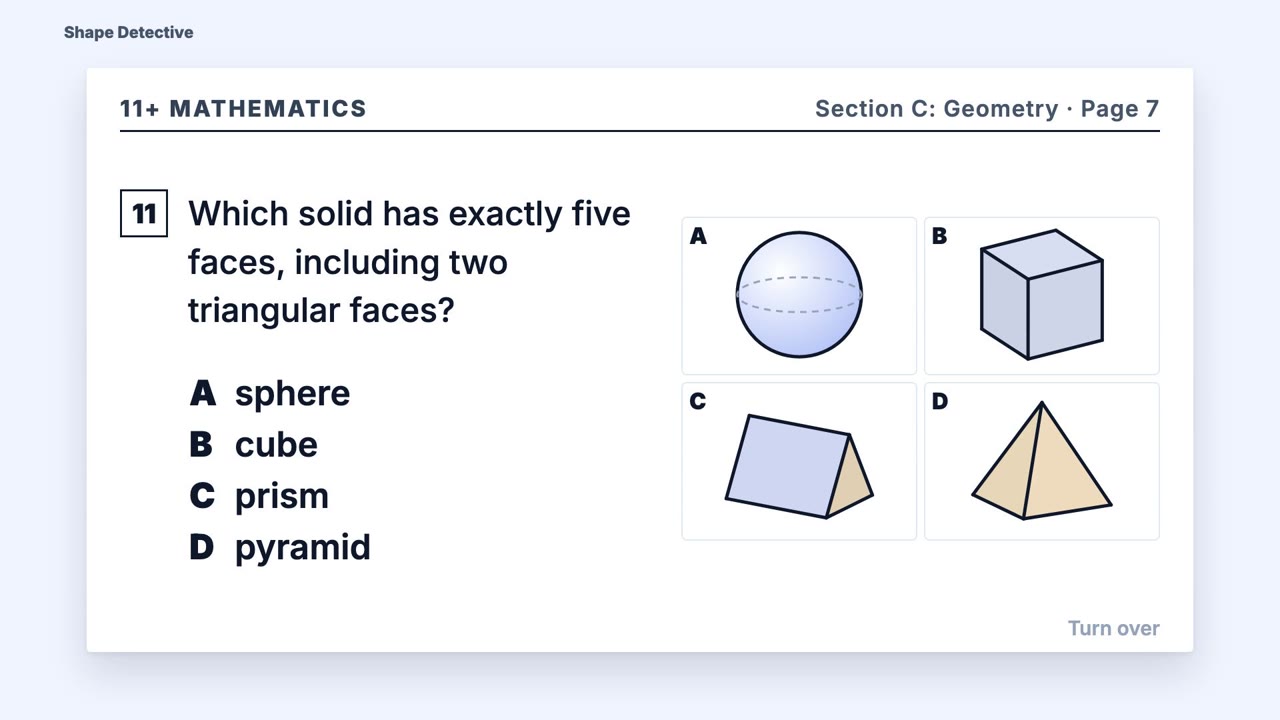
Identify a shape property
11+ Maths · Geometry
A short worked example (2:24) for one 11+ maths skill: Identify a cube net.
This video shows how to check whether a flat arrangement of six squares can fold into a cube. Watch an 11+ maths question solved step by step.
Turn on captions with the CC button. The full transcript is below the video.
Every word of the video, to read along or to skim before watching.
Six squares can lie flat in dozens of arrangements. But only some can snap into a cube. The secret is not how neat the pattern looks... it is whether every square can become a different face, without a crash.
Picture six equal squares joined edge to edge. Choose one square as the base. Its neighbours fold up along their shared edges, like hinged doors. Each square must land on one of the cube's six face positions. Now watch two tests. If two squares fold onto the SAME face, they overlap, so the net fails. If an open side is left because the last square cannot close it, the net fails too. You may turn the flat pattern to make it easier to follow. Turn it like rotating a sheet on the table. Do not mirror or flip the drawing: every square must remain joined to the same edge as before.
Let's work through an example. A question shows four equal squares in one horizontal row. One extra square is joined above the second square, and one extra square is joined below it. Does this arrangement fold to make a cube? Start with the second square as the front face. Fold the square above it upwards to make the top. Fold the square below it downwards to make the bottom. Those faces meet at edges, but they do not overlap. Next, fold the first square in the row around the left edge. It becomes the left face. Fold the third square around the right edge. It becomes the right face. Five different positions are now filled. The fourth square is still joined to the third. Swing it round the final edge... it closes the back of the cube. No faces overlap, and no gap remains. So the arrangement IS a cube net.
Remember: choose a base, fold along shared edges, and check that all six squares reach different faces with no gap. Rotate the pattern if you need to, but never mirror it. You can spot a true cube net!
Watch these next. The first ones teach the skills closest to this one.
Length 2:38Identify a shape property
 Length 2:29
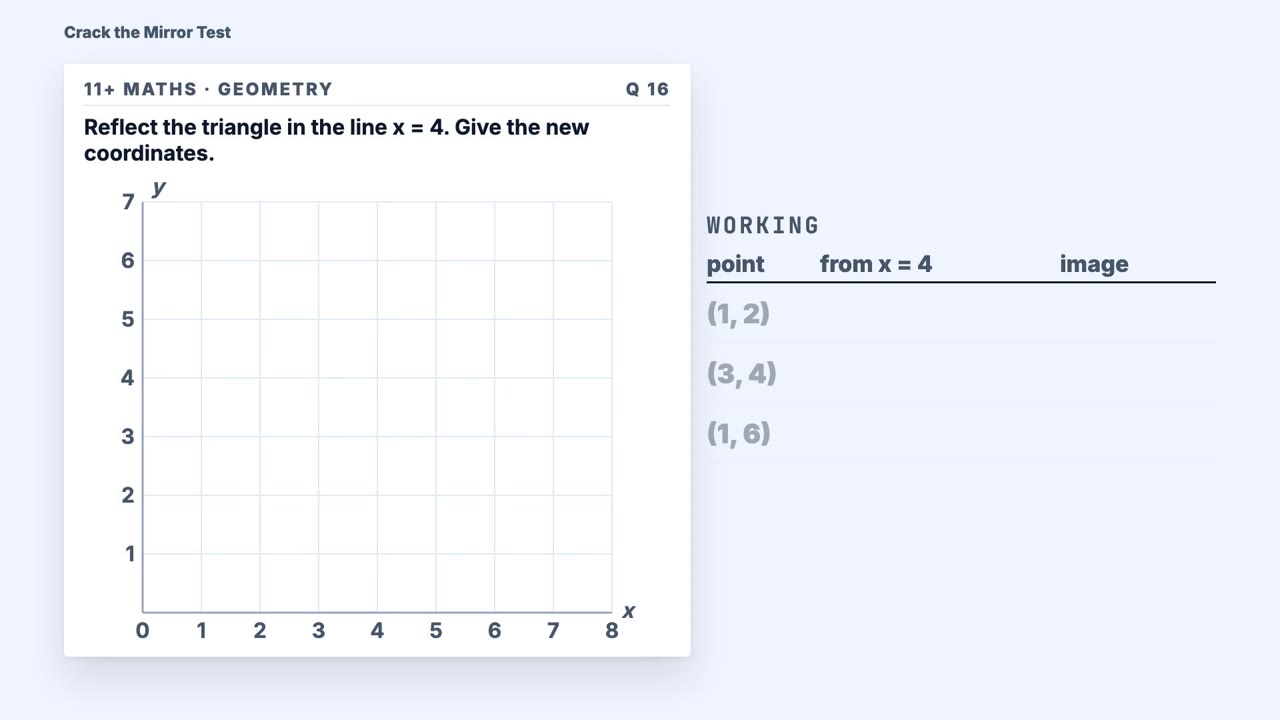
Identify line symmetry
 Length 2:48
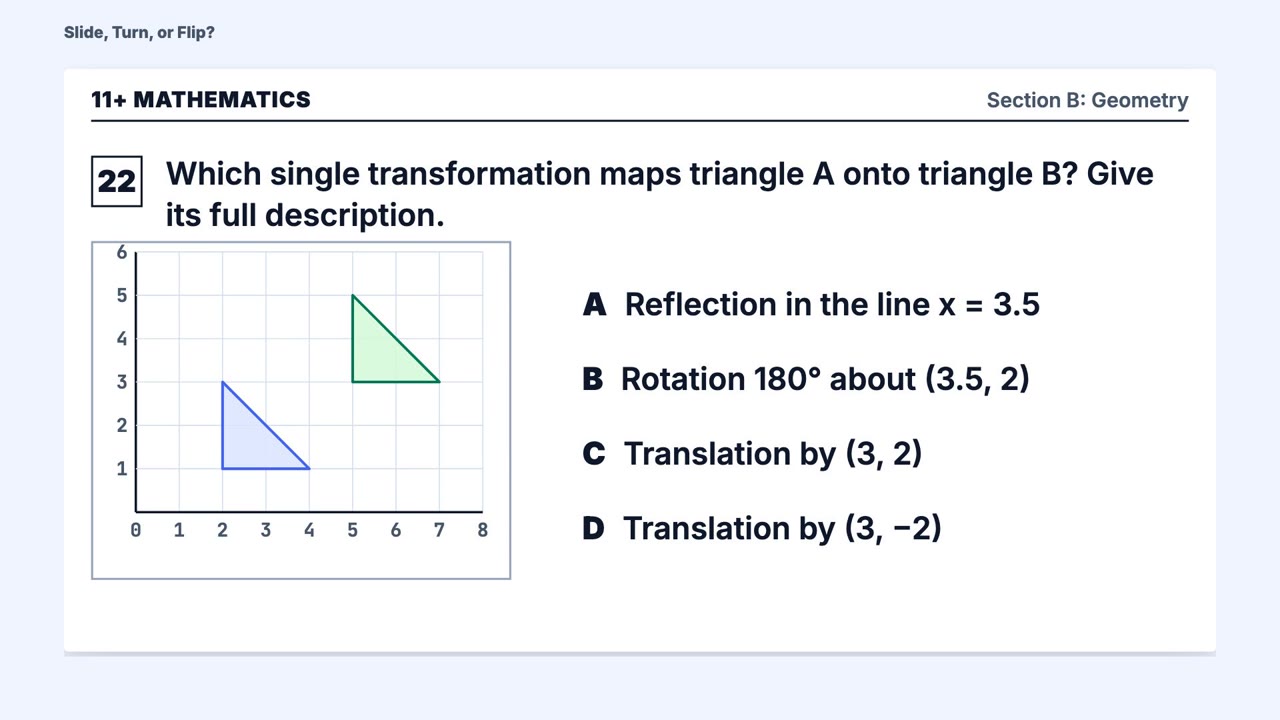
Identify a geometric transformation
The free diagnostic checks maths, English and both kinds of reasoning, and shows what to practise next. No card is required.