
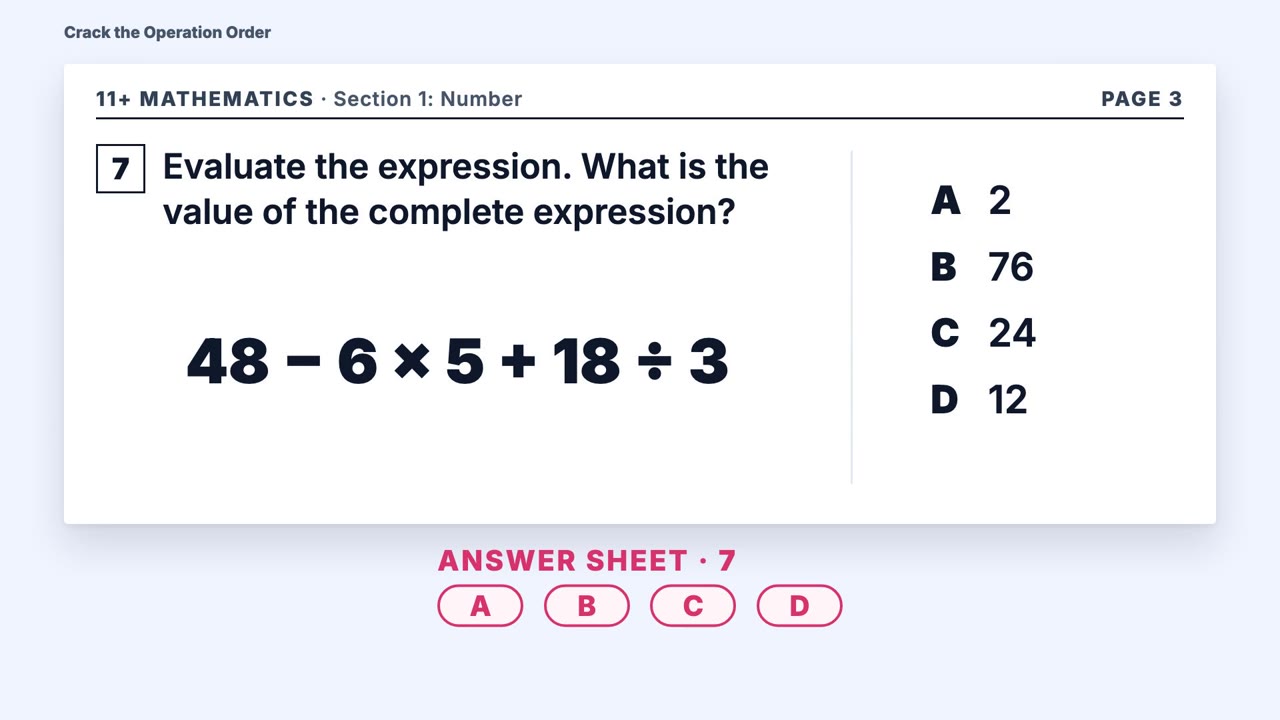
 Length 2:50
Crack the Operation Order
Evaluate a mixed expression
11+ Maths · Number
A short worked example (2:33) for one 11+ maths skill: Divide whole numbers or decimals.
This video shows how to calculate a division and interpret any remainder in the way the question asks. Watch an 11+ maths question solved step by step.
Turn on captions with the CC button. The full transcript is below the video.
Every word of the video, to read along or to skim before watching.
A division can finish with a remainder... or can it? Add a decimal point and zeroes, and that leftover can keep dividing. The answer becomes more precise with every new decimal place you reveal.
Picture forty-seven counters shared equally between four trays. Each tray gets eleven counters, with three left over. So forty-seven divided by four is eleven remainder three. That remainder is not automatically the final answer. The question tells you how to report it. To continue, write a decimal point after eleven. Add a zero after forty-seven, making four hundred and seventy tenths in the working. Bring down the zero beside the remainder three. Now divide thirty by four. Seven fits, with two left. The seven means seven TENTHS, not just seven. Its column gives its place value. You can add another zero and continue again. Twenty divided by four is five, so the exact answer is eleven point seven five. If the question asks for fewer decimal places, look at the NEXT digit, then round once.
Let's work through an example. Calculate fifty-three divided by eight. Give your answer to one decimal place. This is one division, so there is no chain of operations to work through from left to right. Eight fits into fifty-three six times, because six eights are forty-eight. Subtract, and five remains. Write fifty-three point zero, then put the answer's decimal point directly above it. Bring down the zero. Fifty divided by eight is six, with two left. The six sits in the tenths column. We need one decimal place, so inspect the next digit. Add another zero. Twenty divided by eight is two, with four left. The hundredths digit is two. Two is below five, so the tenths digit stays six. The required answer is six point six.
Divide carefully, extend a remainder with zeroes when needed, and let the stated accuracy control your final answer. Keep each digit in its proper place - and you will divide with confidence!
Watch these next. The first ones teach the skills closest to this one.
Length 2:50Evaluate a mixed expression
 Length 2:37
Find a sequence term
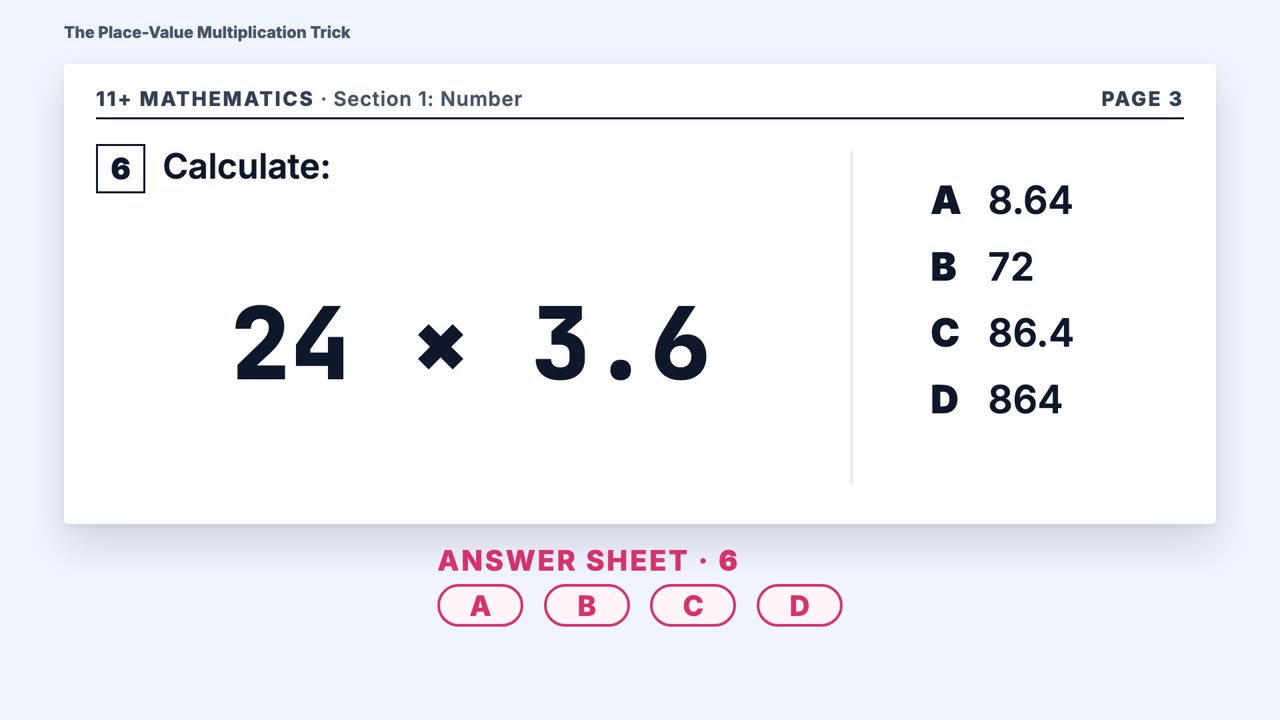 Length 2:47
Multiply whole numbers or decimals
The free diagnostic checks maths, English and both kinds of reasoning, and shows what to practise next. No card is required.