
 Length 2:26
Fractions in Decimal Disguise
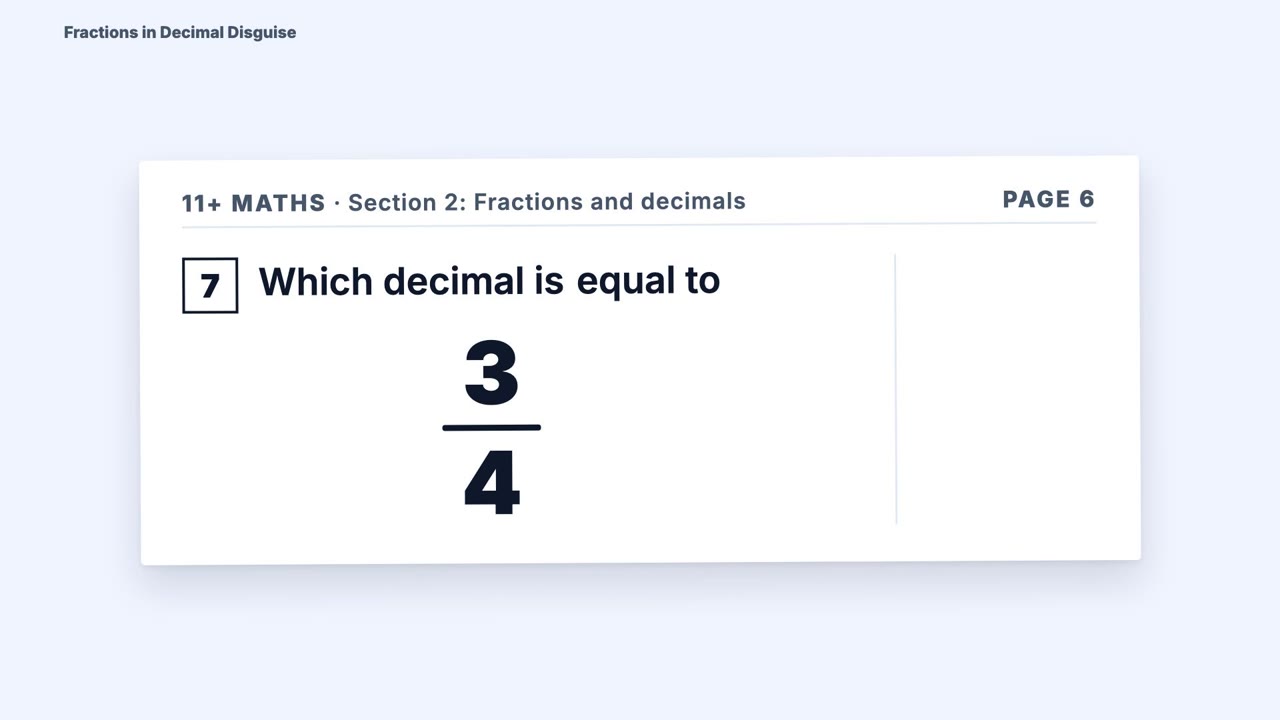
Convert fraction and decimal
11+ Maths · Fractions, decimals and percentages
A short worked example (2:42) for one 11+ maths skill: Convert decimal and percentage.
This video shows how to convert a decimal to a percentage, or a percentage to a decimal, using place value. Watch an 11+ maths question solved step by step.
Turn on captions with the CC button. The full transcript is below the video.
Every word of the video, to read along or to skim before watching.
Could zero point four and forty per cent be exactly the SAME amount? They look different... yet both can shade the same part of this square. There is a quick hundred switch connecting them. Once you see it, decimal and percentage questions become much easier!
Per cent means out of one hundred. This square has one hundred EQUAL boxes, arranged in ten equal rows and ten equal columns. If forty boxes are shaded, that is forty out of one hundred: forty per cent. Equal boxes matter. Unequal pieces cannot represent equal hundredths. Now take zero point four. It means four tenths. Each tenth fills ten boxes, so four tenths fills forty boxes. Look... the shading has not moved at all. Zero point four and forty per cent name the SAME amount; only the notation changes. To convert a decimal to a percentage, multiply by one hundred, then write the per cent sign. The digits shift two place-value columns to the RIGHT. To return to a decimal, divide by one hundred, shifting two columns left. Never simply add or drop the sign. Zero point four per cent is not zero point four; it is one hundred times smaller.
Here is an 11+ question: convert zero point three seven to a percentage. First, read the decimal carefully. Zero point three seven means thirty-seven hundredths. So, on a hundred grid, exactly thirty-seven equal boxes should be shaded. That tells us the percentage will be between thirty and forty per cent. Now multiply zero point three seven by one hundred. Shift the digits two place-value columns right. After one shift, we have three point seven. After the SECOND shift, we have thirty-seven. Now attach the per cent sign. The answer is thirty-seven per cent. Check it by reversing the switch. Start with thirty-seven per cent and divide by one hundred. Shift two place-value columns LEFT: thirty-seven becomes three point seven, then zero point three seven. We have reached the original decimal, and the same thirty-seven grid boxes remain shaded. Check complete!
Remember the hundred switch: decimal to percentage, multiply by one hundred. Percentage to decimal, divide by one hundred. Change the value AND the notation - never just add or remove the per cent sign. You have got this!
Watch these next. The first ones teach the skills closest to this one.
Length 2:26Convert fraction and decimal
 Length 2:36
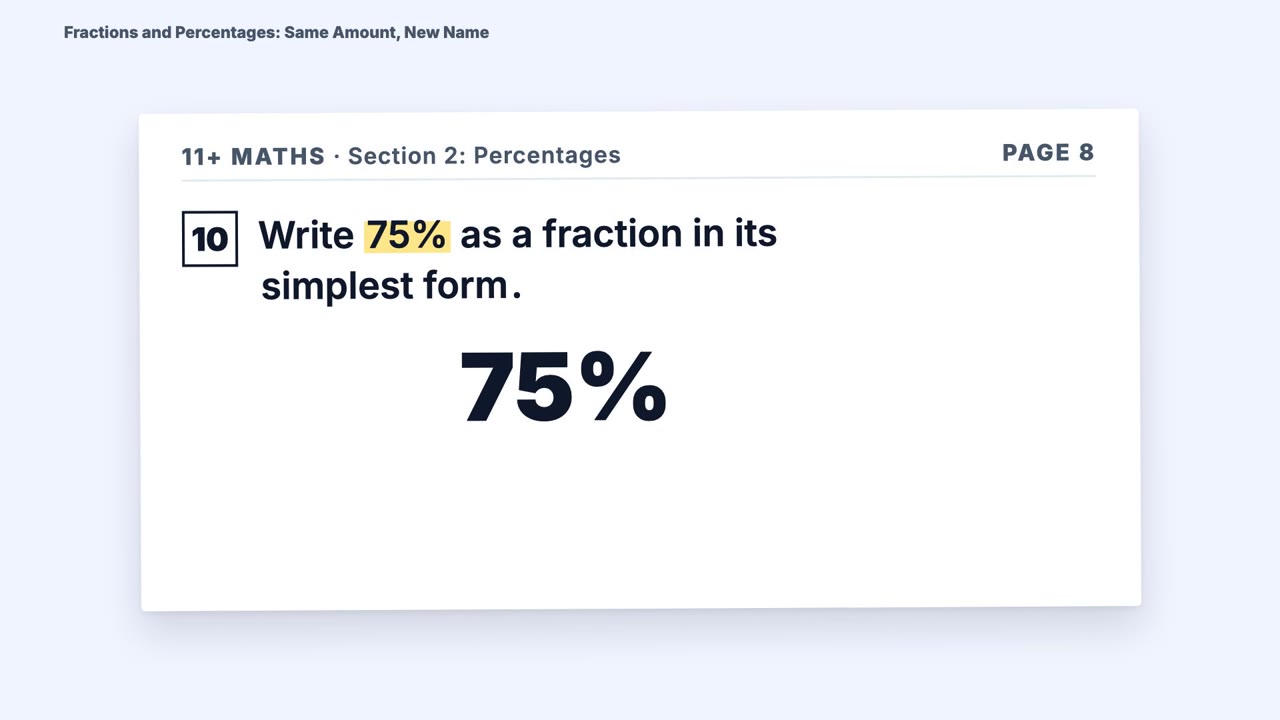
Convert fraction and percentage
 Length 2:10
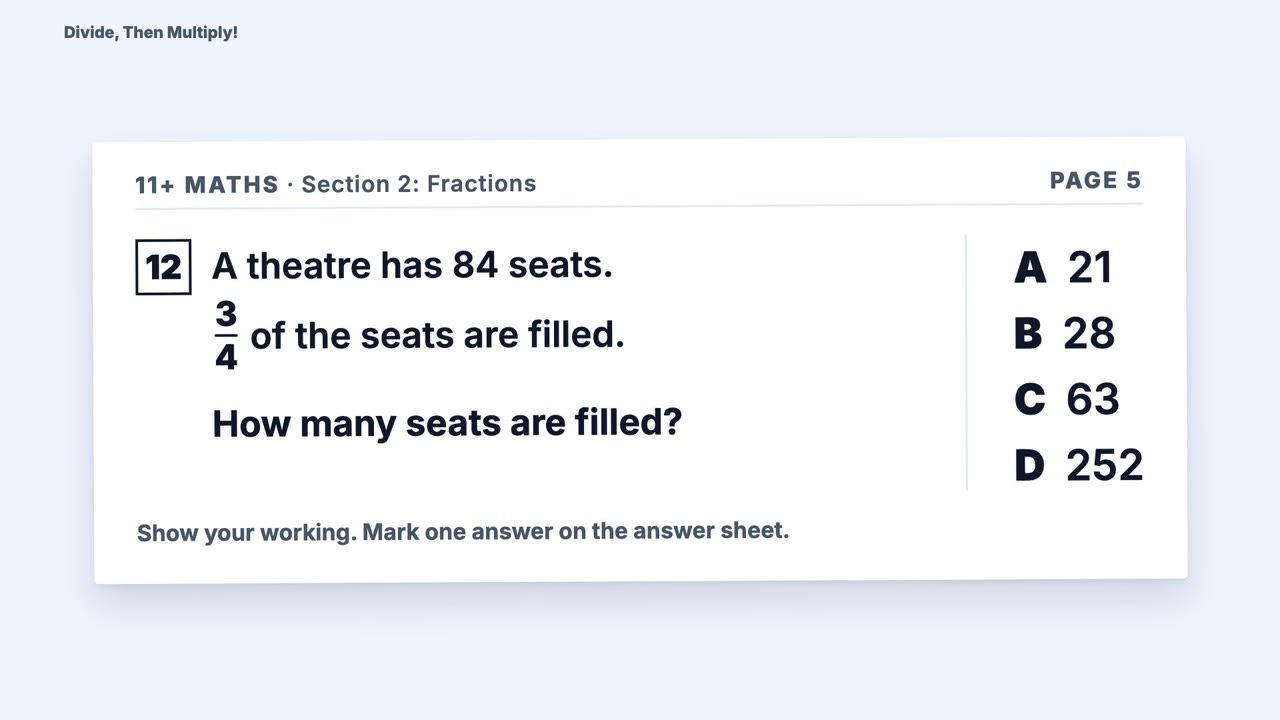
Find a fraction of a quantity
The free diagnostic checks maths, English and both kinds of reasoning, and shows what to practise next. No card is required.