
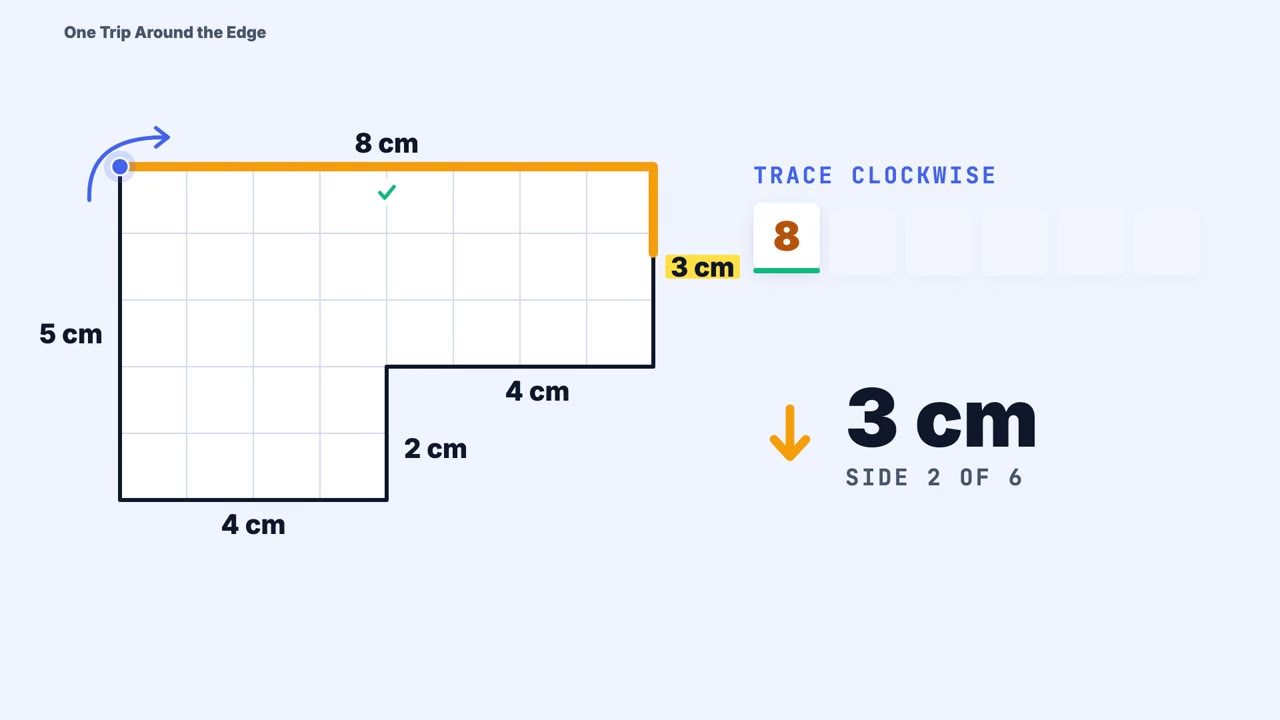
 Length 2:39
One Trip Around the Edge
Calculate perimeter
11+ Maths · Measure
A short worked example (2:34) for one 11+ maths skill: Calculate a duration.
This video shows how to calculate how much time passes between two clock times or timetable entries. Watch an 11+ maths question solved step by step.
Turn on captions with the CC button. The full transcript is below the video.
Every word of the video, to read along or to skim before watching.
A cinema advert says the film starts at ten forty-seven and finishes at twelve eighteen. The clocks look awkward... but two friendly jumps can uncover the running time.
Picture the start and finish on a timeline, with time moving from left to right. First, jump from the start to the next whole hour. Then jump from that hour to the finish. Each jump shows a chunk of elapsed time. Write the minutes beside each arrow. Add the chunks because both happened, one after the other. Check the units: sixty minutes make one hour. This is elapsed time, not boundary length, so multiplying side lengths cannot help. You are measuring how much TIME passed. Why use whole hours? They are easy landmarks, like stepping stones. You could choose different jumps and still get the same answer. The vital rule is simple: cover every minute once, with no gaps and no overlaps.
Let's work through an example. A museum workshop begins at nine forty-seven in the morning and ends at eleven oh eight. How long does the workshop last? Place nine forty-seven at the left of a timeline and eleven oh eight at the right. Jump to ten o'clock first. From nine forty-seven to ten o'clock is thirteen minutes. Label that arrow thirteen minutes. Now jump from ten o'clock to eleven o'clock. That is one whole hour. The final jump, from eleven o'clock to eleven oh eight, is eight minutes. Three clear chunks now fill the gap. Add them: thirteen minutes, plus one hour, plus eight minutes. Combine the minutes first. Thirteen plus eight equals twenty-one. So the total duration is one hour and twenty-one minutes. Check it by moving forward: nine forty-seven, ten o'clock, eleven o'clock, eleven oh eight. The finish matches exactly.
To calculate a duration, move forward from start to finish in friendly jumps, label each chunk, then ADD the chunks. Keep your units tidy, check the finish... and you can tame even awkward timetable times!
Watch these next. The first ones teach the skills closest to this one.
Length 2:39Calculate perimeter
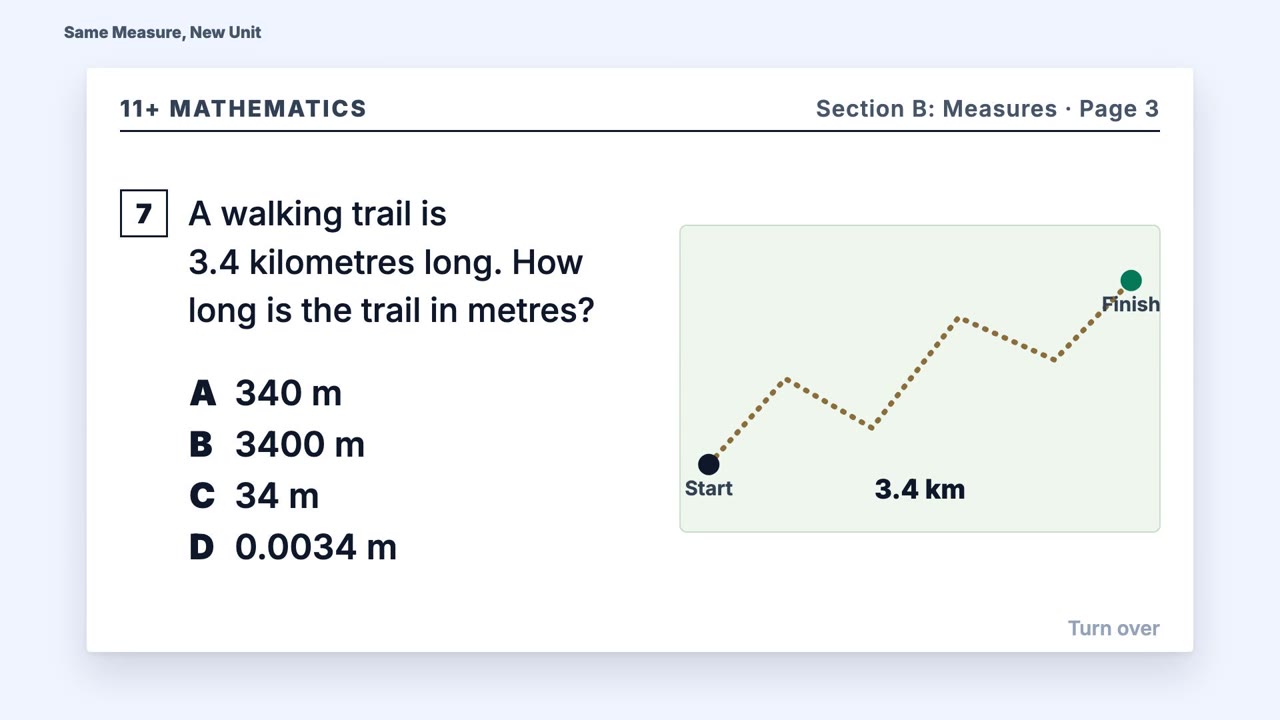 Length 2:43
Convert units
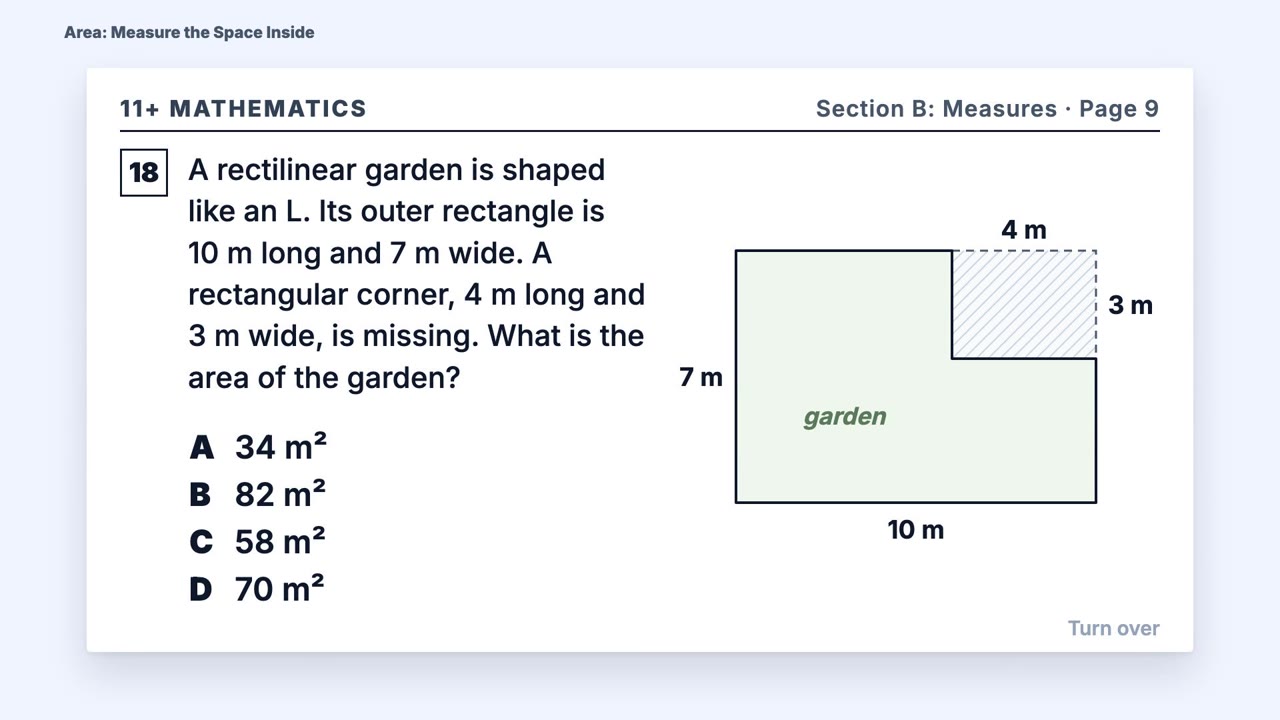 Length 2:45
Calculate area
The free diagnostic checks maths, English and both kinds of reasoning, and shows what to practise next. No card is required.