
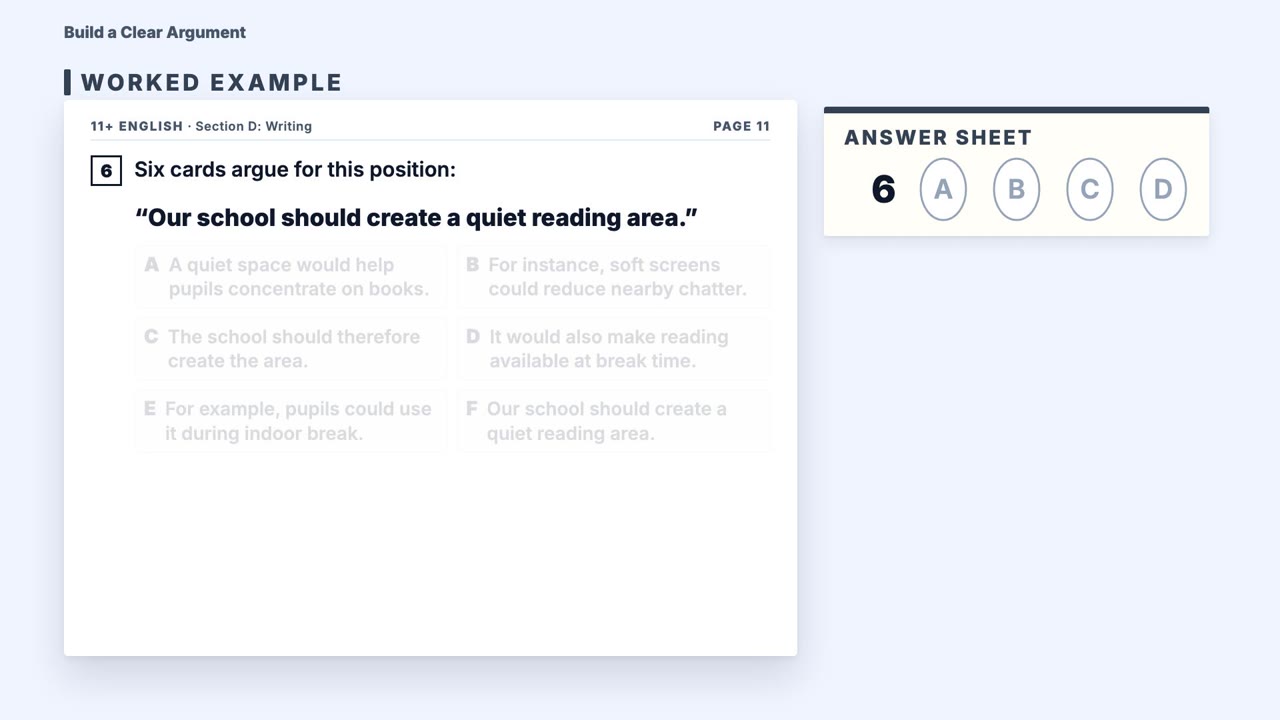
 Length 2:44
Build a Clear Argument
Organise an argument
11+ English · Writing
A short worked example (2:43) for one 11+ English skill: Plan for purpose and audience.
This video shows how to choose content and a style of language that suit the task and the reader. Watch an 11+ English question solved step by step.
Turn on captions with the CC button. The full transcript is below the video.
Every word of the video, to read along or to skim before watching.
Two messages can share the same facts, yet one makes someone act and the other gets ignored. The secret is not fancier vocabulary... it is choosing every detail for WHO will read it, and why.
Start with purpose: what must your writing do? Inform, persuade, entertain, or instruct? Put that goal at the centre of your plan. Then name the audience. A head teacher, a friend, and younger pupils need different explanations, even when the topic stays the same. Now build two columns: content and register. Content means the facts, reasons, or instructions you include. Register means how formal, friendly, serious, or lively your words sound. Draw arrows from each choice back to the purpose and audience. If a choice does not help them, leave it out. Here is the common trap: planning the piece YOU would enjoy, then adding the audience's name at the top. That changes the label, not the plan. Instead, choose what this reader needs to know, what may convince them, and which tone will make them listen.
Let's work through an example. Your school council wants pupils to use less plastic at lunchtime. Plan a short email to pupils aged nine to eleven, persuading them to bring a reusable bottle. Choose the most suitable content and register. First, pin down the purpose: persuade. The audience is pupils your age, so they need a clear reason and an easy action. In the content column, write: fewer throwaway bottles means less plastic waste. Then add the action: bring a named reusable bottle from Monday. Next, choose a friendly, encouraging register: "Bring your bottle on Monday and help our school cut plastic waste!" That direct invitation suits pupils and the persuasive purpose. Formal wording such as "Your compliance is requested" would sound wrong here. The completed plan is: useful reason, simple action, upbeat tone.
Remember: purpose tells you what the writing must achieve; audience tells you what to include and how to sound. Link every planned choice to both... and your writing will already be heading in the right direction.
Watch these next. The first ones teach the skills closest to this one.
Length 2:44Organise an argument
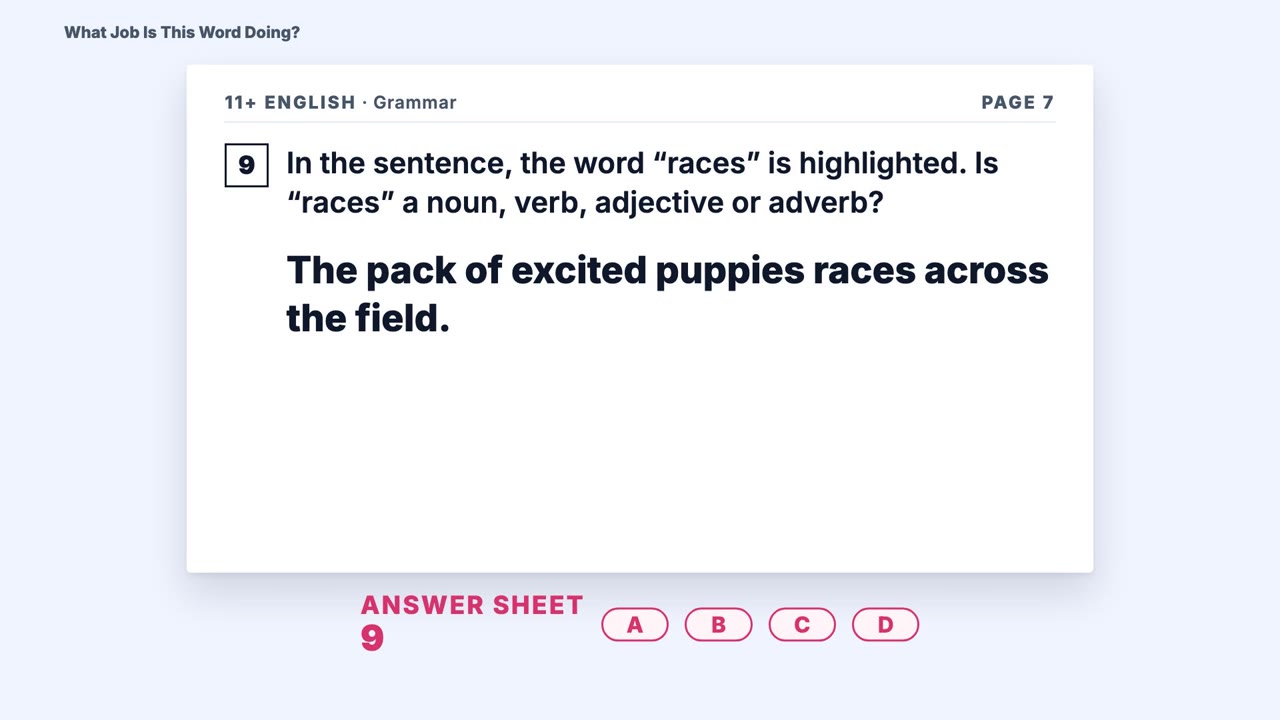 Length 2:35
Classify a word in context
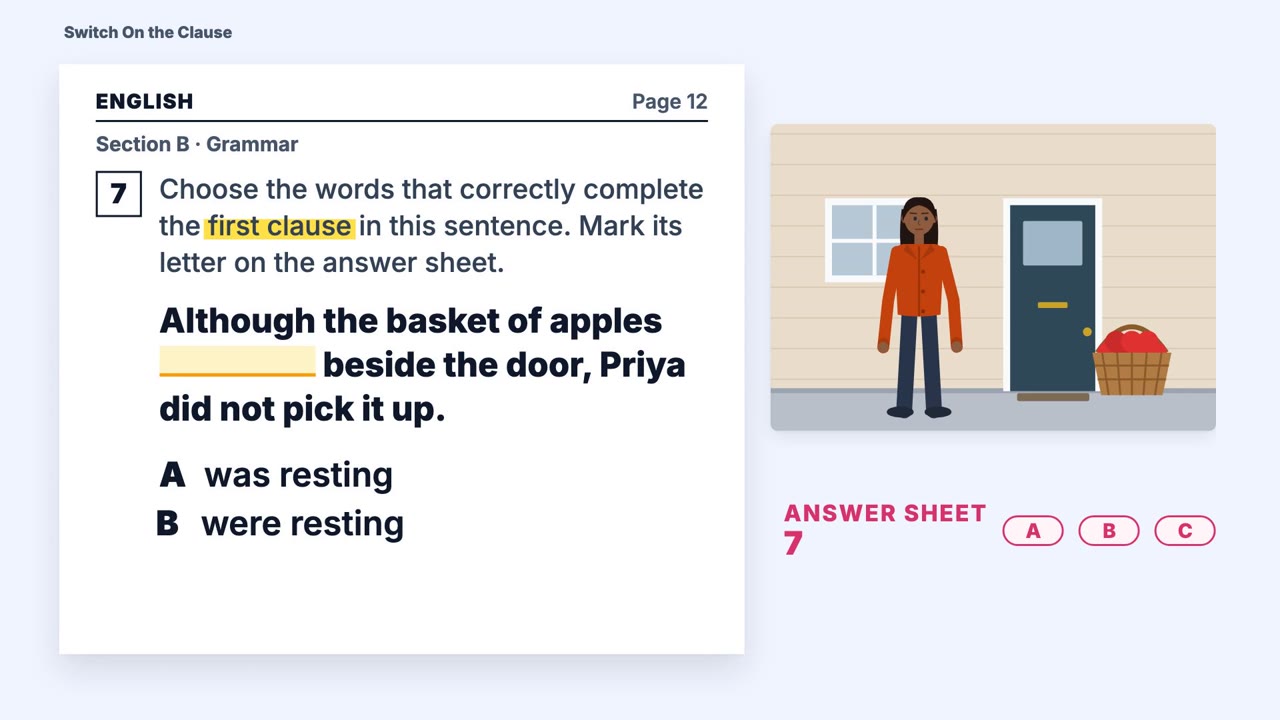 Length 2:38
Complete a finite clause
The free diagnostic checks maths, English and both kinds of reasoning, and shows what to practise next. No card is required.