
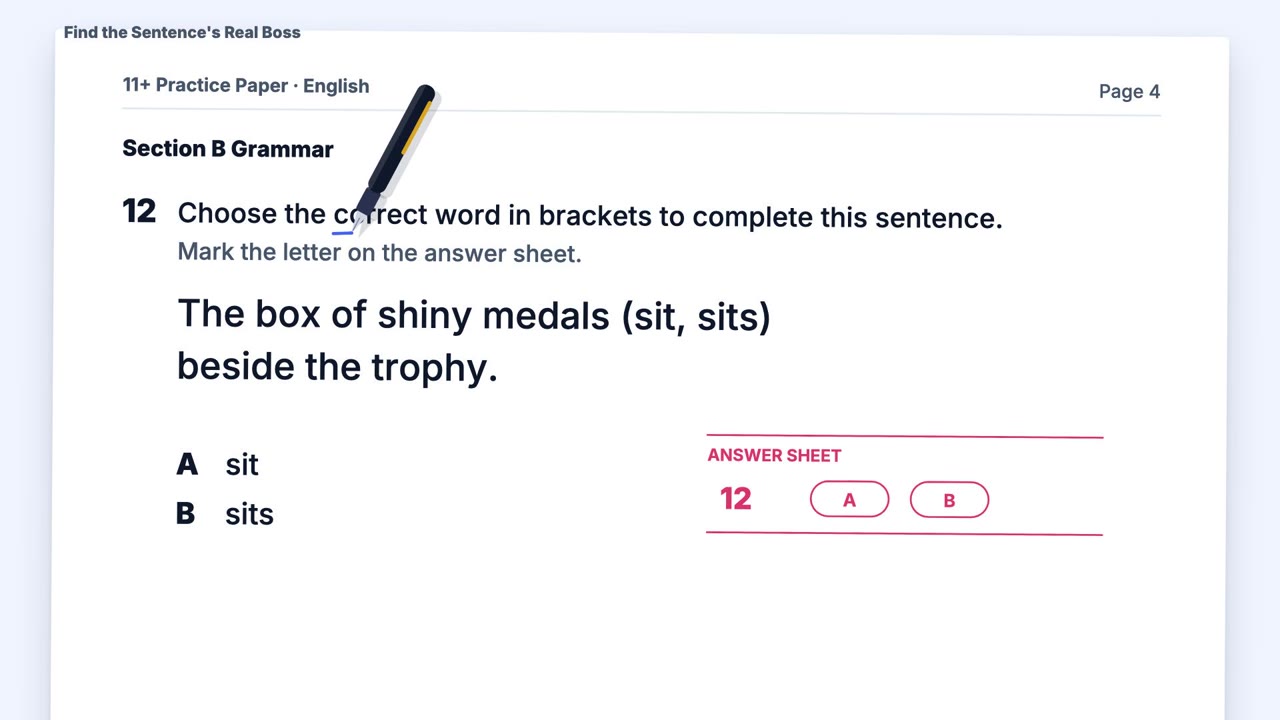
 Length 2:33
Find the Sentence's Real Boss
Match subject and verb
11+ English · Grammar
A short worked example (2:38) for one 11+ English skill: Maintain consistent tense.
This video shows how to choose verb forms that keep the order of events clear. Watch an 11+ English question solved step by step.
Turn on captions with the CC button. The full transcript is below the video.
Every word of the video, to read along or to skim before watching.
One tiny verb can make a whole story wobble. A sentence begins yesterday, then suddenly jumps to today without warning. Can you spot the time traveller... and send it back where it belongs?
A sentence has a timeline. Past-tense verbs place actions behind you: walked, noticed, had forgotten. Present-tense verbs place actions now: walks, notices, has forgotten. Future forms point ahead: will walk, will notice. When actions belong to the same time frame, their verb forms should work together. Watch this pair. "Maya opened the gate and waves to her friend." Opened fixes the scene in the past, but waves jumps into the present. Keep the camera in one time: "Maya opened the gate and waved to her friend." Now both actions sit on the past timeline. Time clues help. Yesterday, last week, and earlier usually signal the past. Now and every day often signal the present. Tomorrow and next year point to the future. Do not match a verb to the nearest noun. The noun tells you who; the timeline tells you WHEN the action happens.
Let's work through an example. Choose the best word to complete this sentence: "After Priya finished her breakfast, she ___ her coat and hurried to school." The options are: puts on, put on, will put on, or is putting on. First, find the time clue. "Finished" is past tense. "Hurried" is past tense too. Those two verbs hold the sentence firmly in the past. The missing action happens between them, so it should stay in that same time frame. Now test each option. "Puts on" and "is putting on" are present forms, so they make the sentence jump forwards. "Will put on" points to the future, which also breaks the sequence. "Put on" can show the past. The completed sentence is: "After Priya finished her breakfast, she put on her coat and hurried to school." The answer is "put on".
Keep your sentence on one timeline: use time clues, check every verb, and ignore nearby nouns. Hold the tense steady... and your writing will sound confident and clear.
Watch these next. The first ones teach the skills closest to this one.
Length 2:33Match subject and verb
 Length 2:31
Order sentence elements
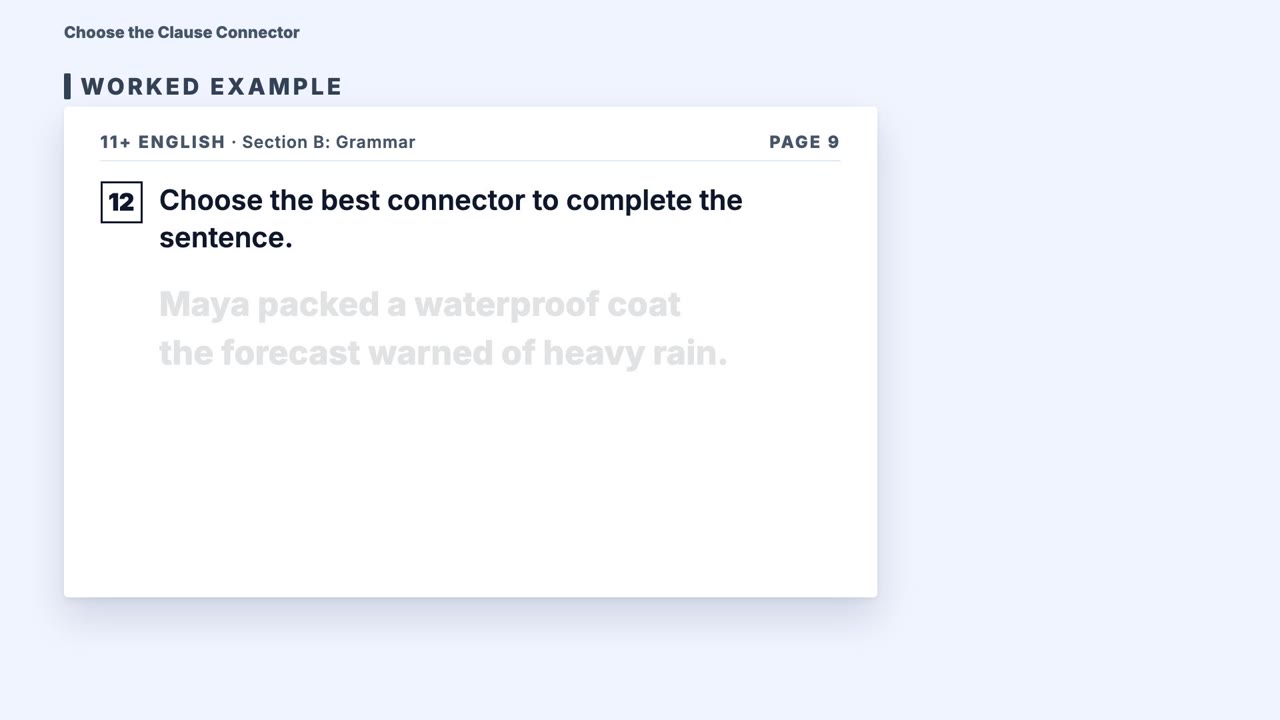 Length 2:40
Select a clause connector
The free diagnostic checks maths, English and both kinds of reasoning, and shows what to practise next. No card is required.