
 Length 2:35
Find the Detail on the Line
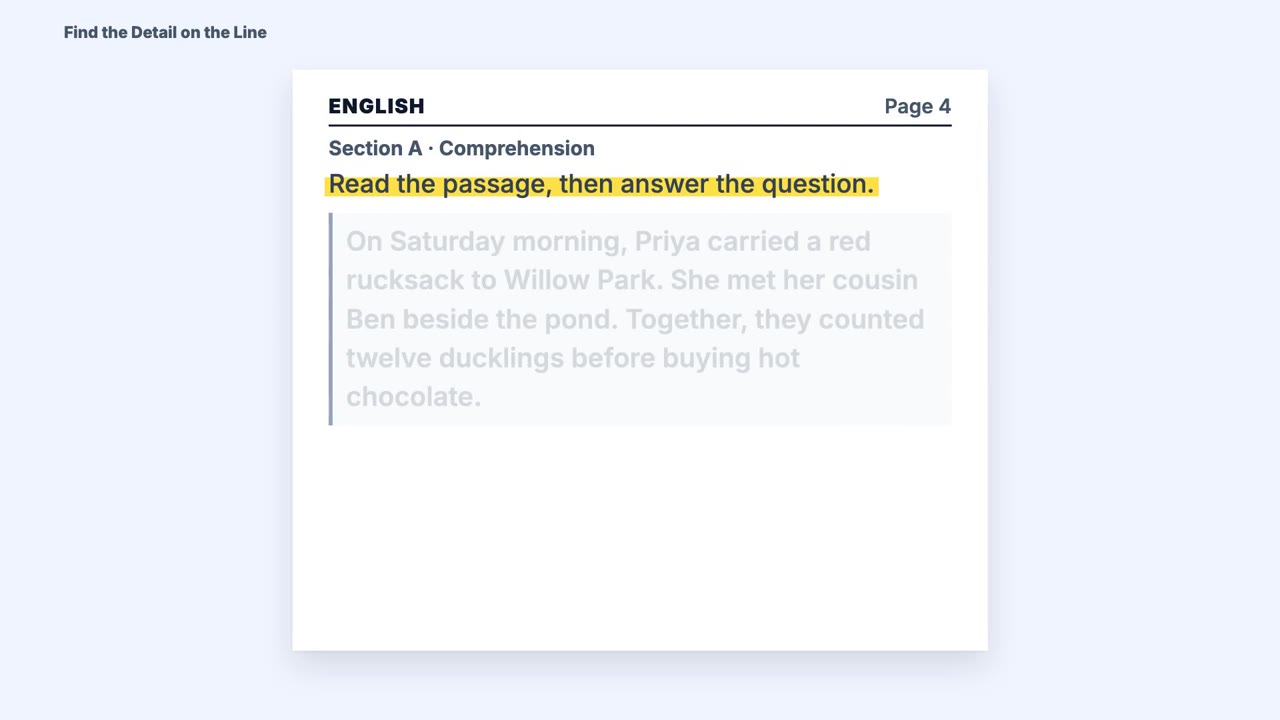
Retrieve an explicit detail
11+ English · Reading
A short worked example (2:33) for one 11+ English skill: Interpret a word in context.
This video shows how to use the surrounding sentence and passage to work out what a word means. Watch an 11+ English question solved step by step.
Turn on captions with the CC button. The full transcript is below the video.
Every word of the video, to read along or to skim before watching.
One tiny word can change its meaning when it moves into a new sentence. Even a familiar one can trick you. So, how do you crack the meaning without a dictionary? You become a word detective - and make the surrounding text prove your answer.
Start with the whole sentence. Cover the mystery word, then ask: what is happening here? Notice the people, actions and details around the gap. These clues create a meaning-shape. The missing word must fit that shape. Next, test a simple replacement. Put your possible meaning into the sentence. Does the sentence still make sense? Does it match the wider passage? If both answers are yes, your meaning has evidence behind it. Beware the tempting trap: choosing the definition you already know. A word can have several meanings. Do not grab a nearby detail, either. Use the grammar and the exact event to choose the meaning that fits THIS sentence.
Let's work through an example. Read this short passage: "Maya reached the shelter just as the rain hammered down. Inside, she found a bench and gratefully sank onto it. At last, she was sheltered from the storm." In this passage, what does "sank" mean: fell below the surface, became lower in value, sat down heavily, or felt disappointed? First, picture the event. Maya has hurried through heavy rain and reached shelter. She finds a bench. The words "gratefully" and "At last" show relief. So "felt disappointed" clashes with the passage, and nothing is going beneath water or losing value. Now replace the word: "she gratefully sat down heavily onto it." The action fits the bench, and the manner fits her tired relief. Therefore, "sank" means sat down heavily. That is option three.
When a word feels slippery, use three moves: read around it, try a replacement, and demand evidence from the whole passage. Choose the meaning that fits the exact sentence - not simply the meaning you know best. You can crack unfamiliar words with clues!
Watch these next. The first ones teach the skills closest to this one.
Length 2:35Retrieve an explicit detail
 Length 2:43
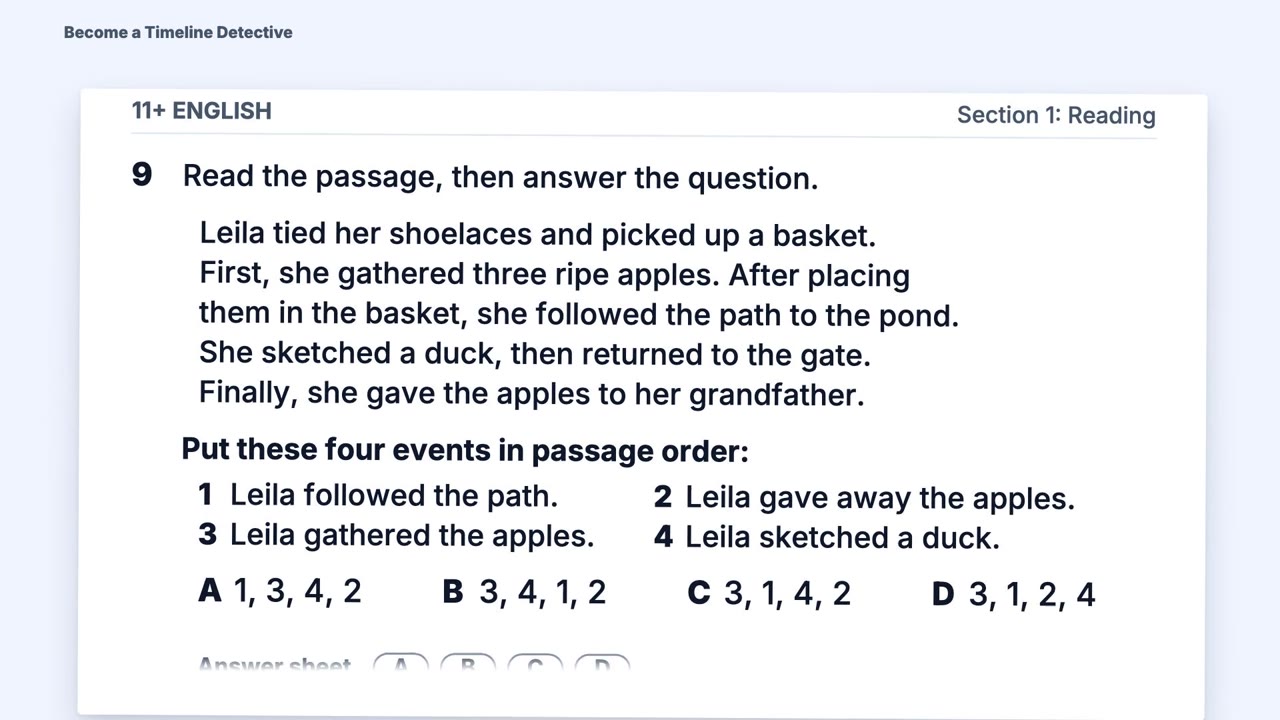
Sequence passage events
 Length 2:28
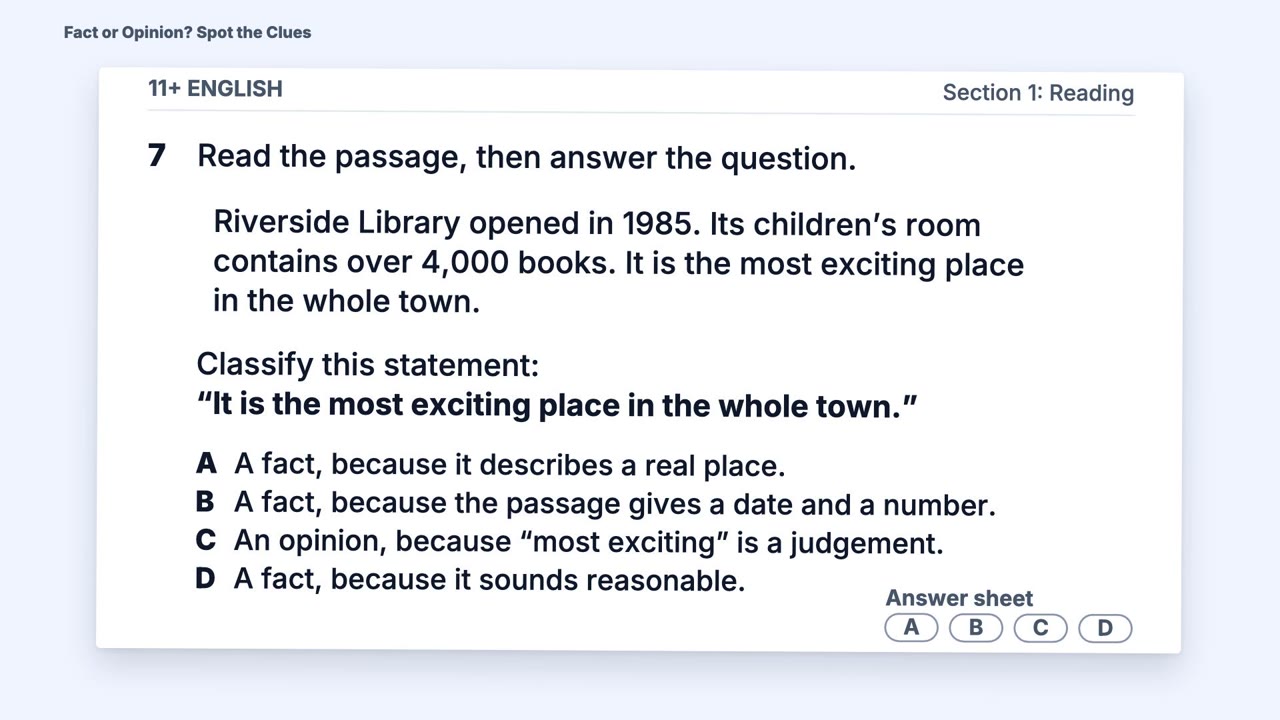
Distinguish fact and opinion
The free diagnostic checks maths, English and both kinds of reasoning, and shows what to practise next. No card is required.