
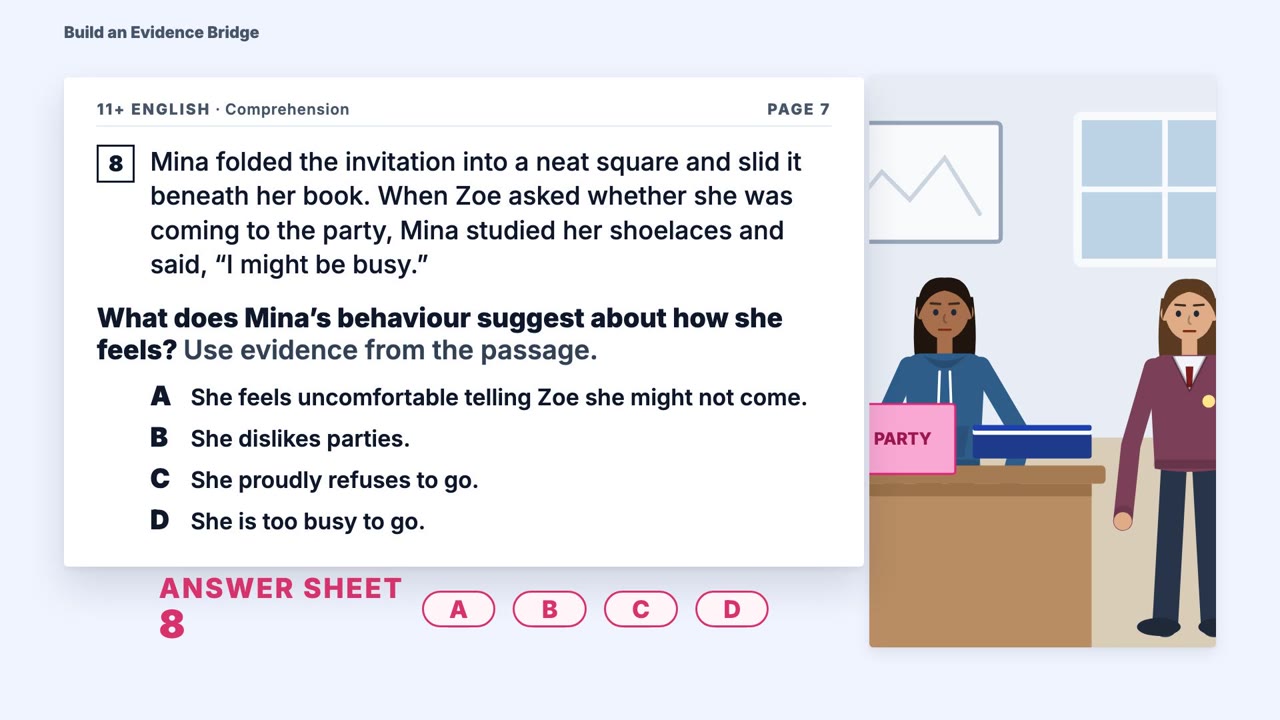
 Length 2:33
Build an Evidence Bridge
Infer a character state
11+ English · Reading
A short worked example (2:55) for one 11+ English skill: Identify writer viewpoint.
This video shows how to use a writer’s choice of words to work out their attitude towards the subject. Watch an 11+ English question solved step by step.
Turn on captions with the CC button. The full transcript is below the video.
Every word of the video, to read along or to skim before watching.
Two writers can describe the same rainy playground and make it feel completely different. One calls it a sparkling adventure; the other calls it a soggy disaster. Their facts may match... but their viewpoints do not.
A writer's viewpoint is what they think or feel about a subject. You uncover it through language choices. Picture a magnifying glass over describing words, comparisons, and loaded phrases that show approval, dislike, excitement, or doubt. First, name the subject. Next, collect exact clues around it. Then ask, "What attitude do these clues create?" Build your answer from the words on the page - not from what you already believe about the topic. Beware of a nearby detail. A new slide, three benches, or Tuesday's rain may be true, but a true detail is not automatically the viewpoint. And a sensible guess is still only a guess unless several language clues support it.
Let's work through an example. Read this passage: "At last, the council has rescued our dreary playground. The splendid new climbing frame towers like a castle, and even the gloomy corner now bursts with colour." The question asks: what is the writer's viewpoint about the playground changes? Choose: disappointed, strongly approving, unsure, or uninterested. Start with the subject: the changes. Spotlight the positive choices. "Rescued" suggests the playground was saved. "Splendid" gives direct praise. "Towers like a castle" makes the frame seem grand and exciting. One clue could mislead; these clues point together. Check the final phrase: "even the gloomy corner now bursts with colour." The contrast moves from gloomy to lively. That strengthens the same attitude. The writer sounds pleased and enthusiastic about what has changed. So the answer is strongly approving. Do not choose a statement merely saying there is a climbing frame. That is a detail. Do not invent that every child loves it. The passage never says that. Our answer fits the exact language.
Remember: find the subject, gather exact language clues, and let their shared attitude reveal the viewpoint. Stay evidence-first, and you'll spot what the writer REALLY thinks. You've got this!
Watch these next. The first ones teach the skills closest to this one.
Length 2:33Infer a character state
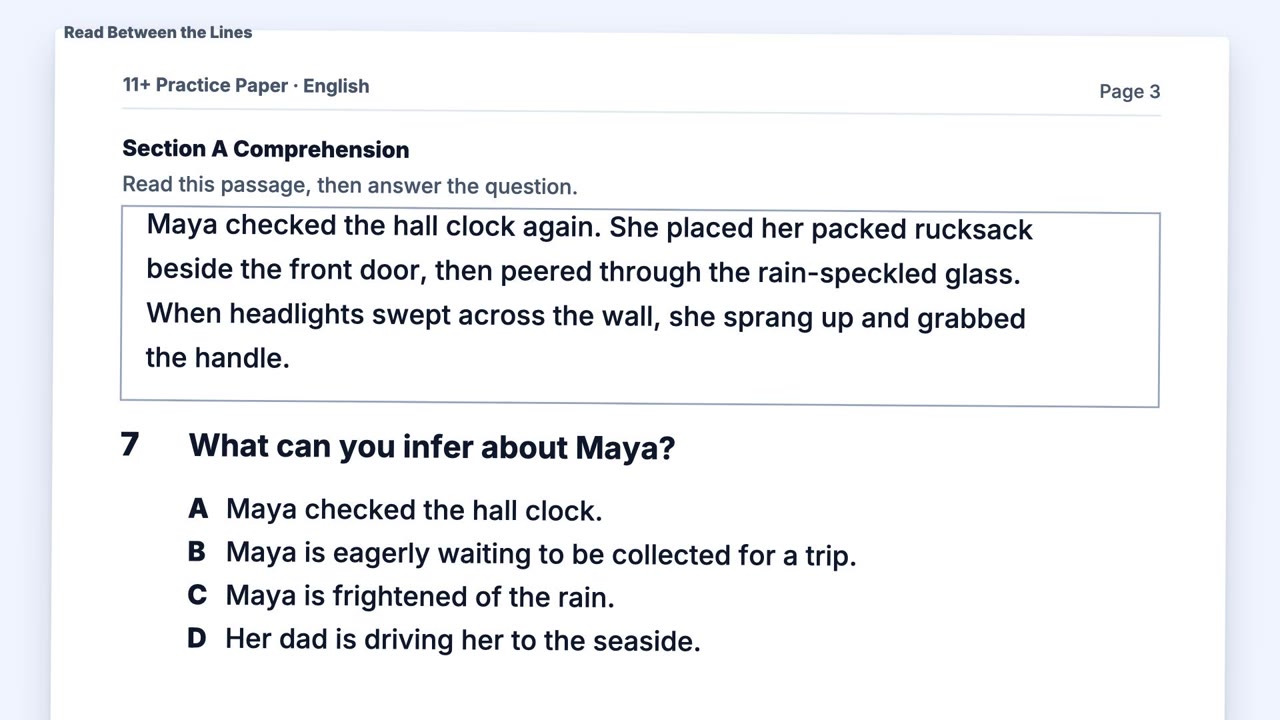 Length 2:37
Infer implicit meaning
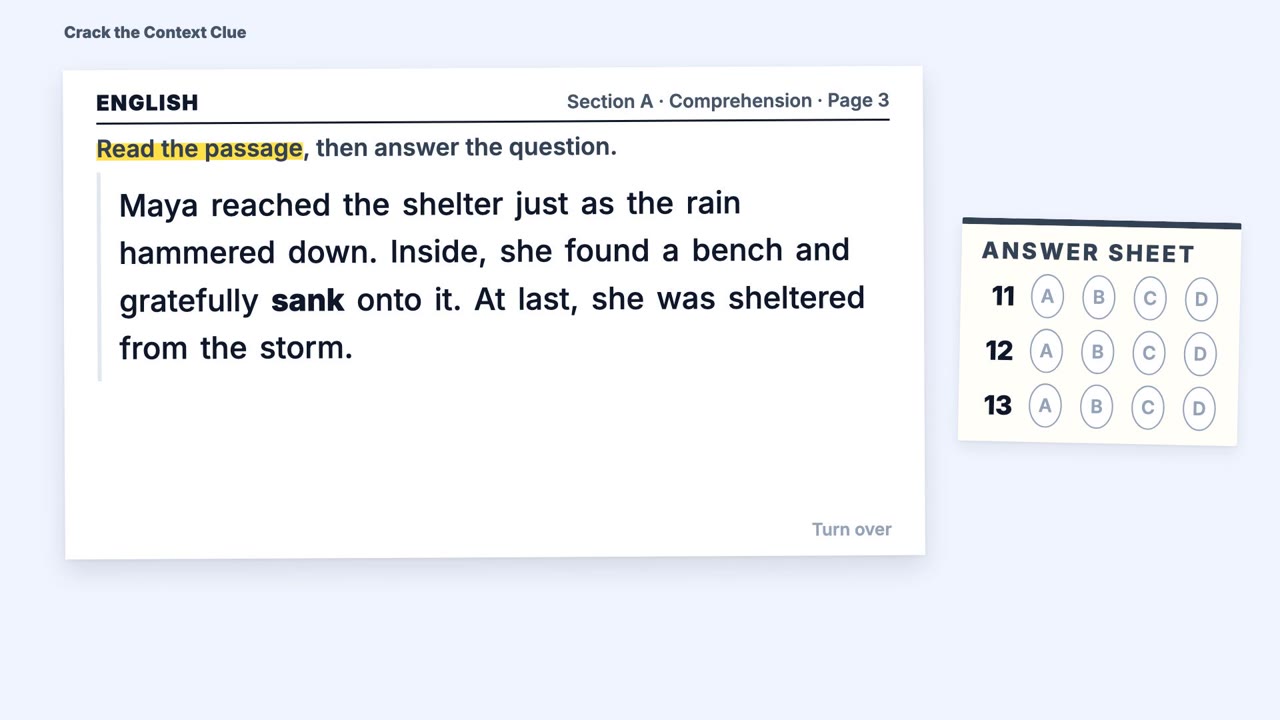 Length 2:33
Interpret a word in context
The free diagnostic checks maths, English and both kinds of reasoning, and shows what to practise next. No card is required.