
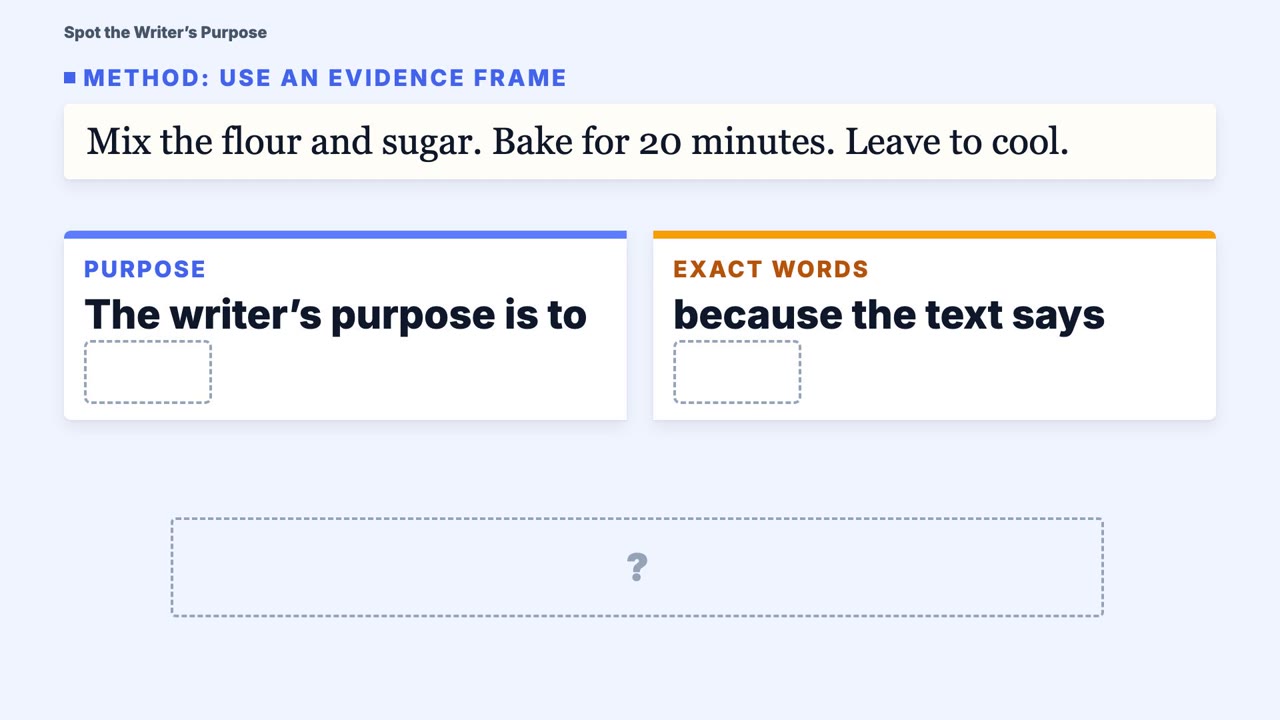
 Length 2:42
Spot the Writer’s Purpose
Identify writer purpose
11+ English · Reading
A short worked example (2:47) for one 11+ English skill: Identify textual mood.
This video shows how to use the words in a passage or poem to identify the atmosphere they create. Watch an 11+ English question solved step by step.
Turn on captions with the CC button. The full transcript is below the video.
Every word of the video, to read along or to skim before watching.
A door handle turns. Nothing frightening has happened... yet. So why can three tiny details make your shoulders tighten? The words are creating a mood, and you can prove it.
Mood is the feeling or atmosphere a passage creates for the reader. It might feel joyful, peaceful, mysterious, gloomy or tense. Picture each mood as a coloured lens laid over the scene. First, spot exact clues you can point to. Look at setting words, sounds, weather, movement and characters' actions. Then ask, what feeling do these clues build TOGETHER? One detail can mislead you; a pattern is stronger evidence. Do not choose an answer merely because it could happen in that setting. Match the option's meaning to the actual words. If the passage says birds chirped softly beside still water, 'exciting' is possible beside a lake, but 'peaceful' fits the evidence. Say the mood in your own word before looking at options. This protects you from a tempting answer that copies one nearby detail.
Let's work through an example. Read this passage: 'Rain tapped at the windows. The classroom clock ticked loudly. Mia held her breath as the door handle slowly turned.' The question asks: Which mood does the passage create? A, cheerful. B, tense. C, peaceful. D, proud. Start with the setting. 'Rain tapped' gives a small repeated sound. The clock 'ticked loudly', making time feel unusually noticeable. On screen, underline those two sound clues. They do not suggest laughter, comfort or success. Now check Mia's action. She 'held her breath'. That is the strongest clue: she is waiting, alert and unsure. The handle turns 'slowly', stretching the moment. Together, the clues build nervous expectation. Compare every option with that evidence. Cheerful needs happiness; peaceful needs calm; proud needs achievement. None appears. Tense means nervous suspense, and every clue supports it. The explicit answer is B, tense.
Remember: name the mood, point to a pattern of exact words, then test the option's meaning against them. Evidence first. Guesswork does not decide. You can catch the feeling and prove it!
Watch these next. The first ones teach the skills closest to this one.
Length 2:42Identify writer purpose
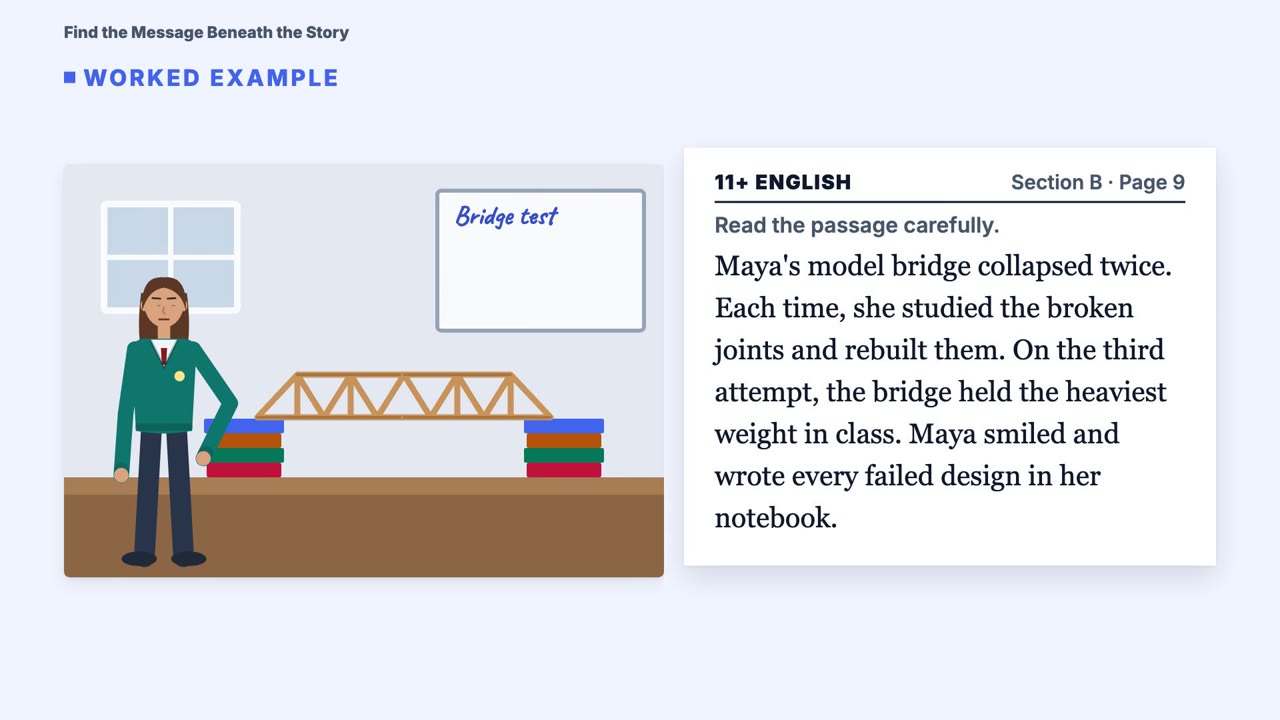 Length 2:44
Identify a theme
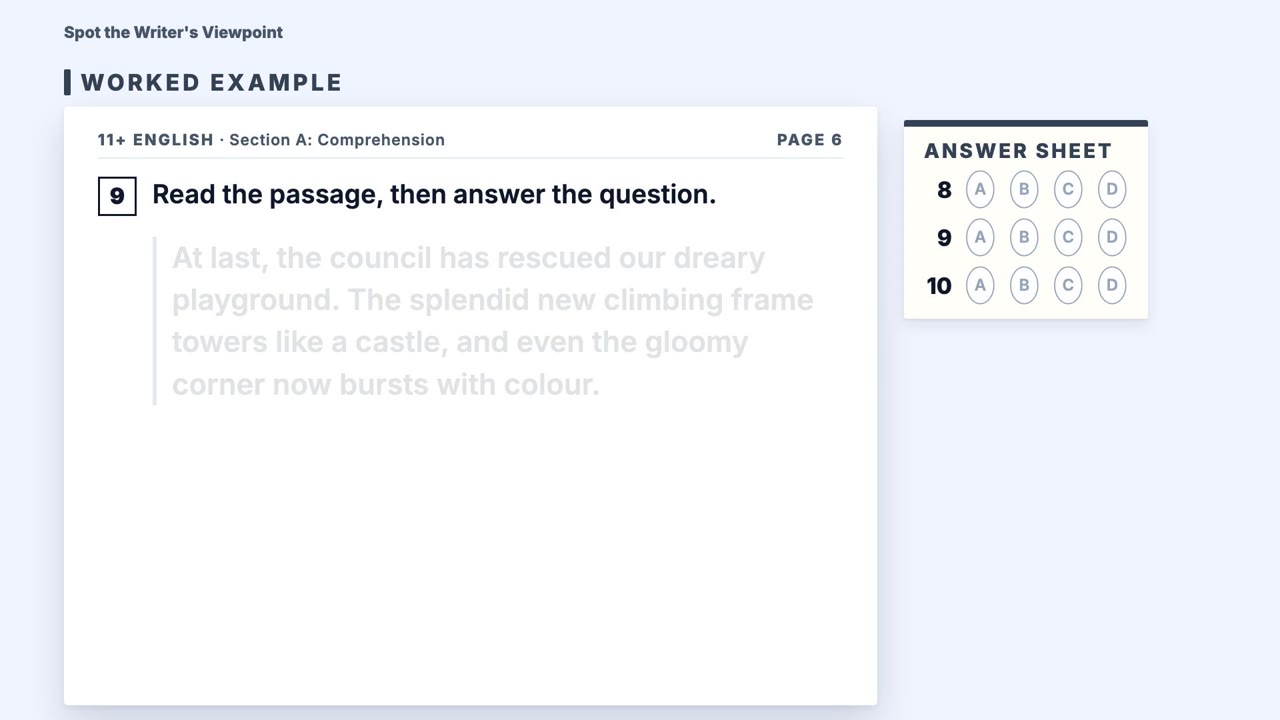 Length 2:55
Identify writer viewpoint
The free diagnostic checks maths, English and both kinds of reasoning, and shows what to practise next. No card is required.