
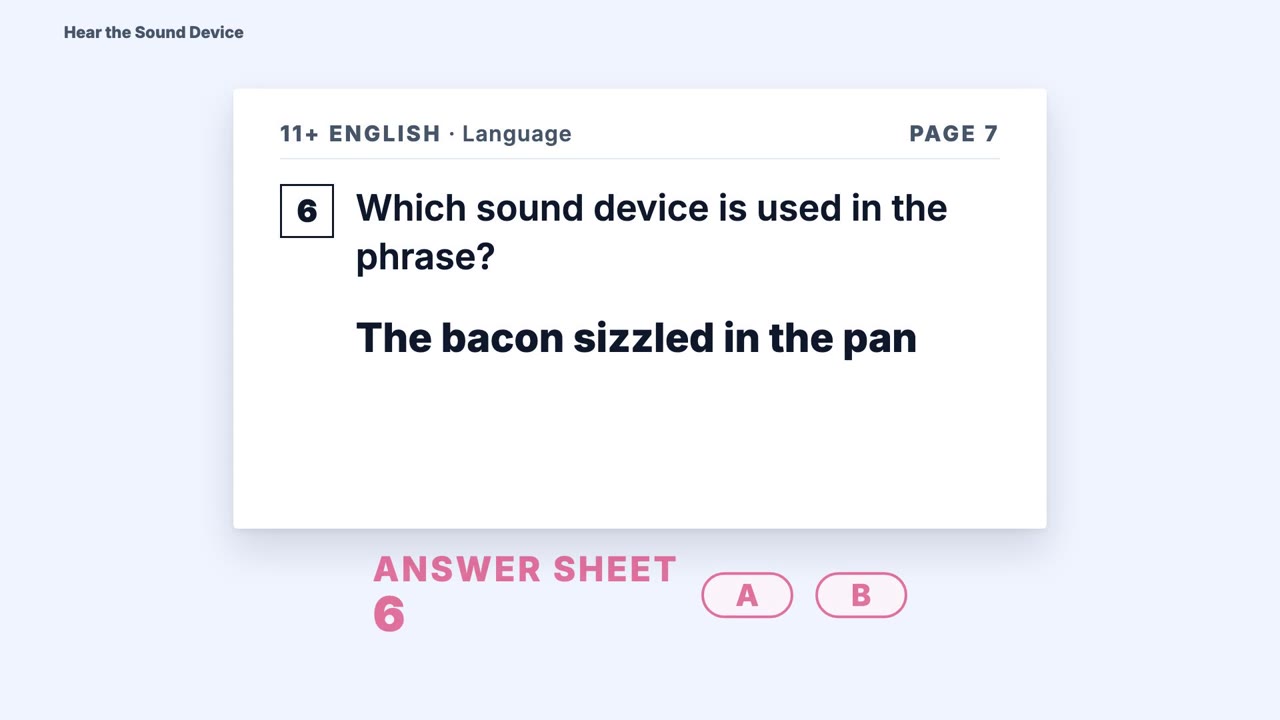
 Length 2:43
Hear the Sound Device
Identify a sound device
11+ English · Language
A short worked example (2:48) for one 11+ English skill: Identify figurative language.
This video shows how to distinguish similes, metaphors and personification from literal descriptions. Watch an 11+ English question solved step by step.
Turn on captions with the CC button. The full transcript is below the video.
Every word of the video, to read along or to skim before watching.
One sentence can turn the moon into a torch, make the wind whisper, or compare rain to silver threads. Yet only some sentences are figurative. Can you spot which kind?
Figurative language paints a picture instead of meaning every word literally. A simile compares one thing with another using 'like' or 'as'. 'The lake shone like glass' is a simile. The lake is not glass; its smooth brightness is being compared with glass. A metaphor makes the comparison directly, without 'like' or 'as'. 'The playground was a zoo' is a metaphor. It does not mean cages appeared. It directly renames the noisy, wild playground a zoo. Personification gives a human action or feeling to something non-human. 'The wind whispered through the trees' is personification, because whispering is human-like. Now, watch the trap: the words 'like' and 'as' do not automatically create a simile. 'I ran as the bell rang' is literal. Here, 'as' means while; nothing is compared.
Let's work through an example. Read these four sentences. Option A says, The candle flame danced in the draught. Option B says, The candle flame was bright. Option C says, The candle flame was like a tiny star. Option D says, The candle flame was a tiny star. Which sentence uses personification? First, find the subject: the candle flame. It is not human. Next, inspect each key phrase. Sentence B, 'was bright', simply describes real light, so it is literal. Sentence C uses 'like' to compare the flame with a star, so it is a simile. Sentence D says the flame 'was a tiny star' directly, so it is a metaphor. That leaves sentence A. Can a flame really dance? No. 'Danced' gives the flame a human action, so sentence A uses personification. The explicit answer is A: 'The candle flame danced in the draught.' Notice that lively movement alone is not enough; the clue is a recognisably human action given to something non-human.
Remember: 'like' or 'as' comparison means simile; a direct comparison means metaphor; a human quality given to something non-human means personification. You can name the device!
Watch these next. The first ones teach the skills closest to this one.
Length 2:43Identify a sound device
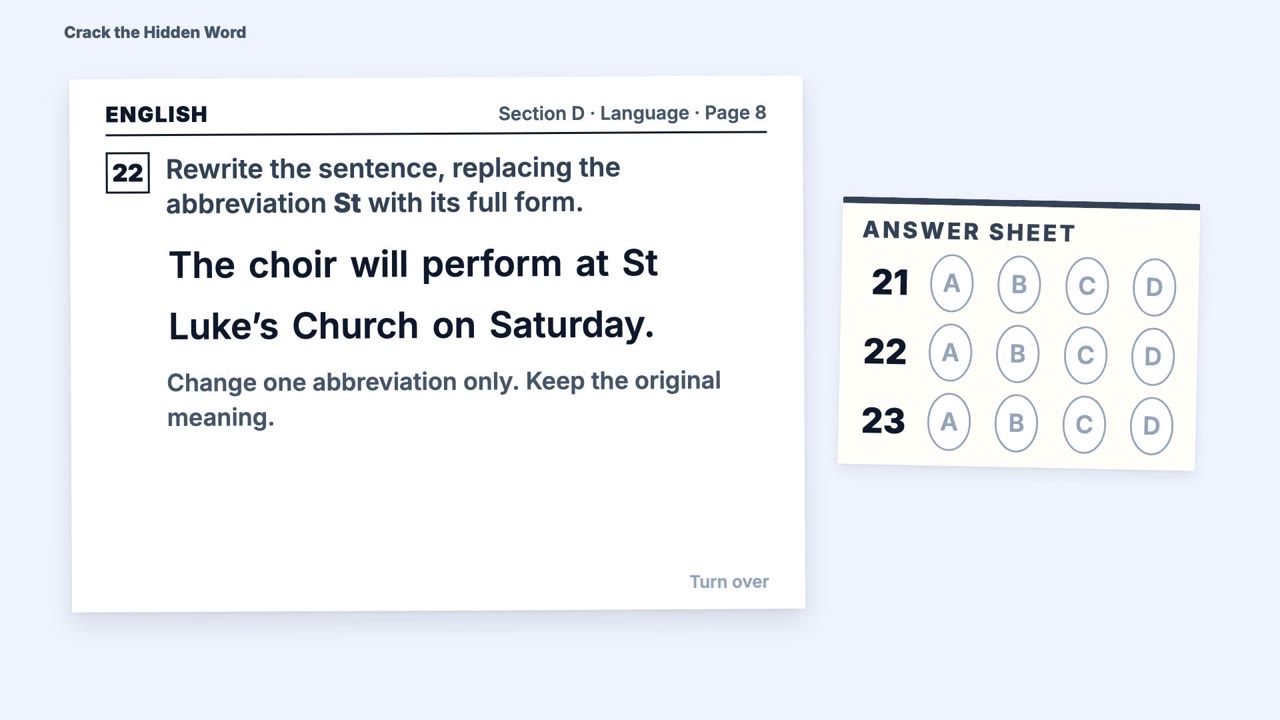 Length 2:36
Expand a common abbreviation
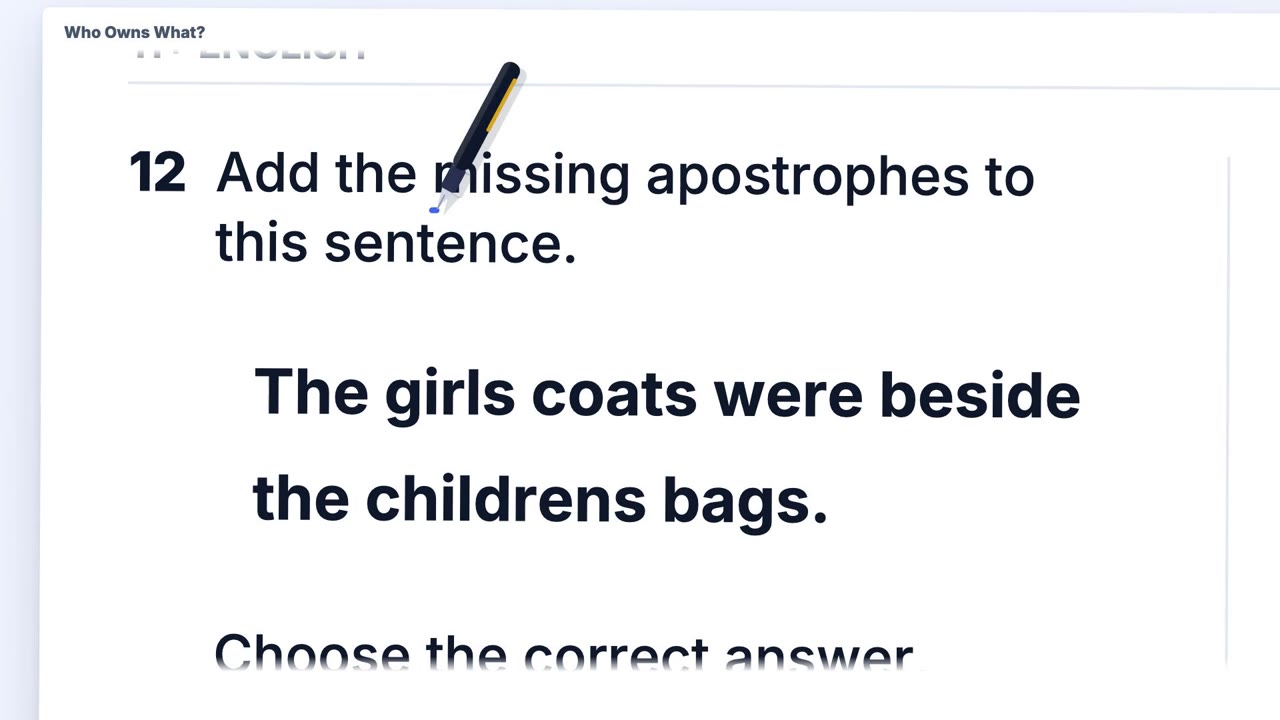 Length 2:40
Mark possession
The free diagnostic checks maths, English and both kinds of reasoning, and shows what to practise next. No card is required.