
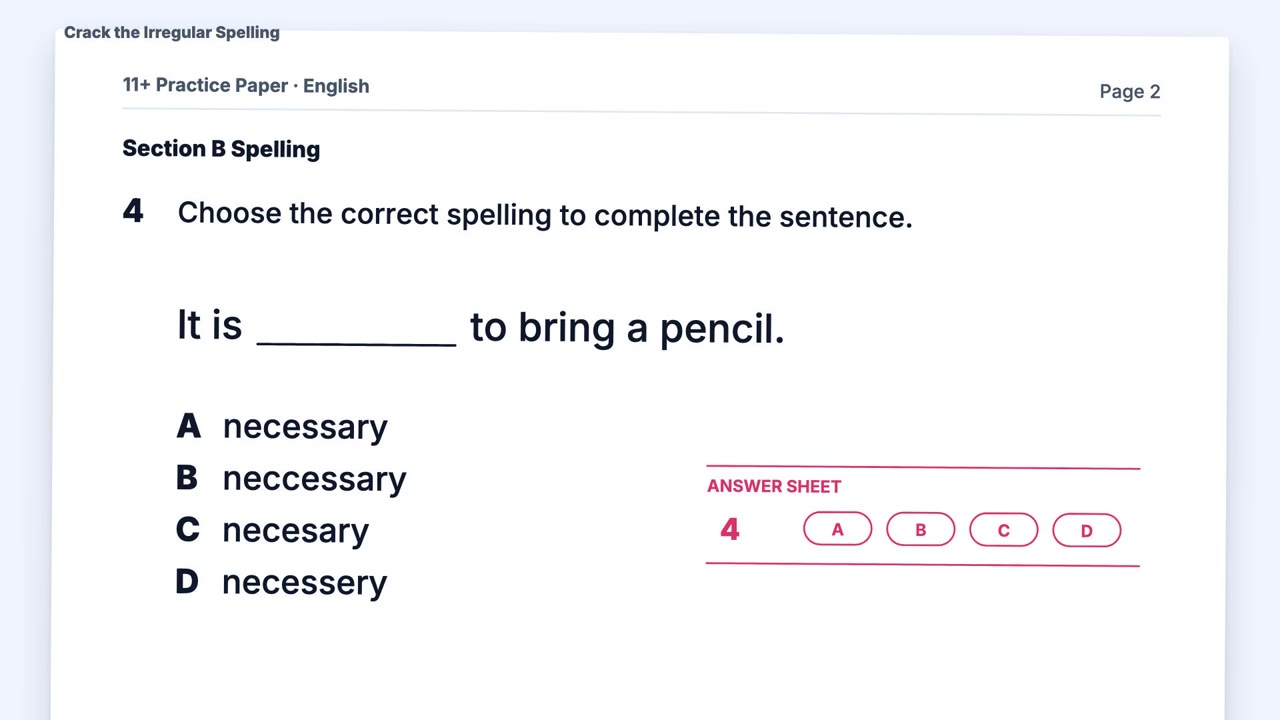
 Length 2:35
Crack the Irregular Spelling
Resolve an irregular spelling
11+ English · Spelling
A short worked example (2:23) for one 11+ English skill: Form a plural.
This video shows how to change a singular noun to its plural and apply the spelling rule that fits the word. Watch an 11+ English question solved step by step.
Turn on captions with the CC button. The full transcript is below the video.
Every word of the video, to read along or to skim before watching.
One tiny ending can turn a single object into a whole crowd. But choose the wrong ending... and a familiar word suddenly looks strange. Can you spot what changes, and what stays exactly the same?
A plural means more than one. Start with the noun in its singular form. For most nouns, simply add s: one boat becomes two boats. The original word stays in place, and the blue s clicks onto the end. Some endings need extra breathing room. If a noun ends in s, x, ch or sh, add es. One brush becomes two brushes. Watch the gold e and s slide together after brush, so the ending is easy to say. A consonant followed by y makes a different change. Remove the y, then add ies. One puppy becomes three puppies. Do not just add s to make puppys. And never slip in an apostrophe: an apostrophe does not make an ordinary plural. Check the letter before y. If it is a vowel, keep the y and add s. One toy becomes four toys. So the y-change belongs to words like puppy, not words like toy.
Let's work through an example. Complete this sentence with the correct plural form of puppy: 'Five blank chased the red ball.' You must write one word, spelled correctly. First, find the noun you must change: puppy. Five tells you there is more than one, so you need a plural. Puppy ends in y. Now inspect the letter just before it. That letter is p, a consonant. That unlocks the y rule. Remove the final y. The word now reads pupp. Add i, e, s to the end... puppies. Put it back into the sentence: 'Five puppies chased the red ball.' The explicit answer is puppies, spelled p-u-p-p-i-e-s.
Remember: check the ending of the noun, then choose s, es, or the consonant-plus-y change to ies. Keep apostrophes out of ordinary plurals. You can now turn one into many with confidence!
Watch these next. The first ones teach the skills closest to this one.
Length 2:35Resolve an irregular spelling
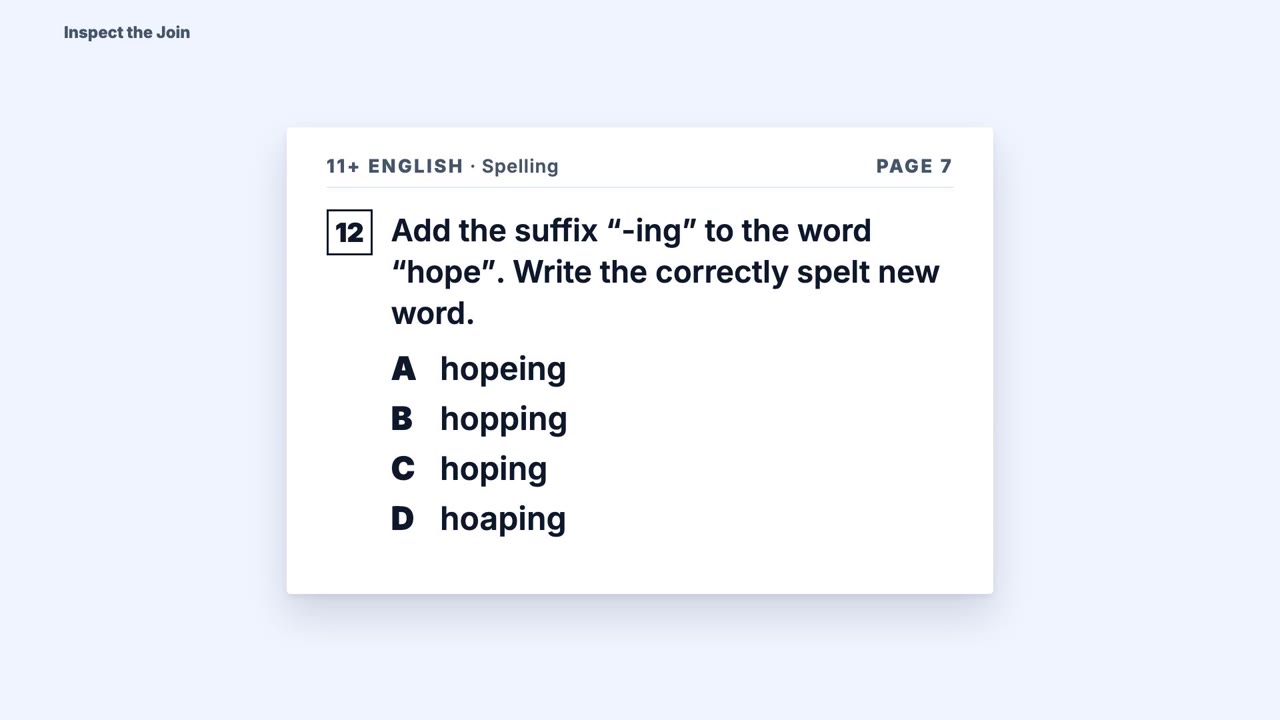 Length 2:36
Apply a prefix or suffix
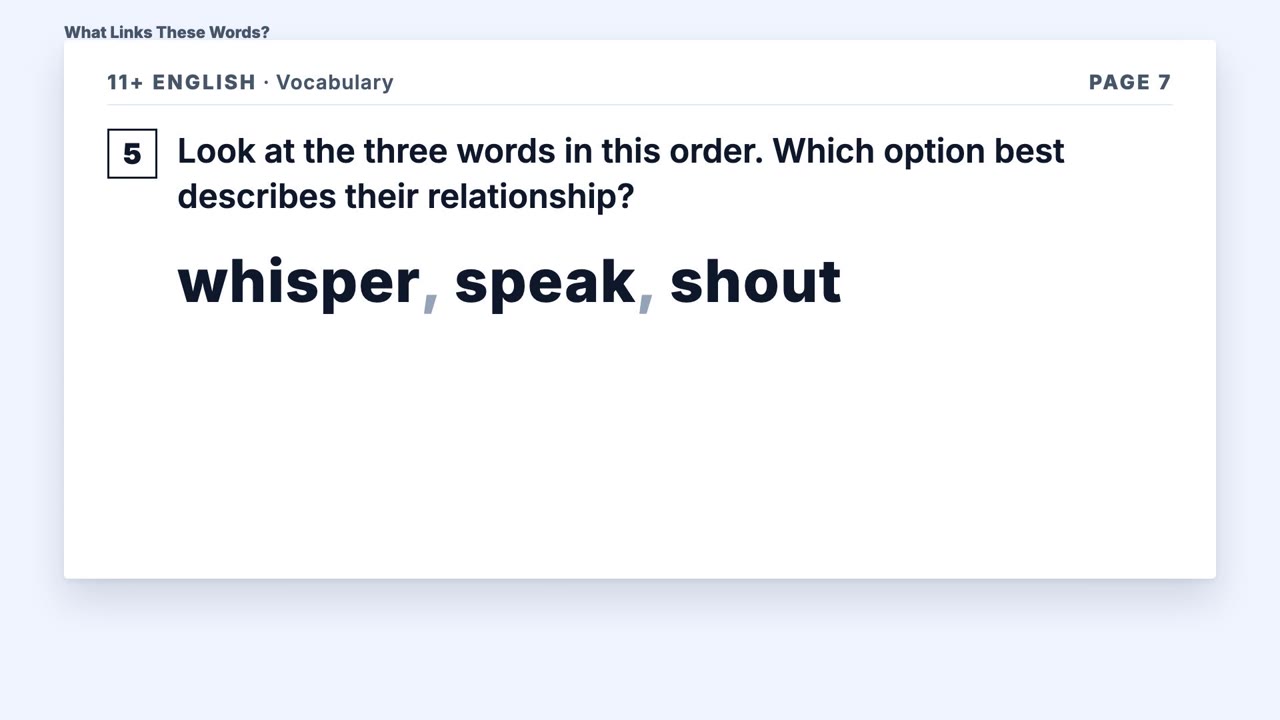 Length 2:40
Classify a word relationship
The free diagnostic checks maths, English and both kinds of reasoning, and shows what to practise next. No card is required.