
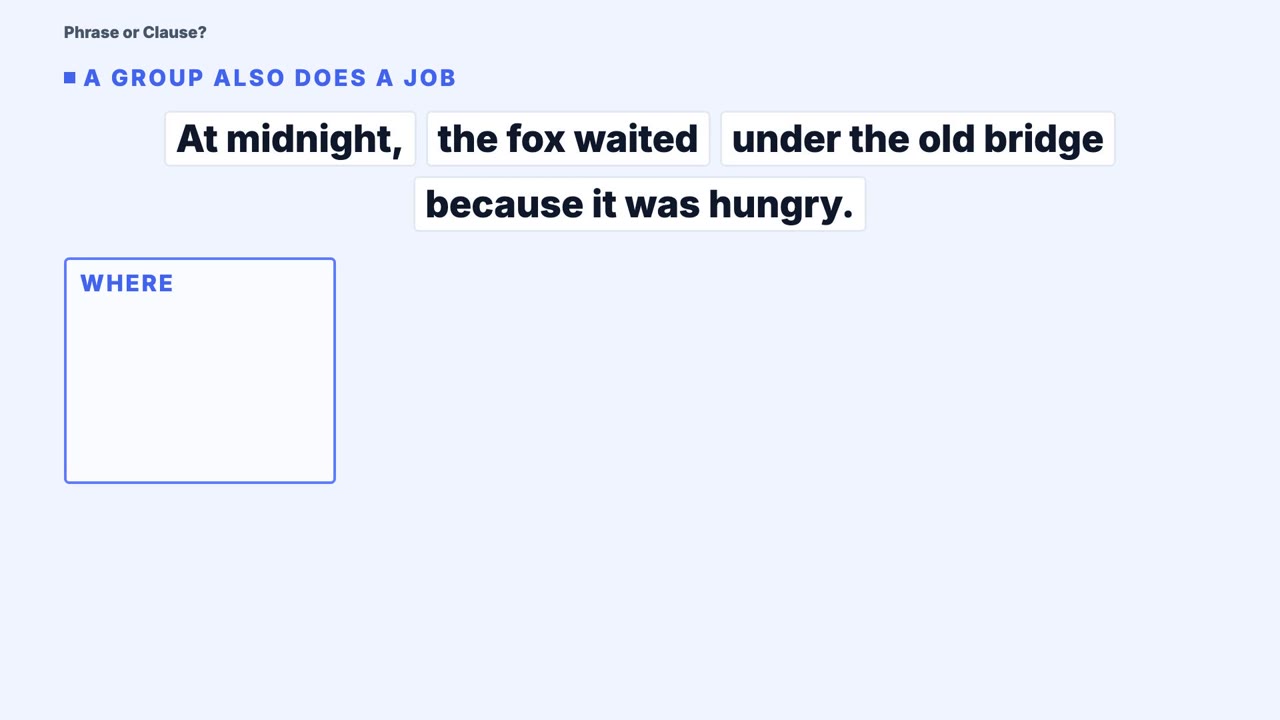
 Length 2:36
Phrase or Clause?
Distinguish a phrase and clause
11+ English · Grammar
A short worked example (2:30) for one 11+ English skill: Distinguish contraction and possession.
This video shows how to choose whether an apostrophe shows missing letters or possession in a sentence. Watch an 11+ English question solved step by step.
Turn on captions with the CC button. The full transcript is below the video.
Every word of the video, to read along or to skim before watching.
Two tiny words can look almost identical, yet one owns something and the other hides a whole verb. Spot the clue, and you can choose the right form in seconds. Ready to catch the apostrophe trick?
Start with the contraction. An apostrophe marks missing letters. "It's" can unfold into "it is", and "you're" can unfold into "you are". If the expanded words fit the sentence, choose the contraction. Now look at possession. "Its" means belonging to it. "Your" means belonging to you. These possessive words have no apostrophe. Point to the owner, then point to the thing owned: "the fox lifted its tail"; "your pencil is sharp". One more check matters. Do not match a verb to the nearest noun. Find the true subject first. In "The box of crayons is open", "box" is the subject, so "is" agrees with "box", not nearby "crayons". The same careful reading helps you test "it is" or "you are".
Let's work through an example. Here is the complete question. Choose the correct word to complete this sentence: "The robot turned ___ head when ___ time to leave." For each gap, choose either "its" or "it's". Take the first gap. The head belongs to the robot, so this is possession. Write "its", with no apostrophe: "The robot turned its head." Try expanding it to "it is". "The robot turned it is head" makes no sense, so the contraction cannot fit. Now take the second gap. Test the expansion: "when it is time to leave". That is a complete, sensible phrase. Compress "it is" to "it's", with an apostrophe replacing the missing letter. The full answer is: "The robot turned its head when it's time to leave."
Remember: expand the apostrophe form first. If "it is" or "you are" fits, use the contraction. If the word shows who owns something, use "its" or "your" without an apostrophe. Find the true subject, ignore the nearest-noun trap, and make your choice with confidence!
Watch these next. The first ones teach the skills closest to this one.
Length 2:36Distinguish a phrase and clause
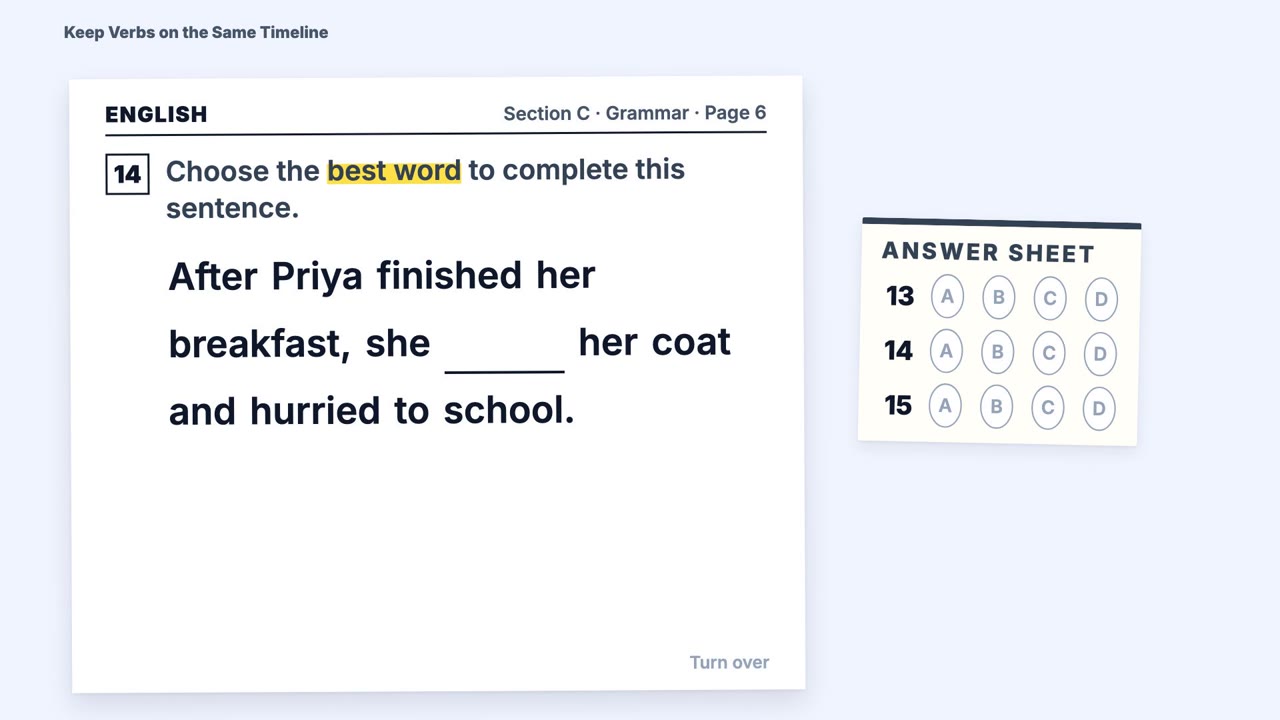 Length 2:38
Maintain consistent tense
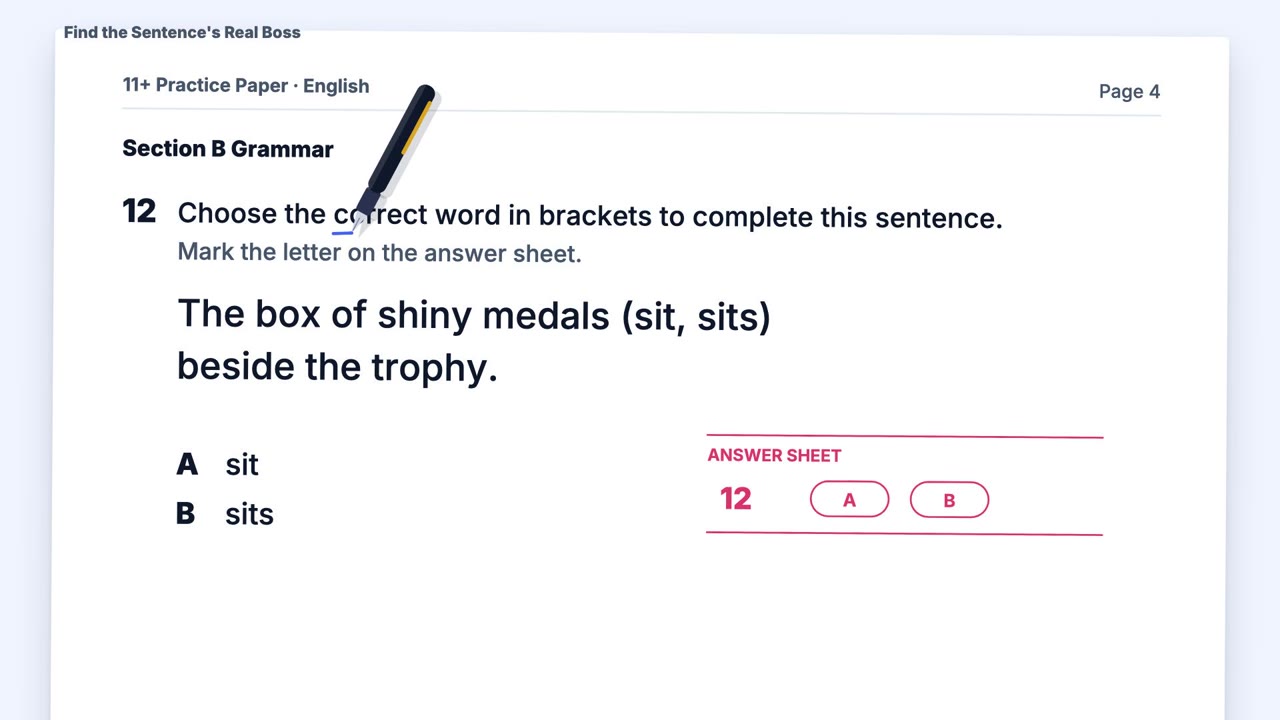 Length 2:33
Match subject and verb
The free diagnostic checks maths, English and both kinds of reasoning, and shows what to practise next. No card is required.