
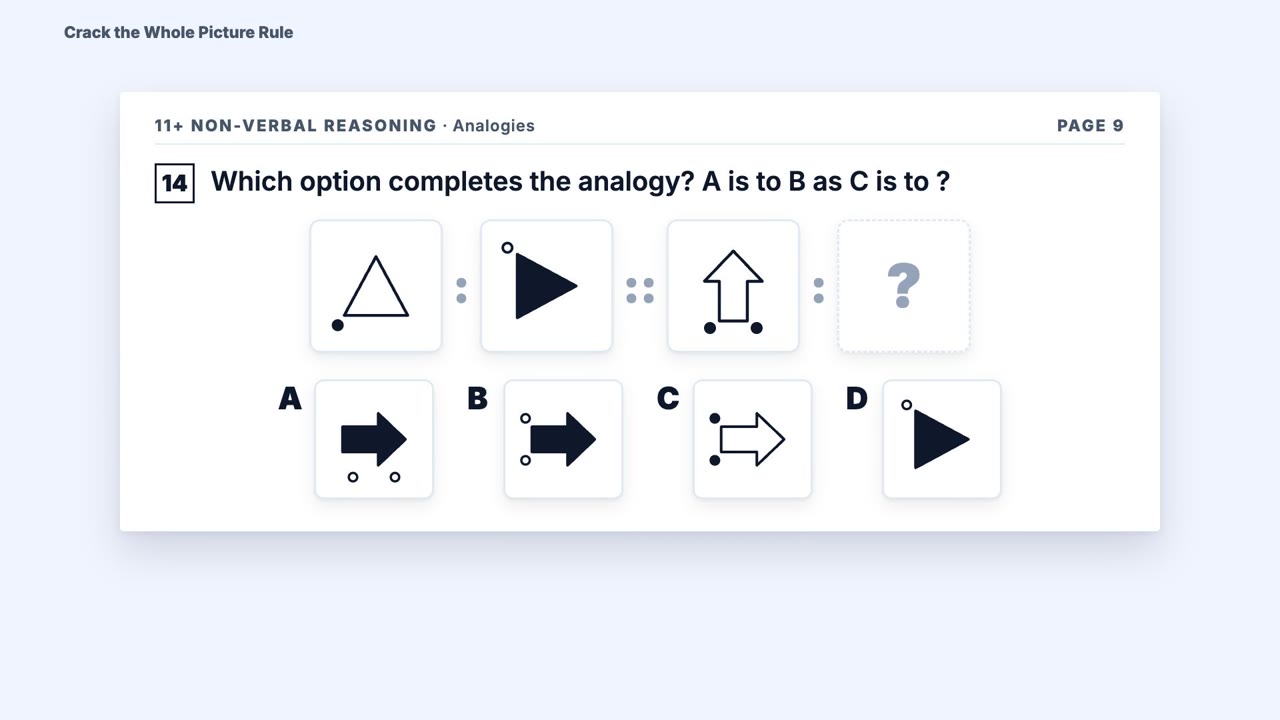
 Length 2:39
Crack the Whole Picture Rule
Complete a visual analogy
11+ Non-verbal Reasoning · Pattern
A short worked example (2:32) for one 11+ non-verbal reasoning skill: Complete a visual series.
This video shows how to find a repeated visual change and apply it to choose the next figure in the series. Watch an 11+ non-verbal reasoning question solved step by step.
Turn on captions with the CC button. The full transcript is below the video.
Every word of the video, to read along or to skim before watching.
One picture can hide a tiny machine. Spot what the machine does each time... and you can predict a picture that has never appeared!
Look at this row of arrows. Each arrow turns one quarter-turn clockwise: up, then right, then down. Nothing else changes. Its size and shade stay fixed. So the next arrow must turn one more quarter-turn, to the left. Use three checks. First, compare picture one with picture two. Say exactly what moved, turned, changed shade, or changed count. Then compare picture two with picture three. The same change must fit BOTH gaps. A common trap is to stare only at the last picture and pick something that looks similar. That is guessing. Instead, repeat the change you proved. Keep every feature that the rule did not change exactly the same.
Let's work through an example. A row shows three white squares. Each square contains one black circle. In the first, the circle touches the top edge. In the second, it touches the right edge. In the third, it touches the bottom edge. Which square comes next? Option A has the circle touching the left edge. Option B has it touching the top edge. Option C has it touching the bottom edge. Option D has it touching the right edge. Which option is correct? Compare the first two squares. The circle moves one side clockwise, from top to right. Check the next gap. It moves one side clockwise again, from right to bottom. Good - one repeated rule explains both changes. Now apply that SAME move to the third square. One side clockwise from the bottom edge lands on the left edge. The square stays white. The circle stays black, and its size stays unchanged. Only its position moves. So Option A is the explicit answer.
Remember: compare each neighbouring pair, name the single repeated change, check it across every gap, then apply it once more. Trust the rule, not a quick resemblance... and you will complete visual series with confidence!
Watch these next. The first ones teach the skills closest to this one.
Length 2:39Complete a visual analogy
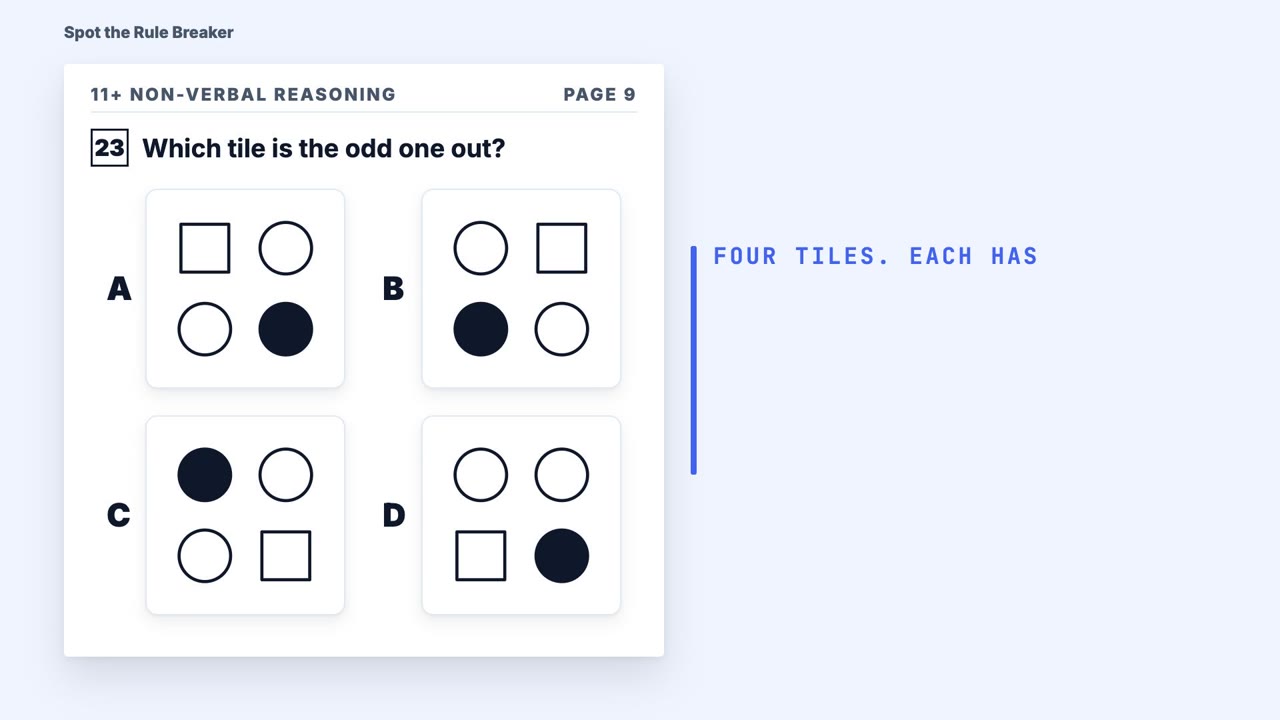 Length 2:37
Identify a visual odd one out
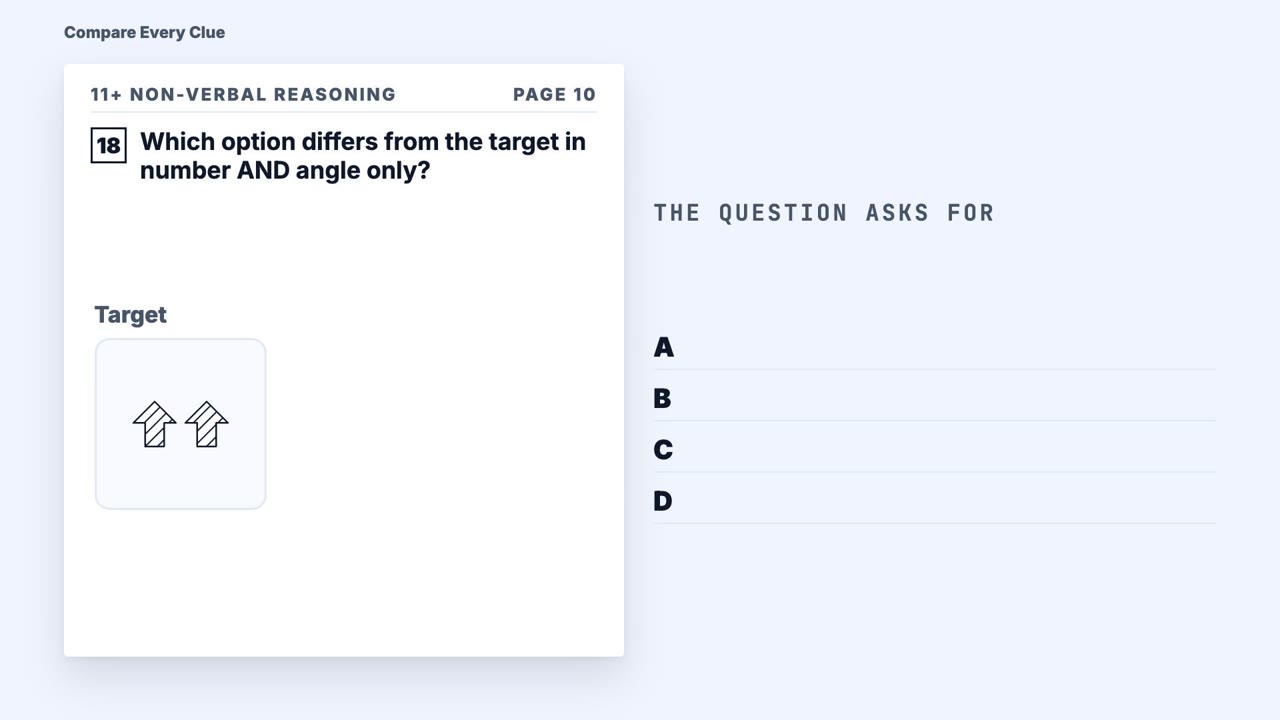 Length 2:39
Compare visual attributes
The free diagnostic checks maths, English and both kinds of reasoning, and shows what to practise next. No card is required.