
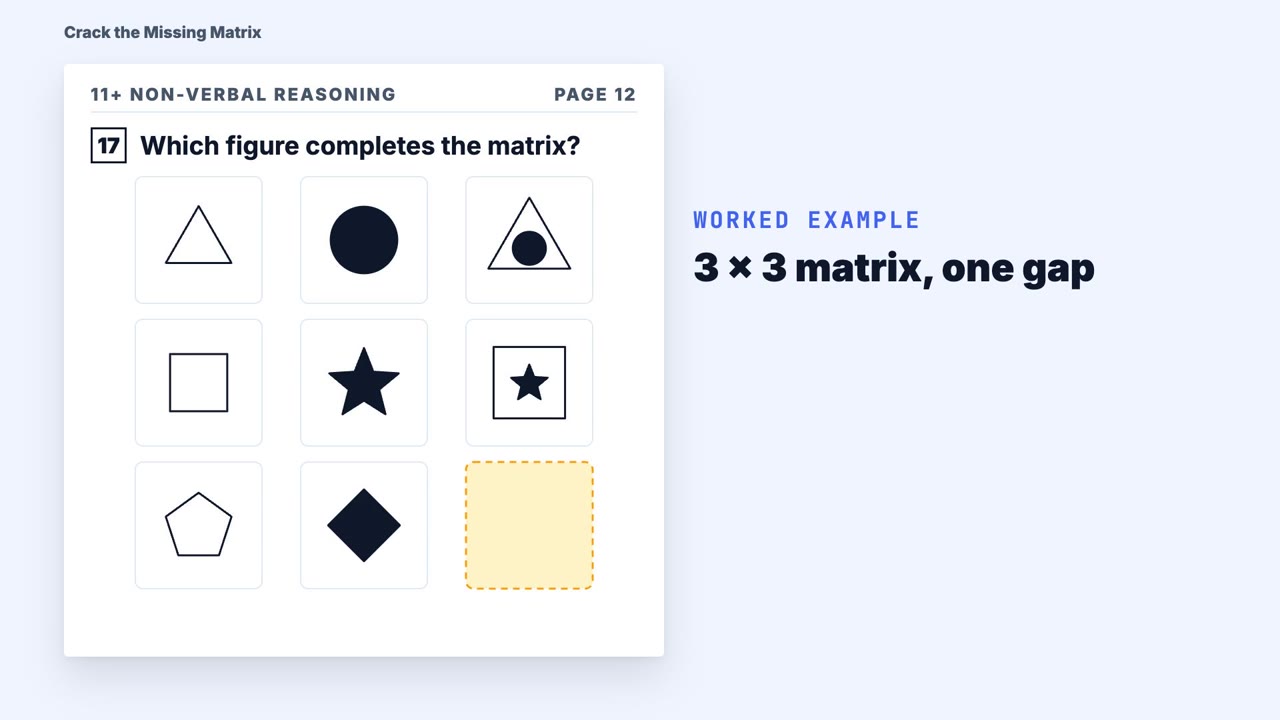
 Length 2:35
Crack the Missing Matrix
Complete a visual matrix
11+ Non-verbal Reasoning · Pattern
A short worked example (2:39) for one 11+ non-verbal reasoning skill: Compare visual attributes.
This video shows how to compare figures by their shape, position, angle, number of parts, size or shading. Watch an 11+ non-verbal reasoning question solved step by step.
Turn on captions with the CC button. The full transcript is below the video.
Every word of the video, to read along or to skim before watching.
Two figures can look almost identical, yet hide several differences. Your eyes may spot the boldest one first... but the winning move is to check EVERY attribute, one by one.
Start with shape. Are both figures triangles, arrows, circles, or something else? Then count every repeated shape. Touch each one with your eyes so a close cluster does not trick you. Next, compare size and position. Is either figure larger? Is it above, below, left, right, or central? Now check angle, or orientation. A figure can keep the same shape while pointing in a different direction. Finally inspect shading: empty, solid, striped, dotted, or grey. Do not stop at the first difference. That is the common trap. Sweep the whole checklist, because two figures may differ in more than one way.
Let's work through an example. A target card shows two large striped arrows in the centre, both pointing upwards. Which option differs from the target in number AND angle, while shape, size, position, and shading stay the same? Option A has three large striped arrows in the centre, pointing right. Option B has three large solid arrows in the centre, pointing upwards. Option C has two small striped triangles in the centre, pointing right. Option D has two large striped arrows at the bottom, pointing right. Which option is correct? Build a quick mental checklist. For Option A, shape matches, size matches, position matches, and stripes match. The count changes from two to three. The angle changes from up to right. That is exactly the required pair of differences. Check the others. B changes number and shading, not angle. C changes shape, size, and angle. D changes position and angle, but not number. So Option A is correct. You found it by comparing every attribute, not by trusting the first difference.
Remember: compare shape, count, size, position, angle, and shading in a steady order. Keep going after the first change, and the full pattern becomes clear. You are ready to spot the difference with confidence.
Watch these next. The first ones teach the skills closest to this one.
Length 2:35Complete a visual matrix
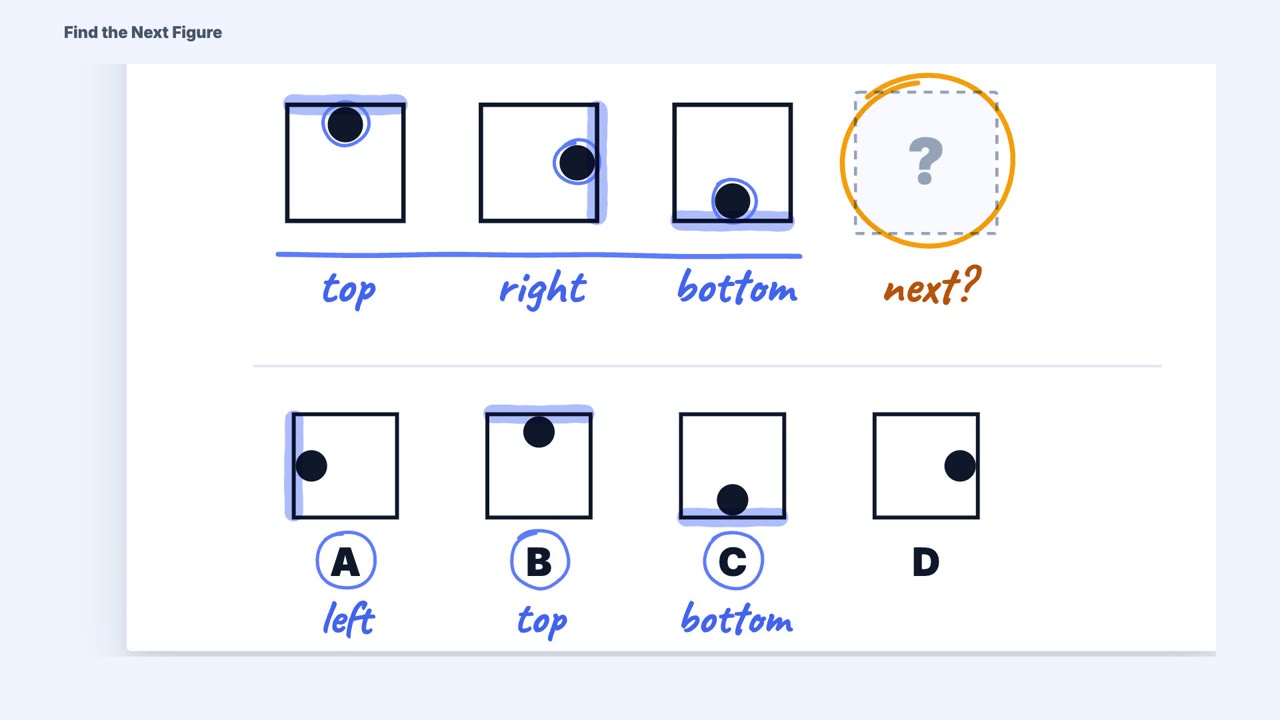 Length 2:32
Complete a visual series
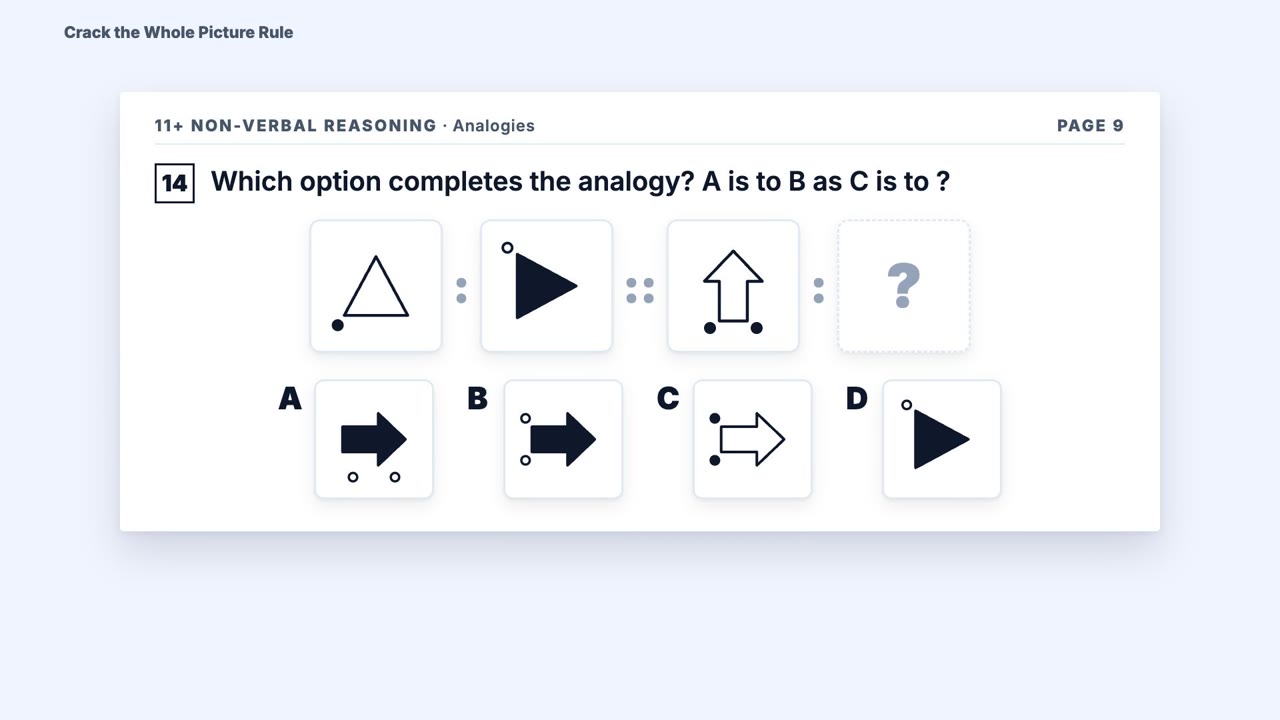 Length 2:39
Complete a visual analogy
The free diagnostic checks maths, English and both kinds of reasoning, and shows what to practise next. No card is required.