
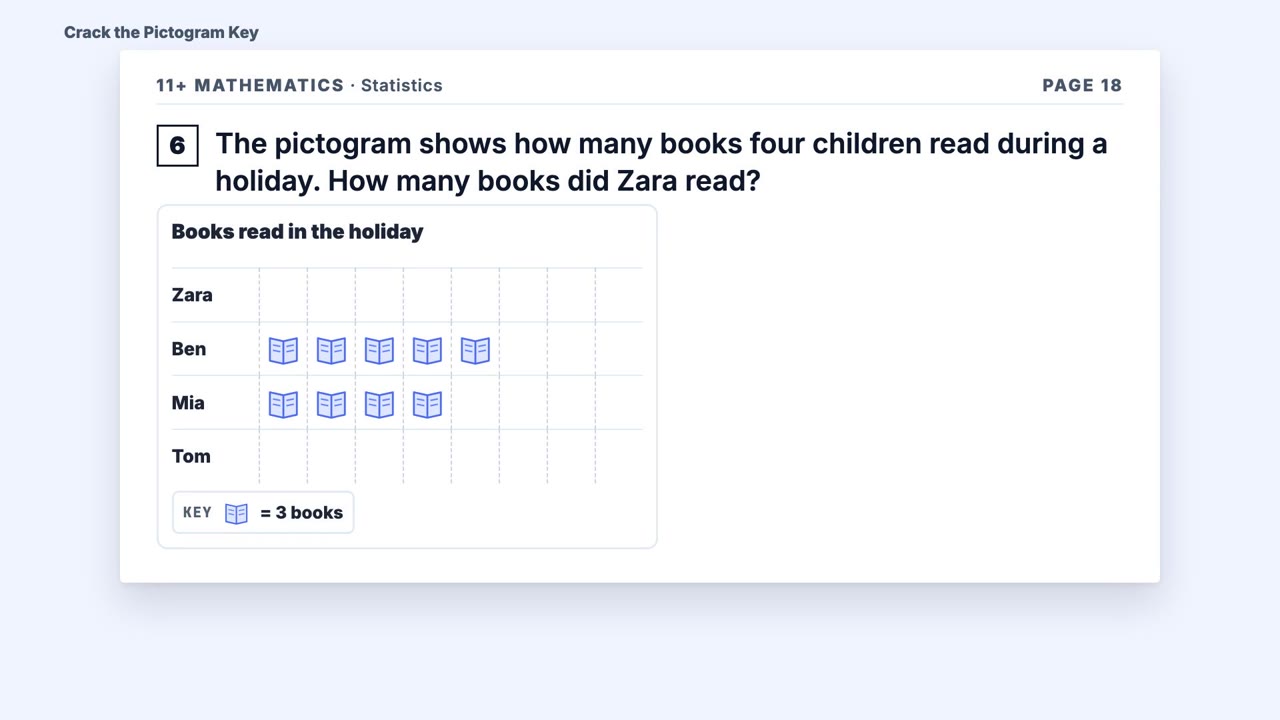
 Length 2:34
Crack the Pictogram Key
Decode a pictogram key
11+ Maths · Data
A short worked example (2:38) for one 11+ maths skill: Compare table values.
This video shows how to use row and column headings to read two table values and compare them. Watch an 11+ maths question solved step by step.
Turn on captions with the CC button. The full transcript is below the video.
Every word of the video, to read along or to skim before watching.
A table can hide two numbers in plain sight. Find the right pair, and one quick comparison reveals the answer. But choose the wrong crossing... and perfect subtraction gives the wrong result.
Start with the name on the left. Slide across that row. Then find the heading at the top, and slide down its column. The number where those paths meet belongs to BOTH labels. Keep that order; swapping row and column sends you to another box. Read the value exactly as shown. A number is ready to use. If pictures appear, multiply by the key. If a scale appears, decode each interval. Never count symbols or grid spaces as though each automatically means one. To compare two values, say which is greater or smaller. If the question asks how many more, subtract the smaller value from the larger. A comparison sign or difference bar can show the relationship clearly.
Let's work through an example. A table shows books borrowed by two classes on Monday and Tuesday. Oak Class borrowed eighteen on Monday and twenty-four on Tuesday. Elm Class borrowed twenty-one on Monday and sixteen on Tuesday. How many more books did Oak Class borrow on Tuesday than Elm Class? First, lock onto Oak Class on the left. Move across its row to the Tuesday column. The crossing shows twenty-four. Highlight that cell. Do not use eighteen; that is Oak Class on Monday. Next, stay with the SAME column heading: Tuesday. Find Elm Class, then move across its row. The Tuesday crossing shows sixteen. Now both highlighted cells match the named class and day. Oak has twenty-four. Elm has sixteen. Twenty-four is greater, so Oak borrowed more. To find how many more, calculate twenty-four minus sixteen. The difference is eight. Oak Class borrowed EIGHT more books than Elm Class on Tuesday.
Remember: row name, column heading, crossing value. Check both values came from the right crossings, decode any key or scale, then compare once. You can read the table with confidence - and make every box earn its place.
Watch these next. The first ones teach the skills closest to this one.
Length 2:34Decode a pictogram key
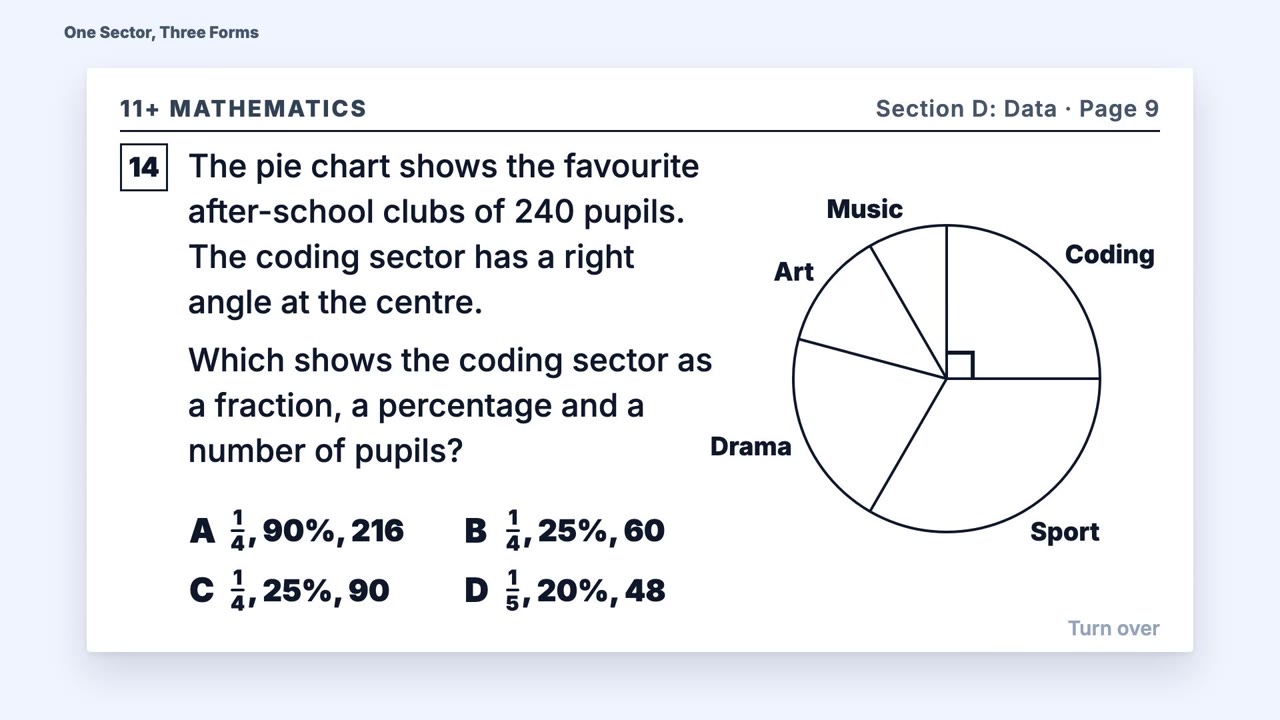 Length 2:30
Interpret a pie-chart sector
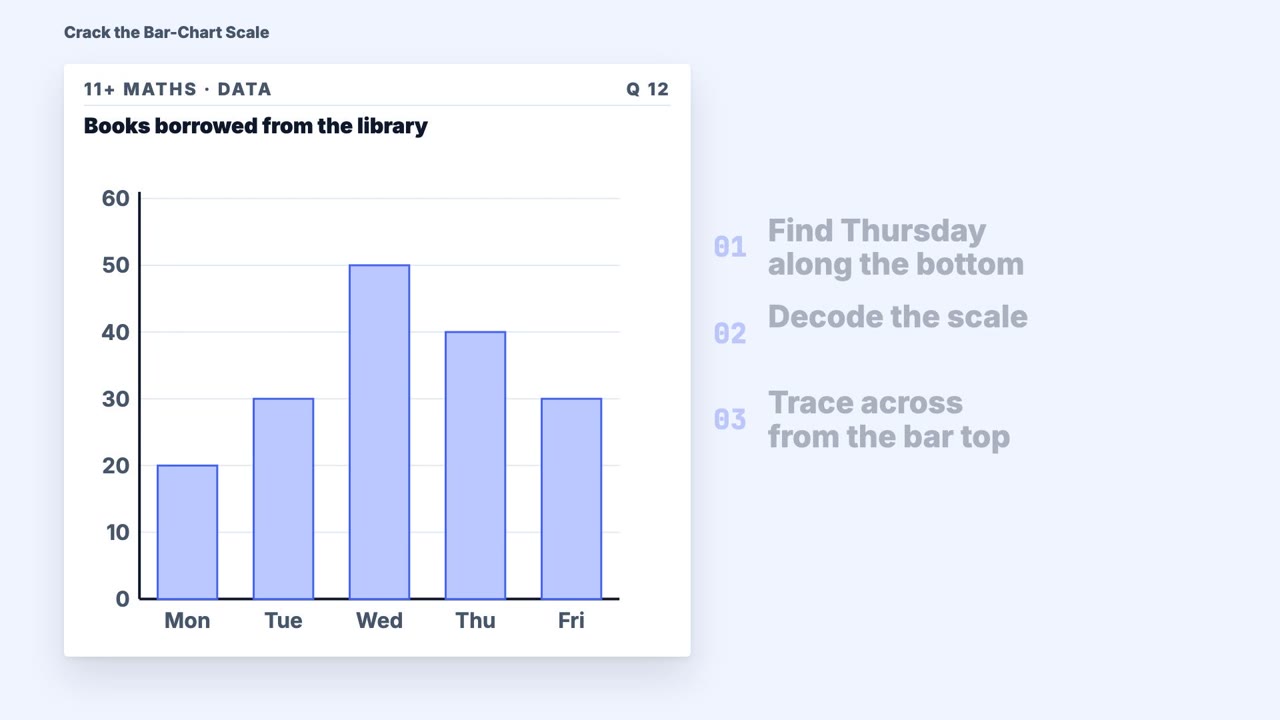 Length 2:15
Read a bar-chart value
The free diagnostic checks maths, English and both kinds of reasoning, and shows what to practise next. No card is required.