
 Length 2:38
Keep Verbs on the Same Timeline
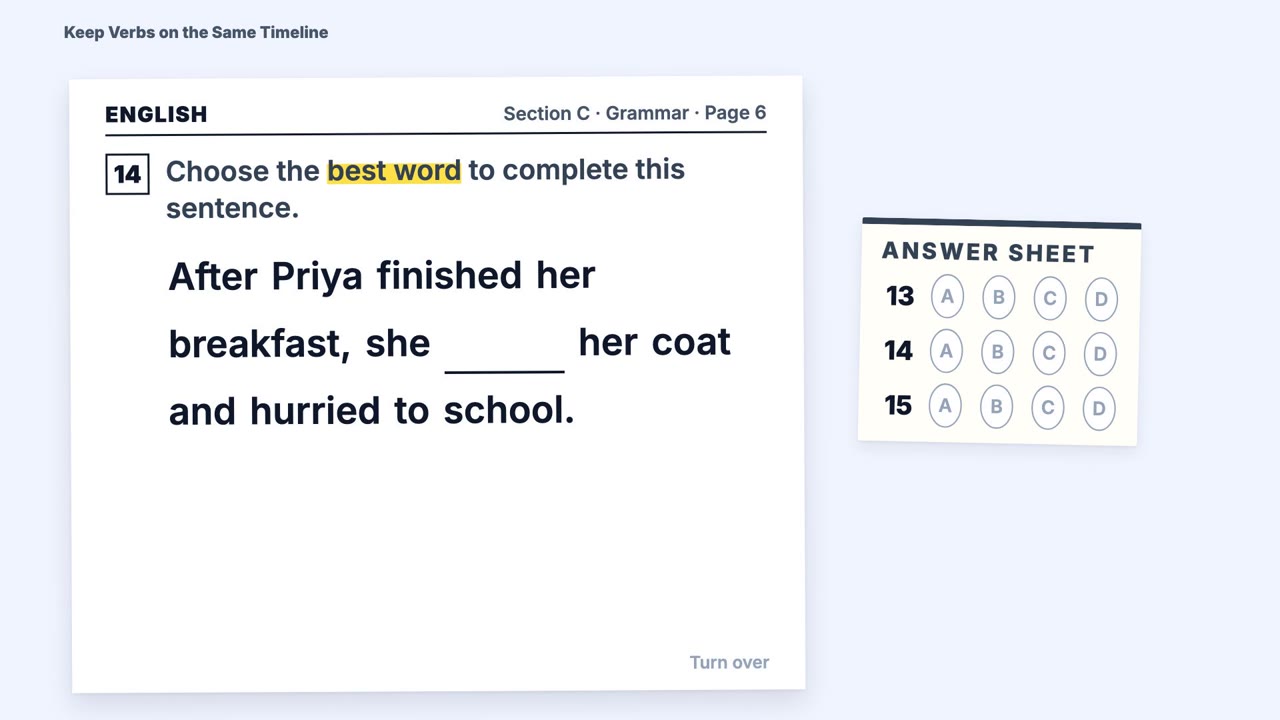
Maintain consistent tense
11+ English · Grammar
A short worked example (2:36) for one 11+ English skill: Distinguish a phrase and clause.
This video shows how to tell a phrase from a clause and work out what the group of words does in its sentence. Watch an 11+ English question solved step by step.
Turn on captions with the CC button. The full transcript is below the video.
Every word of the video, to read along or to skim before watching.
Two groups of words can look almost identical. One is a phrase. The other is a clause. Watch the words come alive... then spot who is doing what.
A phrase is a group of words without its own subject-and-verb team. See 'under the old bridge'. It names a place, but nobody in that group does anything. The whole strip stays blue and earns the label PHRASE. A clause has its own subject and verb. See 'the fox waited'. 'The fox' is the subject. 'Waited' is the verb. Together, they make a complete clause. Two linked spotlights show the team. Do not choose the noun nearest the verb. Find who performs the action. In 'the basket of apples fell', 'apples' sits beside 'fell', but the basket fell. 'The basket' is the true subject, so the group is a clause. A group also does a job. A phrase may tell where or when. A clause may carry the main message or add information. First find the subject-verb team. Then name its job.
Let's work through an example. An 11+ question shows this sentence: 'After lunch, the children beside the fountain opened their maps.' It asks, which bracketed group is a clause, and what role does it play? The choices are 'After lunch', 'beside the fountain', and 'the children beside the fountain opened their maps'. Test the first choice. 'After lunch' tells when, but it has no subject or verb. It is an adverbial phrase. 'Beside the fountain' identifies which children. It has no subject or verb. It is a prepositional phrase doing an adjectival job. Now test the long group. Who performs the action? 'The children beside the fountain' is the subject. What did they do? 'Opened' is the verb. They form a team. So the long group is a clause, and it carries the sentence's main message: a main clause.
Remember: find the true subject and its verb. That team makes a clause. Without that team, you have a phrase. Then ask what job the group performs. You can spot the difference with confidence!
Watch these next. The first ones teach the skills closest to this one.
Length 2:38Maintain consistent tense
 Length 2:33
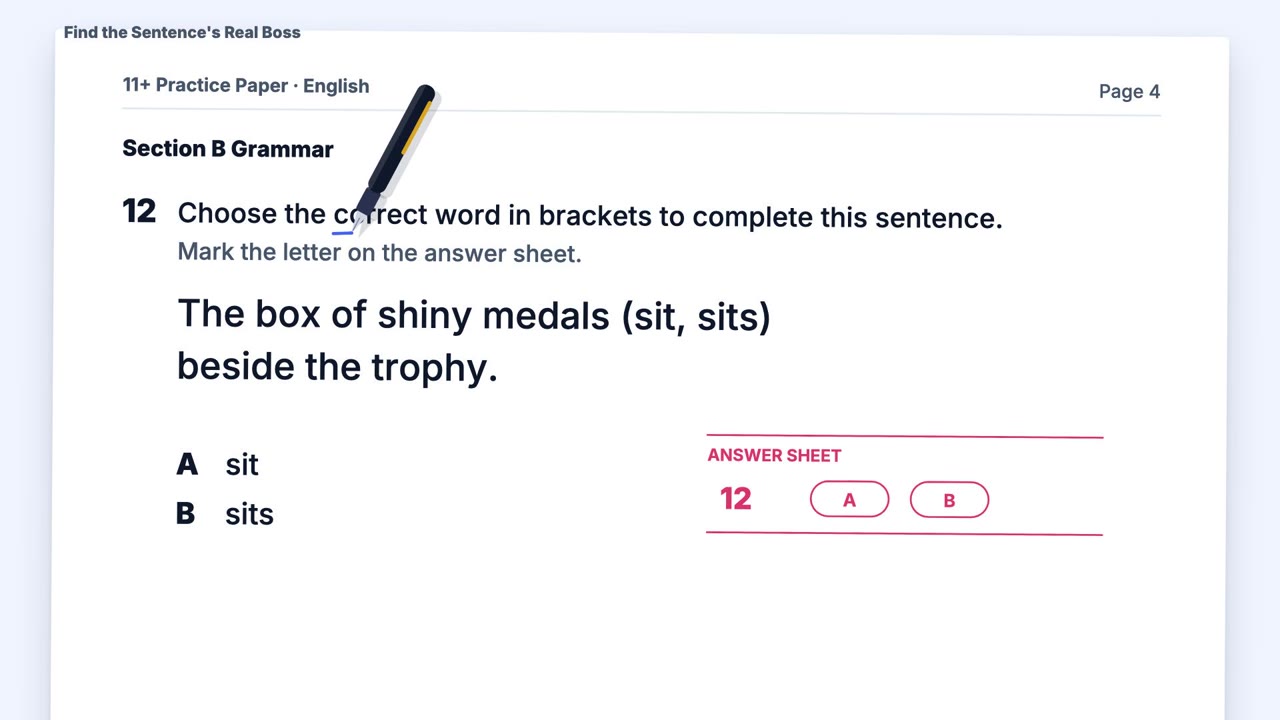
Match subject and verb
 Length 2:31
Order sentence elements
The free diagnostic checks maths, English and both kinds of reasoning, and shows what to practise next. No card is required.